We've sent you an email with a link to update your password.
Reset your password
We will send you an email to reset your password.
NasalGuard in Winter: Where a Barrier Step Fits Indoors and Out
Christine Walek
0 comments
By mid-November the patio chairs are stacked, the furnace runs every evening, and the hooks by the door are full of coats again. It is also when people start asking whether NasalGuard® Airborne Particle Blocker is a spring product that can sit in a drawer until April.
The particles NasalGuard is designed for are not tied to one season. Here is what changes in winter, where a barrier step fits into a winter week, and how to use NasalGuard in winter settings.
Is NasalGuard only for pollen season?
NasalGuard is an invisible, drug-free gel applied around the outside of the nostrils and above the upper lip to help reduce inhalation of everyday airborne particles such as pollen, dust, and pet dander. Pollen is one item on that list, not the whole list.
How it works does not change with the calendar either. Positive ion technology creates an invisible gel barrier around the outside of the nostrils, designed to help reduce contact with everyday airborne particles. What changes in winter is where you spend your time, and which particles share that space with you.
Winter moves most of life indoors. The Americans spend, on average, about 90 percent of their time indoors. With the windows shut and fewer evenings outside, the air in your home, office, and car is most of the air you meet.
Indoors, there are several everyday sources of particles:
Cooking, which picks up from Thanksgiving through New Year's
Some cleaning, including dusting and vacuuming
Candles and other things that burn indoors
Pet dander, from pets who now spend most of the day inside with you
Outdoor air, which still finds its way in through doors and gaps
The EPA also points out that settled dust can be easily kicked up into the air by cleaning, vacuuming, and other activities like walking. Unpacking decorations, clearing the garage before guests arrive, or a full house over the holidays all count.
Winter settings where people use NasalGuard
Start with the parts of a winter week where you know airborne particles will be part of the scene. For most people the list looks something like this:
Holiday travel. Airports and airplanes are some of the busiest shared spaces of the year from late November through early January. Our air travel guide walks through a full travel day.
The daily commute. Buses, trains, and rideshares with the windows up. See NasalGuard for commuting.
Desk days. Shared offices with the heat on all day. Our office guide covers a workday routine.
Time around pets. NasalGuard is a barrier step for time around airborne pet dander. Our explainer on pet dander and airborne particles has the background.
Pick the two or three that match your week. Those are the moments to plan around.
What NasalGuard is, and what it is not
A few plain answers, since the same questions come up every winter:
It is a topical gel, applied externally around the outside of the nostrils and above the upper lip.
It is not a medicine or a drug. It is an externally applied barrier gel.
It is not intended to be inserted into the nose.
It does not stand in for your healthcare professional's advice. Keep following their guidance.
Place a small amount on a fingertip. It looks milky white at this stage.
Spread it between the thumb and finger.
Apply around the outside of the nostrils and above the upper lip, where it goes on invisibly.
Reapply according to the current directions and after the area becomes wet. Winter adds a few new ways for that to happen, such as washing your face after coming in from snow or rain. The label on your tube is the place to check how much to use and when to reapply.
Four points in a winter day to apply or reapply, as directed.
A simple rule of thumb: apply before the part of the day you have in mind, keep the tube in your coat pocket, and reapply when the area gets wet.
Which version fits your winter
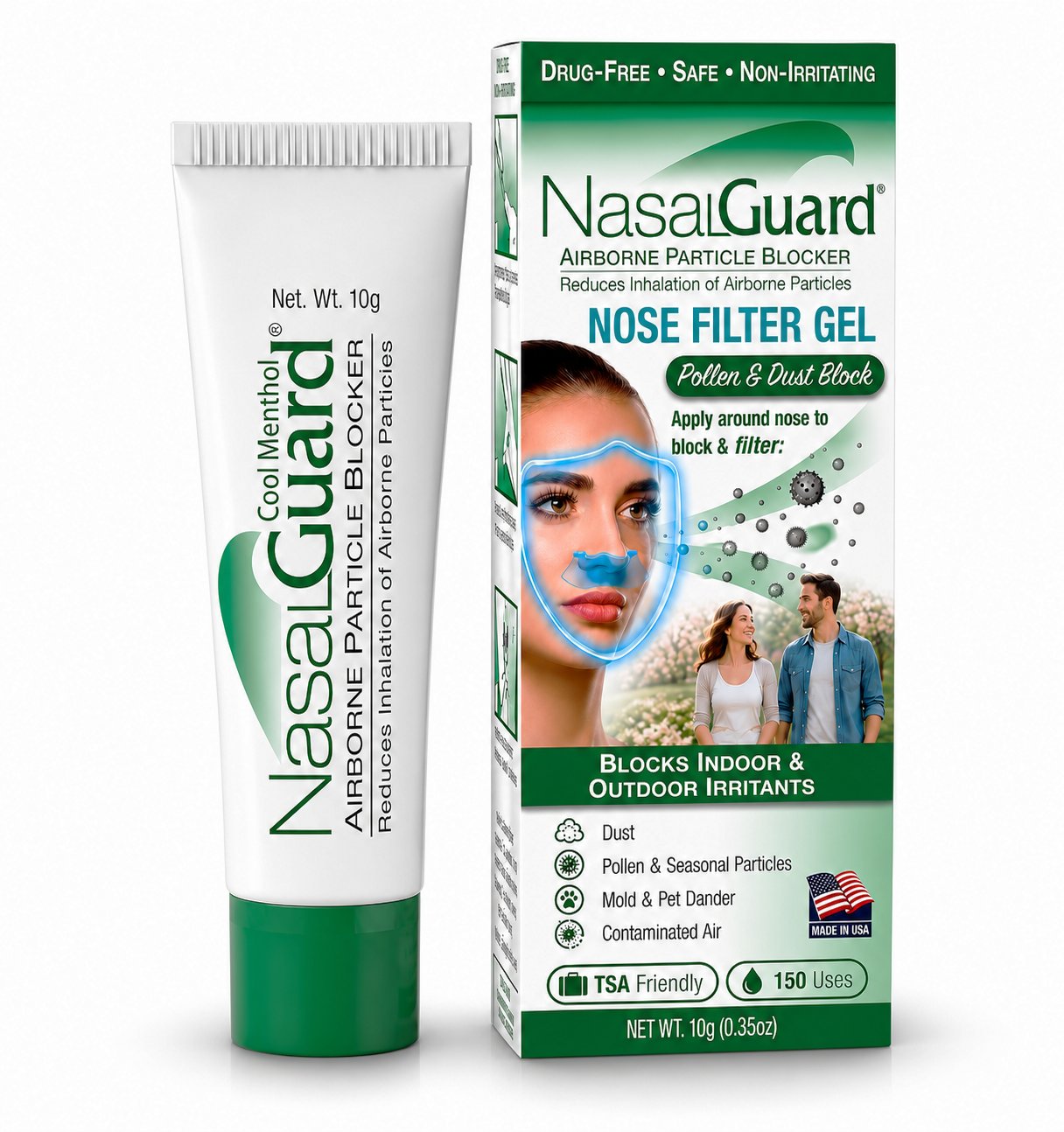
Mostly home, work, and errands: the everyday line, Pollen & Dust Block, in Unscented or Cool Menthol.
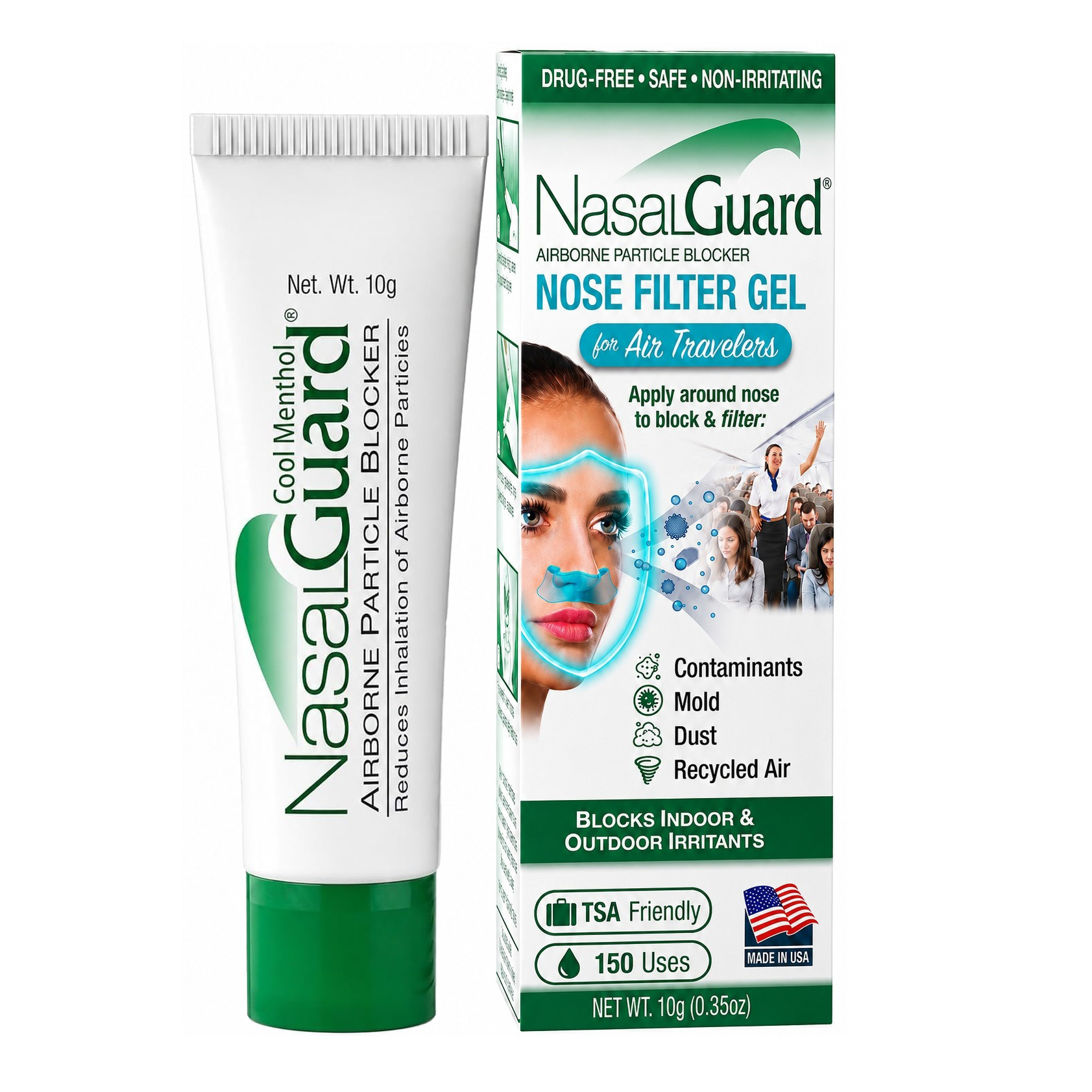
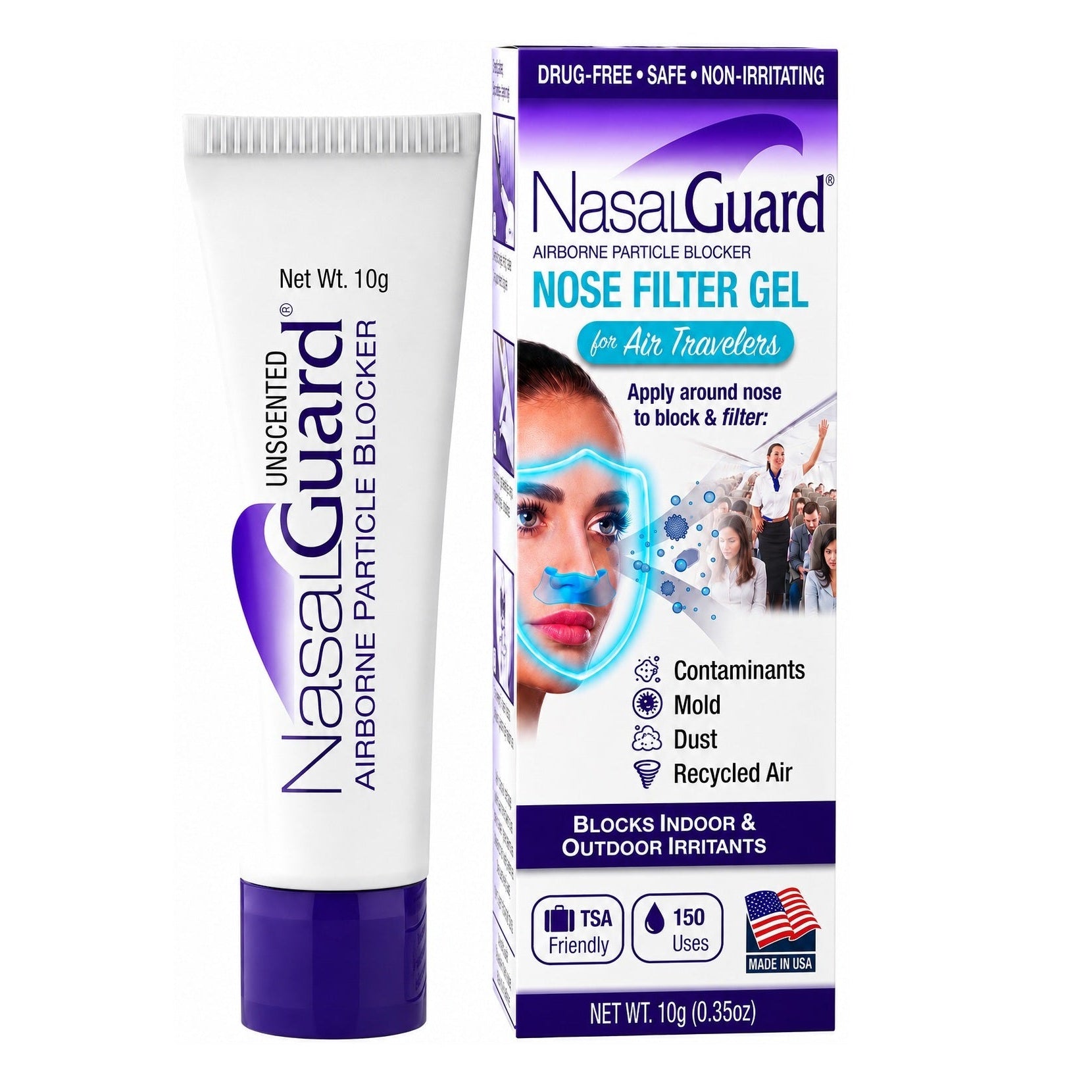
Holiday flights:For Air Travelers, a simple, externally applied barrier step for everyday airborne particles at airports, on airplanes, and in other travel settings.
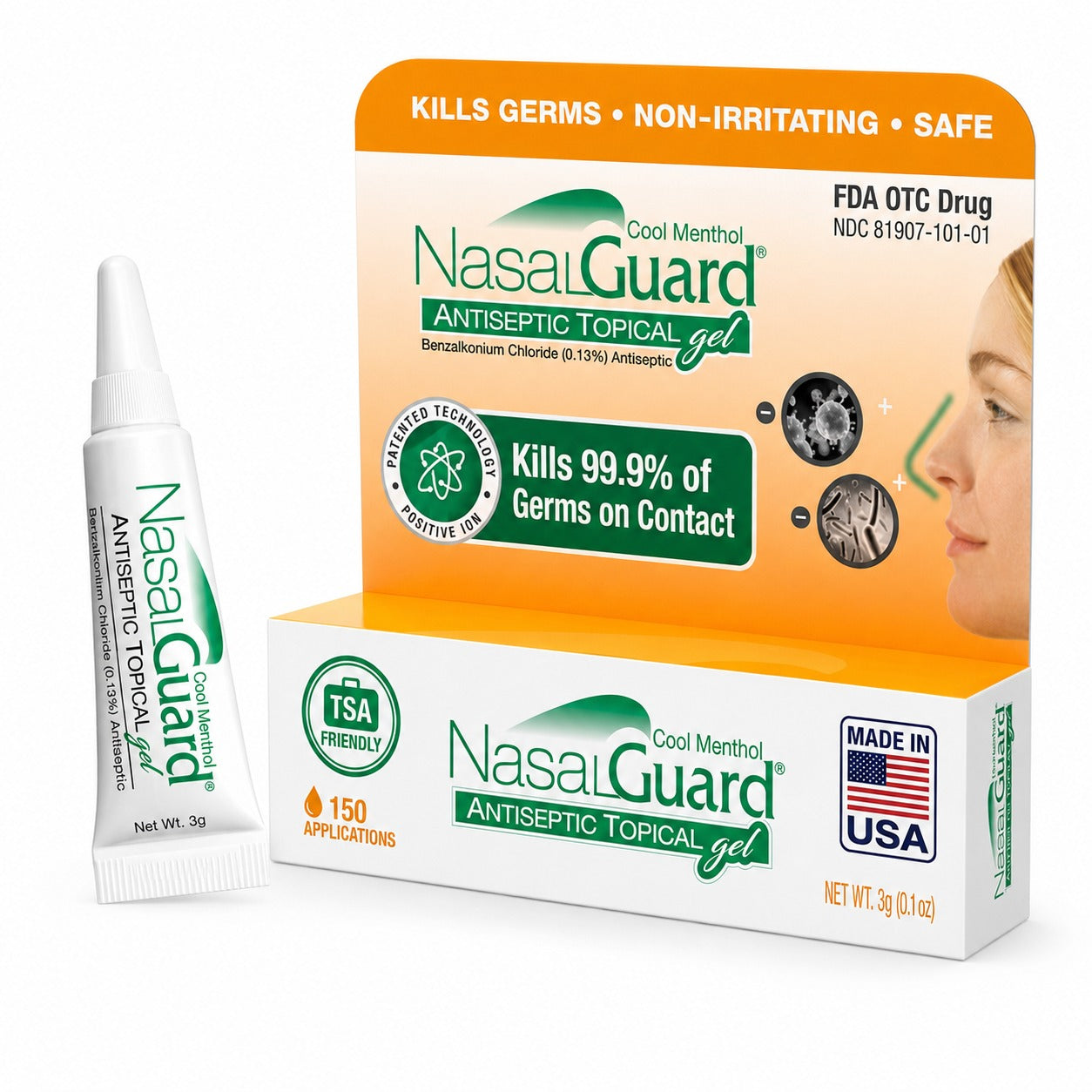
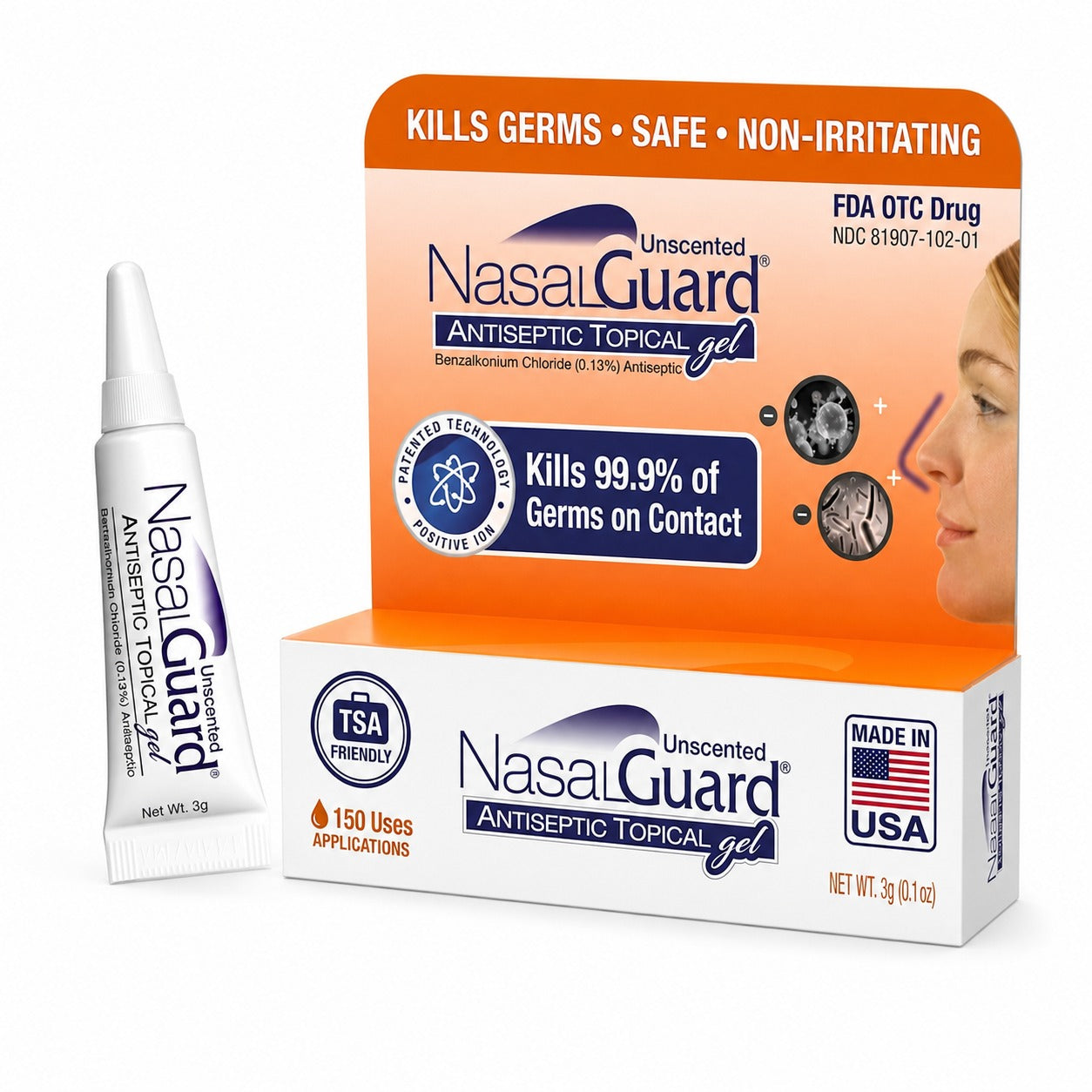
Pocket or shelf: a 3g tube fits a coat pocket. A 10g tube can live on a shelf by the door.
Unscented has no added scent. Cool Menthol has a menthol scent. Every version is applied the same way.
Frequently asked questions
Can you use NasalGuard in winter?
Yes. NasalGuard Airborne Particle Blocker is designed to help reduce inhalation of everyday airborne particles such as pollen, dust, and pet dander, and dust and pet dander are part of indoor life all year. Apply a small amount around the outside of the nostrils and above the upper lip before the settings you have in mind, and use it as directed.
Does NasalGuard go inside the nose?
No. NasalGuard is not intended to be inserted into the nose. Place a small amount on a fingertip, spread it between the thumb and finger, and apply around the outside of the nostrils and above the upper lip. The gel looks milky white on your fingertip and goes on invisibly once spread.
Is NasalGuard a medicine?
No. NasalGuard Airborne Particle Blocker is not a medicine or a drug. It is an externally applied barrier gel that uses positive ion technology to create an invisible gel barrier around the outside of the nostrils. If you have questions about your own health, talk with a healthcare professional and keep following their advice.
How often should I reapply NasalGuard in winter?
Follow the reapplication directions on the current label for your version, and reapply after the area becomes wet, for example after washing your face or coming in from snow or rain. Keeping a 3g tube in your coat pocket makes it easy to reapply when you need to.
Your next step
Pick the one winter setting where you would use it most, and keep a tube there. For everyday settings at home, at work, and on the way there, start with NasalGuard® Pollen & Dust Block, Unscented, 3g. If a flight is on the calendar, add For Air Travelers to your liquids bag. Use as directed.
Christine Walek writes for the NasalGuard editorial team about air quality, travel, and the everyday airborne particles we share space with. Articles are reviewed against current product labeling before publishing.