We've sent you an email with a link to update your password.
Reset your password
We will send you an email to reset your password.
NasalGuard for Air Travel: How to Apply It Before Your Flight
Christine Walek
0 comments
Thanksgiving falls on November 26 this year, and for a lot of people that means a long day moving through security lines, gate areas, jet bridges, and airplane cabins. If NasalGuard is part of your travel routine, or you are adding it for the first time, a little planning makes it easy to use at the right moments.
This guide covers how to use NasalGuard for air travel from the moment you pack to the last leg home: which tube to bring, how to get it through security, and when to apply and reapply.
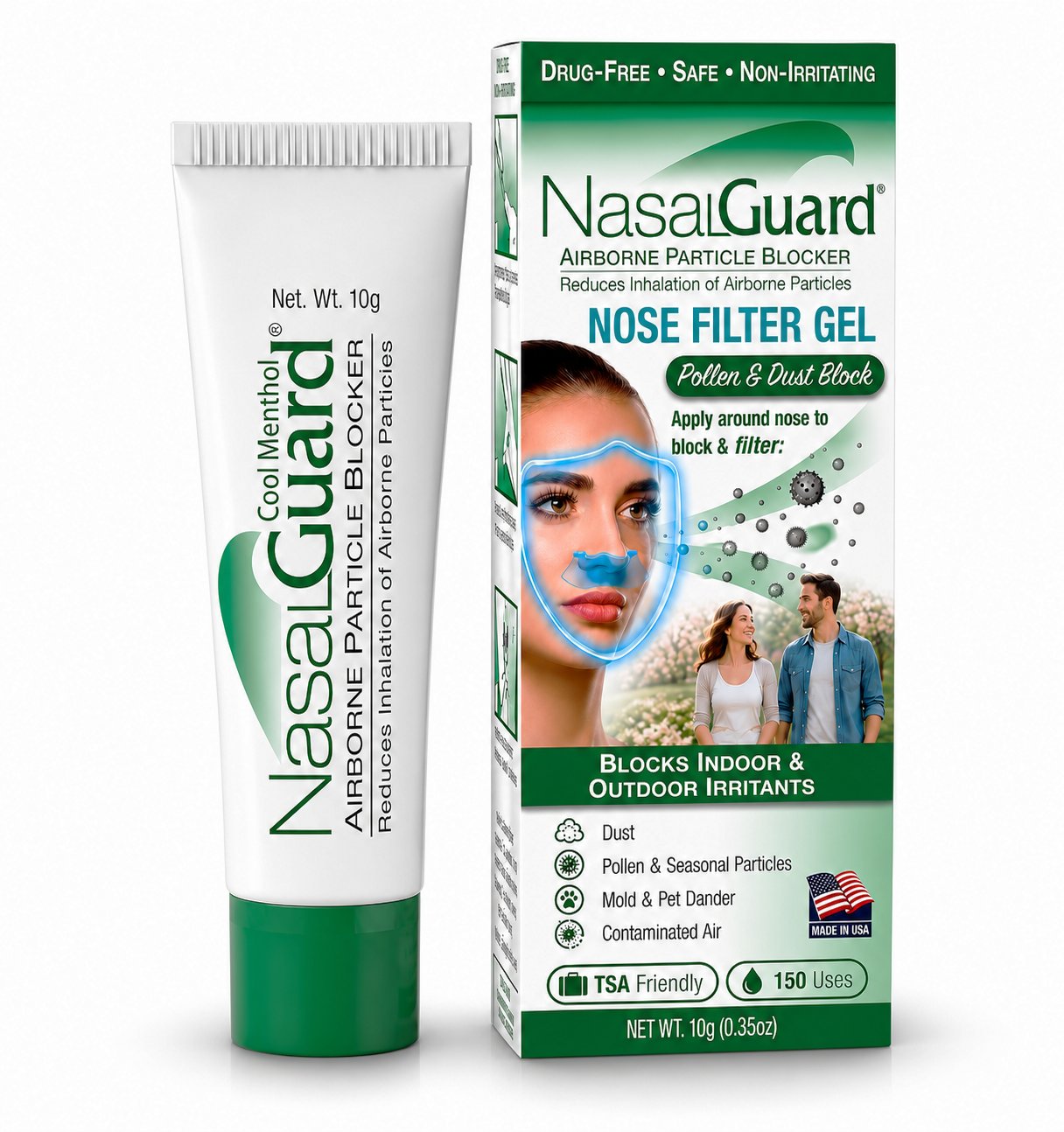
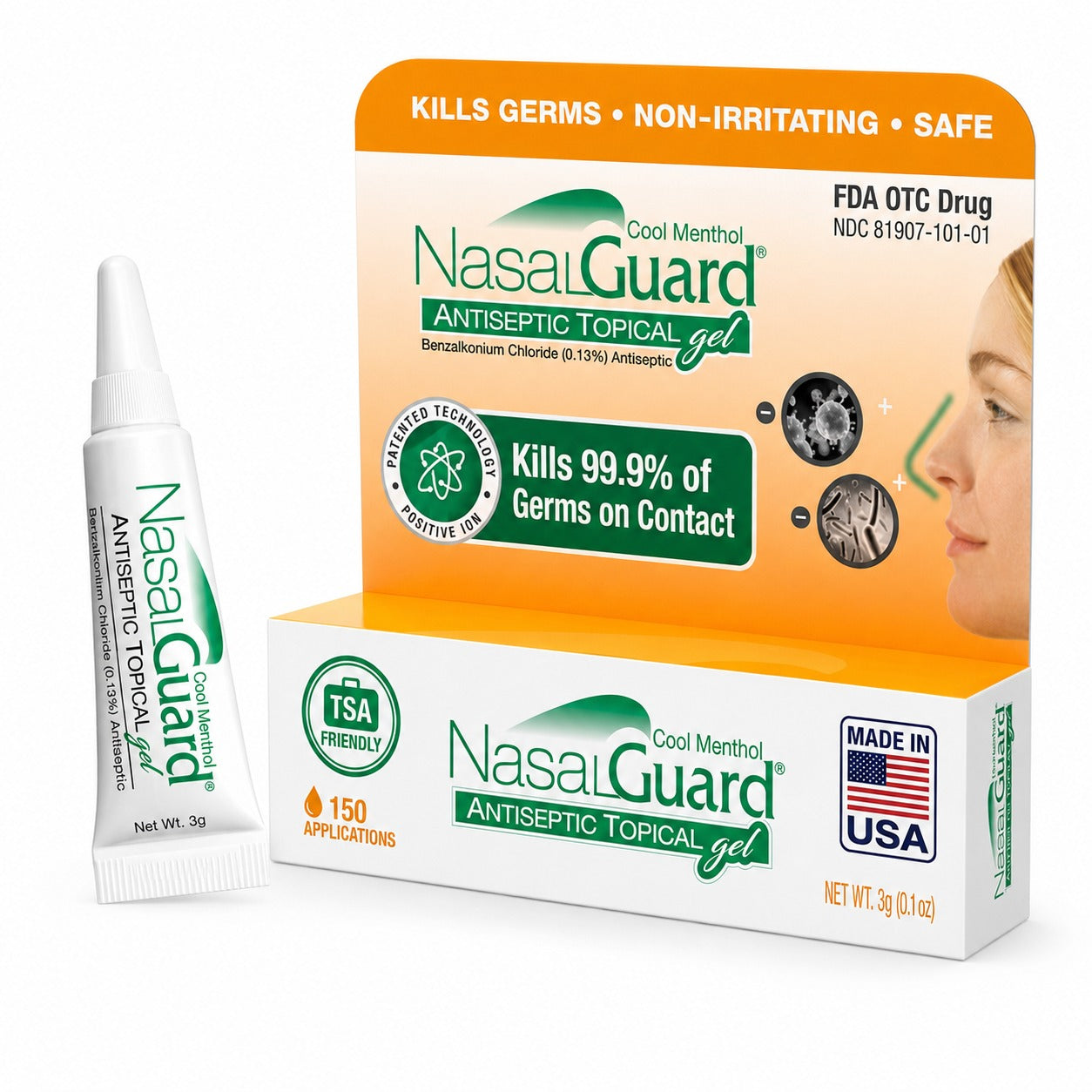
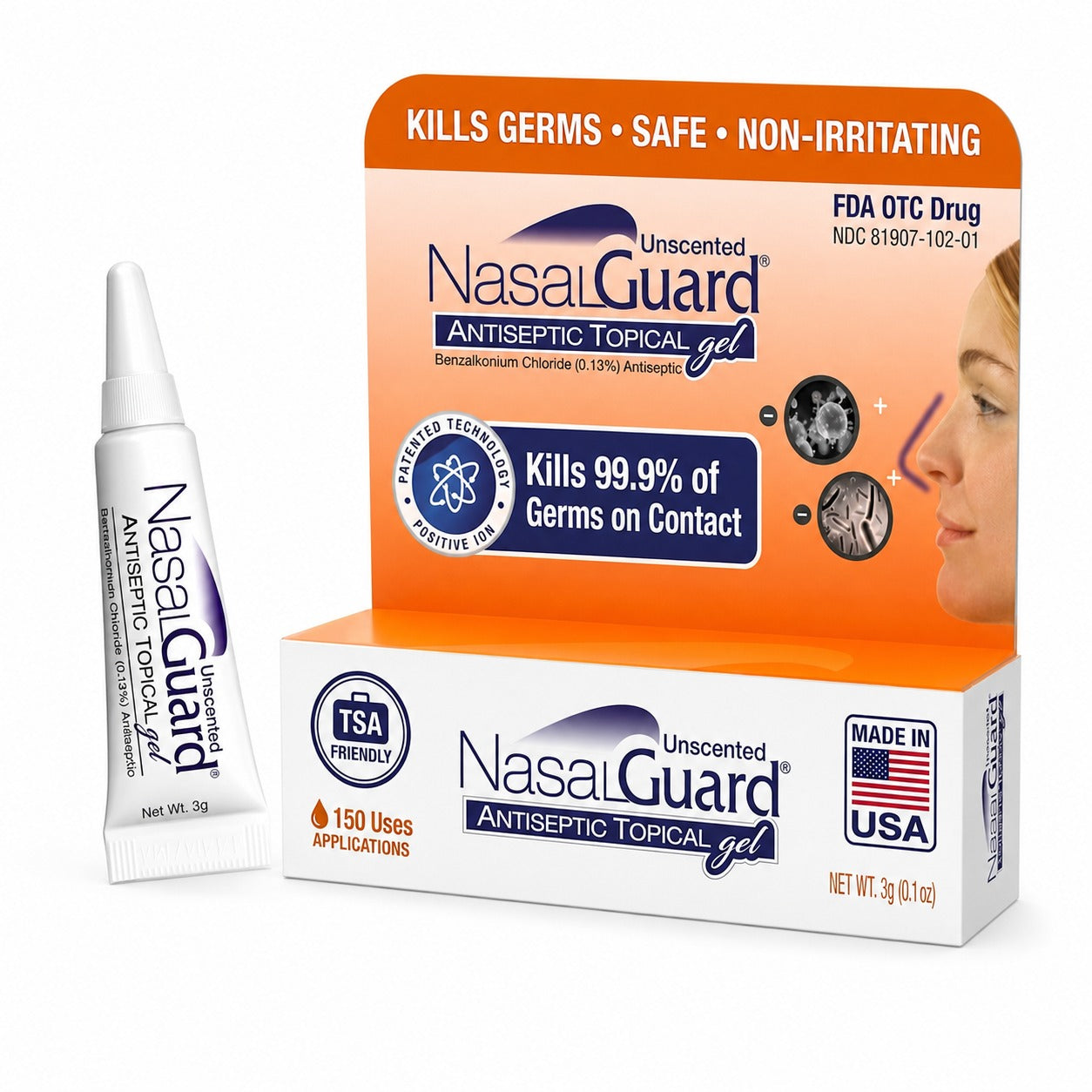
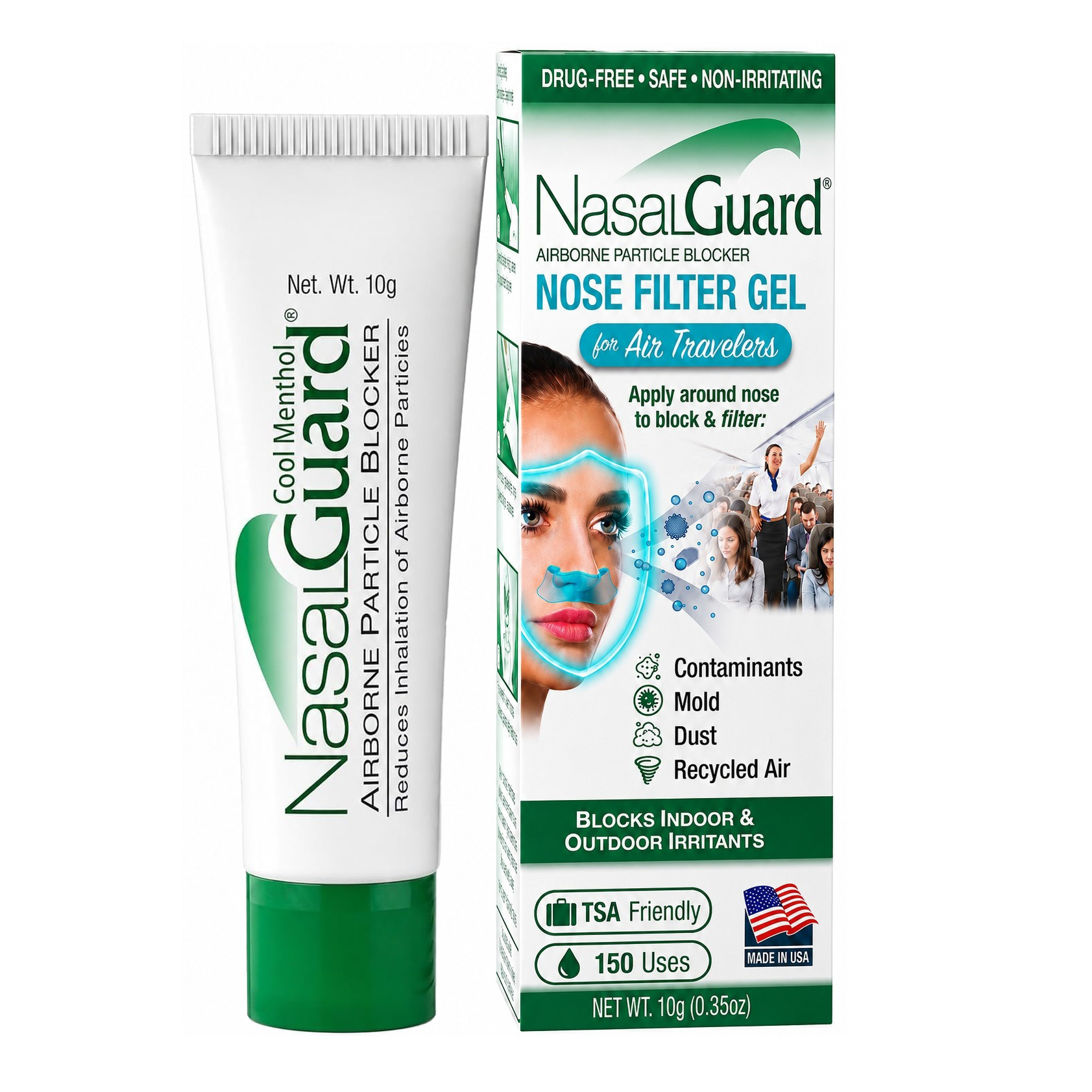
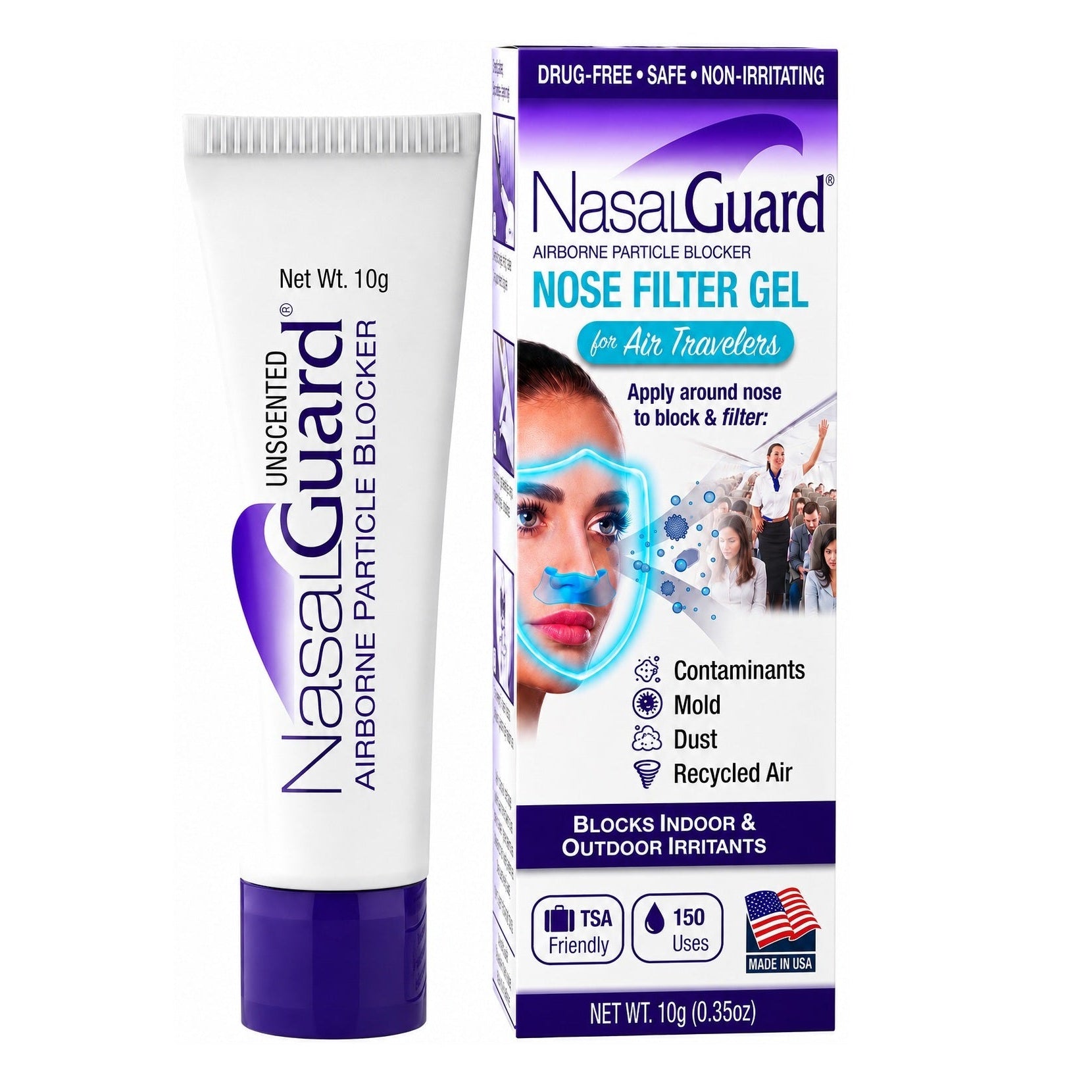
Scent. Unscented if you want nothing you can smell on a long flight. Cool Menthol if you like a fresh, cool feel.
Size. The 3g tube is small enough to live in a jacket pocket. The 10g tube makes sense if you fly often or are packing for two.
One practical tip: small tubes are easy to lose in a big bag. Give yours a permanent home, like the same zip pocket of your carry-on every trip, so you can find it at the gate without unpacking.
How to pack it for airport security
TSA's 3-1-1 rule covers liquids, gels, and aerosols in carry-on bags. Each container can hold up to 3.4 ounces (100 milliliters), and everything goes into one quart-size bag per passenger. A 3g or 10g tube of NasalGuard is a tiny fraction of that limit.
The 3-1-1 rule for liquids, gels, and aerosols. Source: TSA.
Put the tube in your quart-size liquids bag with your other toiletries.
Keep the bag near the top of your carry-on so it comes out fast at screening.
After screening, move the tube to a pocket so it is within reach at the gate and on the plane.
Rules can change, so check TSA's 3-1-1 page before a trip.
How to apply NasalGuard before your flight
The steps take about as long as putting on lip balm:
Wash and dry your hands.
Place a small amount on a fingertip.
Spread it between your thumb and finger.
Apply around the outside of the nostrils and above the upper lip.
It goes on the outside only and is not intended to be inserted into the nose. Once it is on, the gel is invisible.
A travel-day timeline
Think of the day in stretches rather than one application at dawn. Apply before each stretch where you will be in busy, shared air, and reapply according to the current product directions.
Five points in a travel day to apply or reapply, as directed.
Before you leave for the airport. Apply at home or in the car, after you have washed your face.
After security. Screening lines are packed and slow. Check your application once you are through.
At the gate, before boarding. Boarding is the most crowded few minutes of the trip, from the gate line to the jet bridge.
On a connection. If you wash your face or freshen up between flights, reapply afterward.
Before the last leg home. Long travel days blur together. A quick reapplication before the final flight is easy to forget, so set a phone reminder.
Reapply any time the area becomes wet, such as after washing your face, a hot drink that leaves your upper lip damp, or wiping your nose.
Your carry-on checklist for holiday travel
A short list that keeps your travel kit in one place:
Quart-size liquids bag with toiletries and your NasalGuard tube
Refillable water bottle (empty through security, fill it after)
Headphones or earplugs for the cabin
Lip balm and a small moisturizer
A light layer, since cabin temperatures vary
Phone charger and a short cable that reaches from the seat-back port
A second NasalGuard tube in your coat pocket if you are traveling with family
Frequently asked questions
Can I bring NasalGuard through airport security?
Yes. TSA's 3-1-1 rule lets each passenger carry gels in containers of up to 3.4 ounces (100 milliliters) inside one quart-size bag. NasalGuard's 3g and 10g tubes are far smaller than that limit. Pack the tube in your liquids bag and check TSA's site before you fly in case rules change.
When should I apply NasalGuard before a flight?
Apply it before you head into the busiest parts of the trip, such as the security line and the gate area, and again as directed on the current label. Reapply after the area becomes wet, for example after washing your face in an airport restroom.
Which NasalGuard is for air travel?
NasalGuard® Airborne Particle Blocker For Air Travelers comes in Unscented and Cool Menthol, in a 3g tube and a 10g tube. The 3g size fits a pocket or small bag; the 10g size suits frequent flyers.
Does NasalGuard go inside the nose?
No. Apply a small amount around the outside of the nostrils and above the upper lip. It is not intended to be inserted into the nose.
Your next step
Before you pack for Thanksgiving, decide on your scent and size and put the tube straight into your liquids bag so it cannot be left behind. NasalGuard® Airborne Particle Blocker For Air Travelers is a simple, externally applied barrier step for everyday airborne particles at airports, on airplanes, and in other travel settings. Use it as directed.
Christine Walek writes for the NasalGuard editorial team about air quality, travel, and the everyday airborne particles we share space with. Articles are reviewed against current product labeling before publishing.