We've sent you an email with a link to update your password.
Reset your password
We will send you an email to reset your password.
NasalGuard for Commuting: A Routine for Trains, Buses, and Walks
Christine Walek
0 comments
It is 7:40, the platform is busy, a bus pulls away from the curb, and a gust sends dry leaves across the stairs. A commute packs a lot of different air into one short trip.
Here is a simple NasalGuard for commuting routine: when to apply it, what to keep in your bag, and how to fit it into the trip home.
Where everyday airborne particles show up on the way
Most commutes pass through a handful of settings, each with its own mix of everyday airborne particles:
Sidewalks and bus stops next to traffic, where pollution and road dust hang around the curb.
Stations and platforms, where dust settles and gets stirred up every time a train arrives or a crowd moves through.
Parks and tree-lined streets, with pollen in spring and dry leaf litter in fall.
Lobbies, stairwells, and shared rides, where you share space with whatever others carry in on their coats, including pet dander.
You cannot pick the air on a platform. You can pick a routine that goes with you.
Before you leave: apply at home
The easiest moment to apply is at the bathroom mirror, right before your coat goes on. Your hands are clean, the light is good, and it is one less thing to do on a moving train.
Place a small amount on a fingertip.
Spread it between the thumb and finger.
Apply around the outside of the nostrils and above the upper lip.
The gel is milky white on your fingertip and goes on invisibly once spread. Follow the current directions on the label for how much to use.
Milky white on the fingertip, invisible once spread. Apply at home before your coat goes on.
What to keep in your commuter bag
A 3g tube is small enough for a coat pocket, a tote's front pocket, or the zip pouch where your keys live. A few small habits keep it easy to find:
Give it one permanent spot, the same pocket every day, so you are not digging for it on the platform.
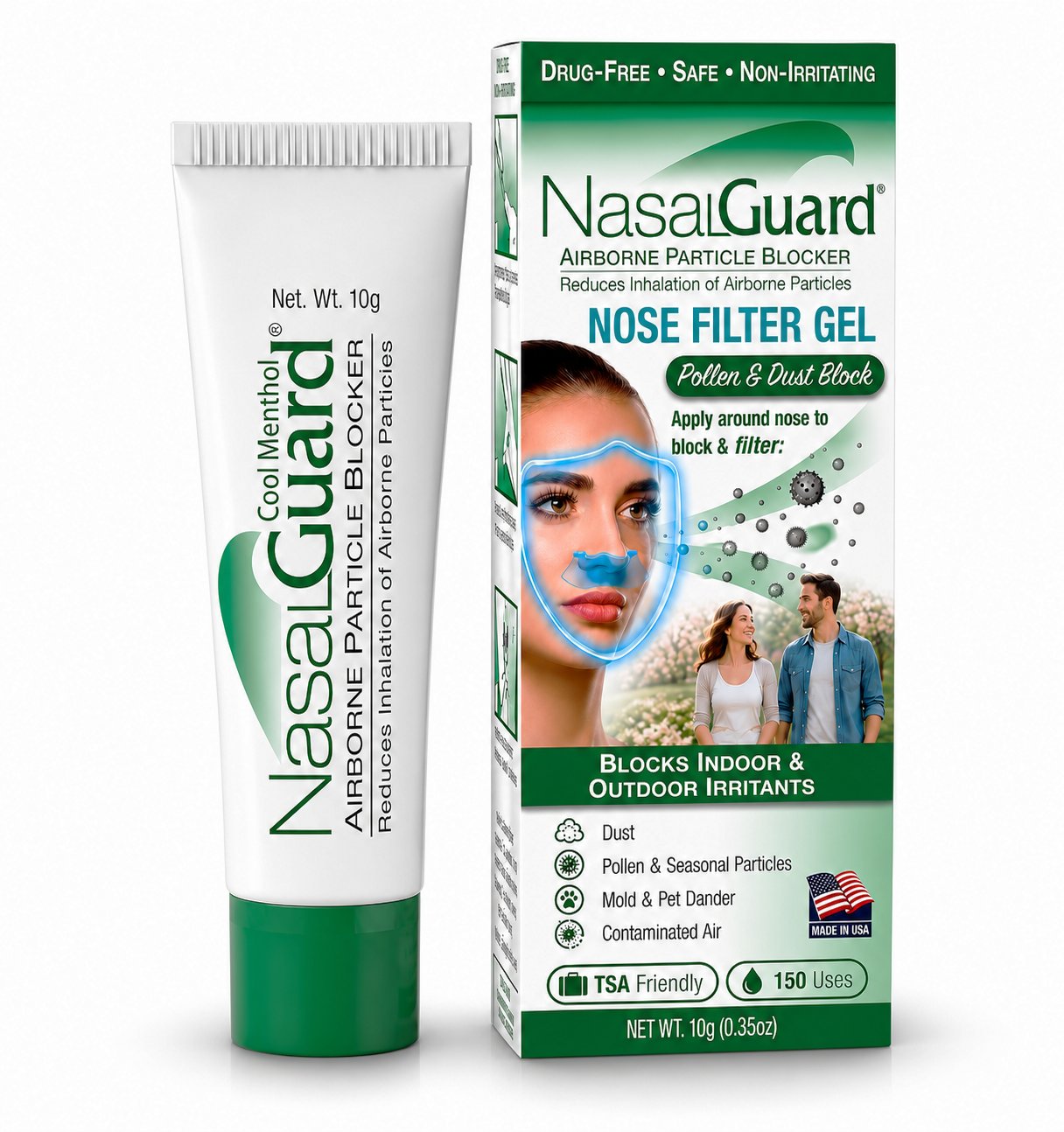
Keep the 10g tube at home by the bathroom sink, and the 3g tube in your bag.
If you split time between home and the office, a second 3g tube in your desk drawer saves a trip back.
Keep the cap on tight and the tube out of direct sun on a window seat.
When to reapply on a commute day
Reapply according to the current directions and after the area becomes wet. On a commute, "wet" happens more than you might expect: a walk through rain or snow, washing your face after a lunchtime workout, or wiping your nose and lip with a napkin.
A natural checkpoint is the end of the workday. Before you head back out for the ride home, check the label directions, wash your hands, and reapply if it is time. That way the trip home gets the same routine as the trip in.
Where NasalGuard fits in a commute day. Reapply according to the current directions and after the area becomes wet.
Which NasalGuard fits a commute
For most commuters, the everyday line is the one to start with. NasalGuard Airborne Particle Blocker Pollen & Dust Block comes in two scents:
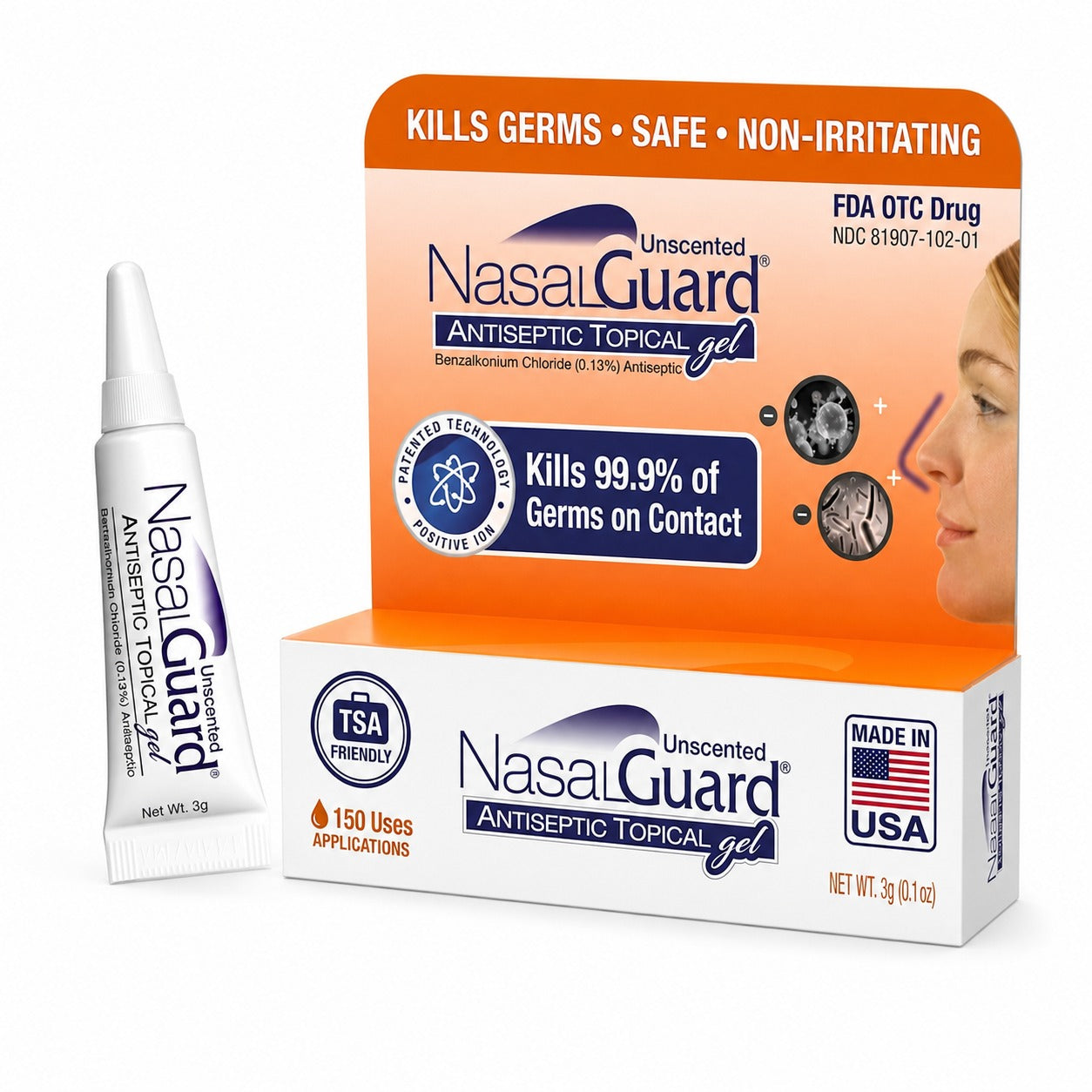
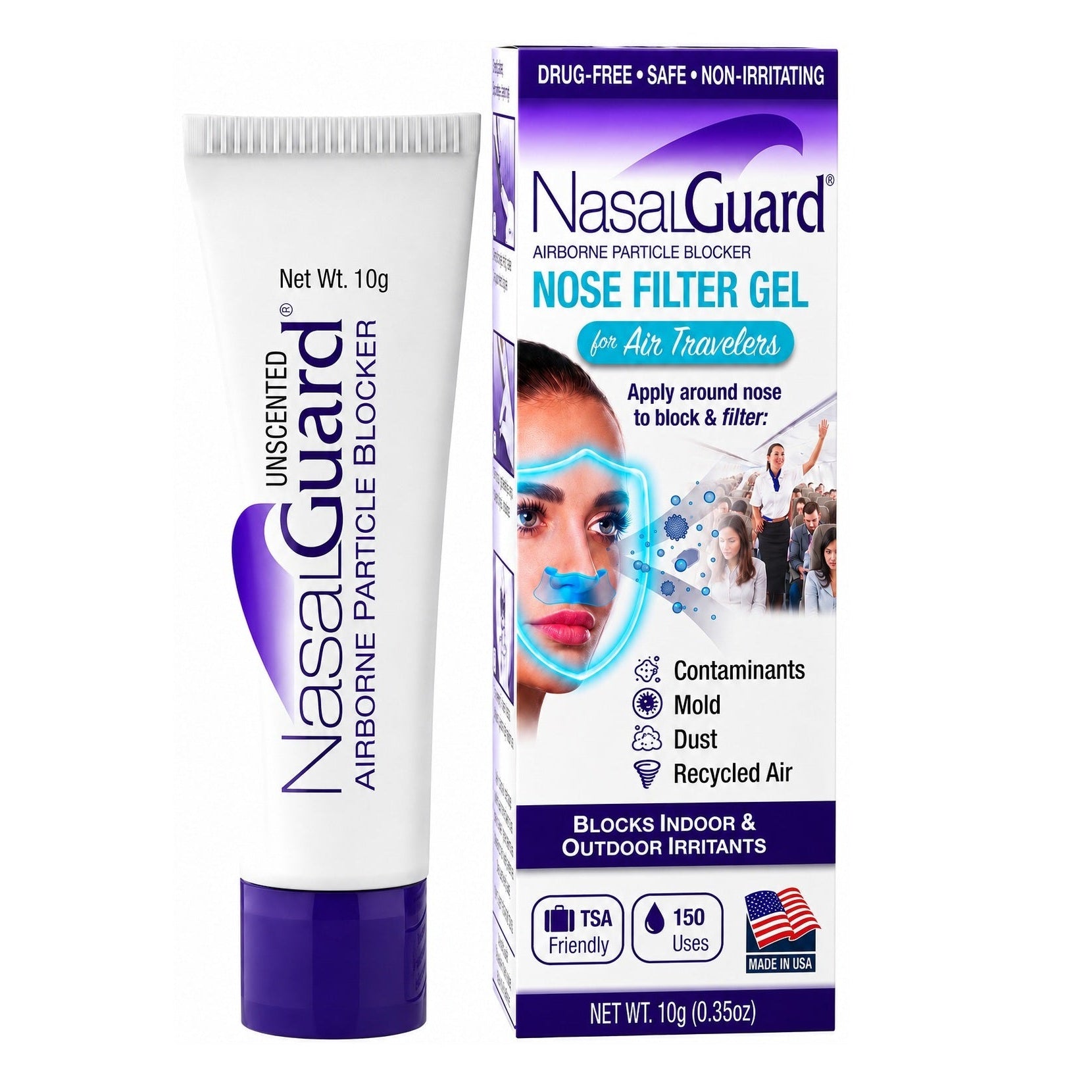
Unscented, 3g, if you prefer nothing to smell on a crowded train or in a shared office.
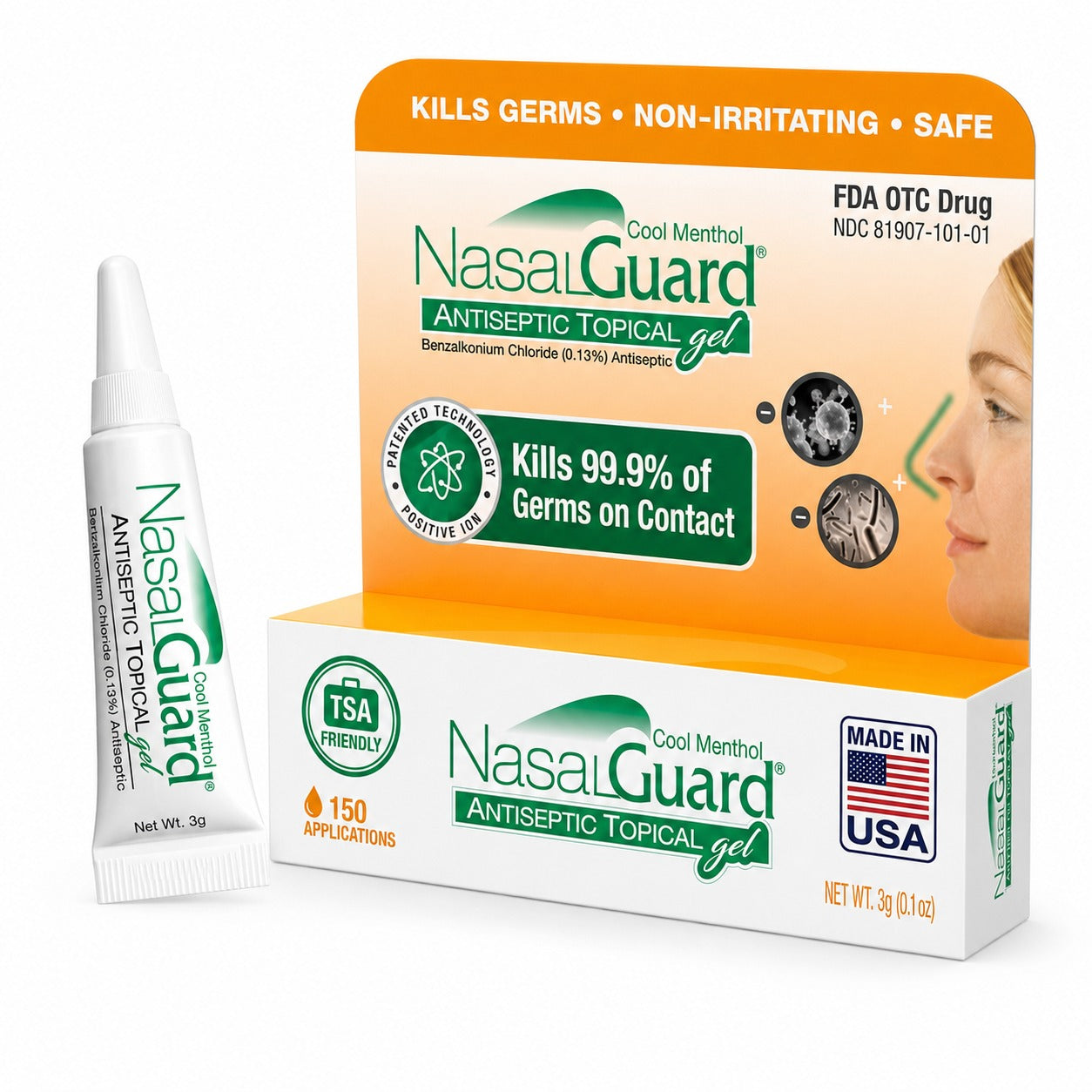
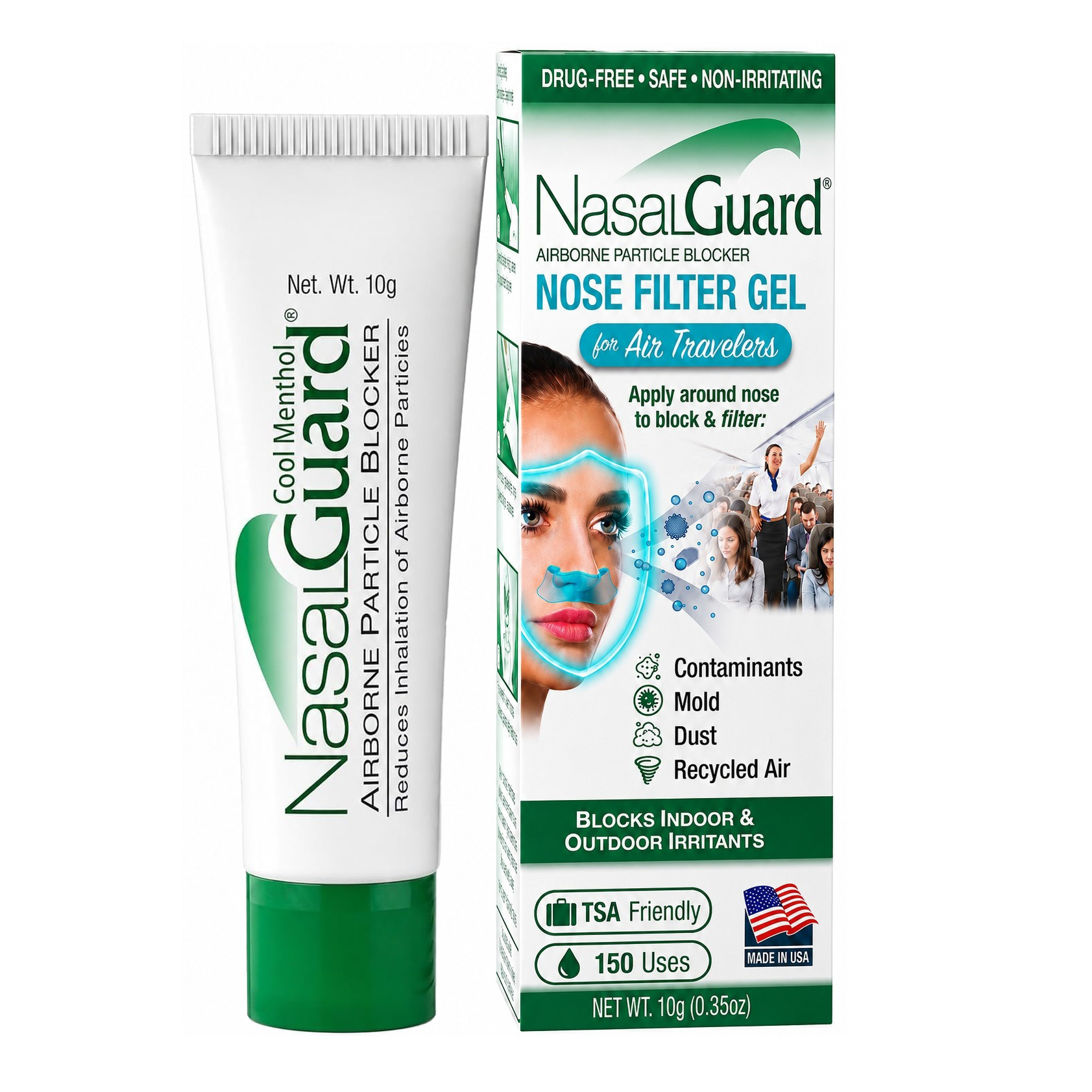
Cool Menthol, 3g, if you like a fresh, cool scent when you apply it.
For the bathroom shelf, the 10g Unscented tube is the larger size. If your commute sometimes ends at an airport, the For Air Travelers 3g tube is made for airports, airplanes, and other travel settings. You can compare every version on the all products page, and our yard work routine shows the same steps for weekends outdoors.
Frequently asked questions
Can I apply NasalGuard on the train?
You can, but it is easier at home before you leave, with clean hands and a mirror. If you do apply on the go, use a clean fingertip, place a small amount on it, spread it between the thumb and finger, and apply around the outside of the nostrils and above the upper lip. Follow the current directions on the label.
Does NasalGuard show on your face?
NasalGuard is a milky-white gel when it first comes out, and it goes on invisibly once you spread it into a thin layer around the outside of the nostrils and above the upper lip. Use a small amount and follow the current directions for how much to apply.
Do I need to reapply NasalGuard after rain?
Reapply according to the current directions and after the area becomes wet. A walk through rain or snow, washing your face, or wiping your nose and lip all count. Keeping a 3g tube in the same pocket of your bag makes it easy to reapply before the trip home.
Which NasalGuard size fits a commuter bag?
The 3g tube is the smaller size and easy to carry. It fits a coat pocket, a tote's front pocket, or a small zip pouch. A simple setup is a 10g tube at home and a 3g tube in your bag. Choose Unscented or Cool Menthol based on whether you like a scent.
Tonight, put a 3g tube in the pocket of the bag you carry tomorrow, and set it next to your keys. NasalGuard® Airborne Particle Blocker is an invisible, drug-free gel applied around the outside of the nostrils and above the upper lip to help reduce inhalation of everyday airborne particles such as pollen, dust, and pet dander. Start with NasalGuard Airborne Particle Blocker Pollen & Dust Block, Unscented, 3g, and use it as directed.
Christine Walek writes for the NasalGuard editorial team about air quality, travel, and the everyday airborne particles we share space with. Articles are reviewed against current product labeling before publishing.