We've sent you an email with a link to update your password.
Reset your password
We will send you an email to reset your password.
Positive Ion Technology: What It Means in NasalGuard
Christine Walek
0 comments
Spend a minute with NasalGuard® Airborne Particle Blocker and you will run into three words that sound like they belong in a lab: positive ion technology. People search for the phrase, and it is a fair thing to wonder about before you buy a small tube of gel.
Here is what positive ion technology means in plain language, where the gel goes, what you will notice when you use it, and what the phrase does not mean.
Positive ion technology in one sentence
Here is the description we use, word for word:
Positive ion technology creates an invisible gel barrier around the outside of the nostrils, designed to help reduce contact with everyday airborne particles.
That sentence is short, and each part does a specific job. Taken in order:
The description of NasalGuard Airborne Particle Blocker, in four parts.
Positive ion technology is the name of the approach used in the gel.
Invisible gel barrier says what you end up with on the skin.
Around the outside of the nostrils says where it goes.
Designed to help reduce contact says what it is for, in measured terms. It is a barrier step for particles such as pollen, dust, and pet dander. It does not stop every particle.
We keep to that wording on purpose. It is what the current product information supports, so you will not find a chemistry lesson here.
Where the gel barrier goes
Placement is the part you control. The gel goes on the skin, and the barrier belongs in two spots:
Around the outside of the nostrils and above the upper lip. Use as directed on the current product label.
Place a small amount on a fingertip.
Spread it between the thumb and finger.
Apply around the outside of the nostrils and above the upper lip.
Reapply according to the current directions and after the area becomes wet. For the fuller walk-through, including how to fit it around a flight, see how to apply NasalGuard before a flight.
What you notice when you use it
The word "technology" can make people picture something more complicated than a small tube. In daily use, it looks like this:
In the tube and on your fingertip, the gel is milky white.
Once spread, it goes on invisibly.
There is nothing to switch on. No battery, no charging, no device to carry. It is a topical gel.
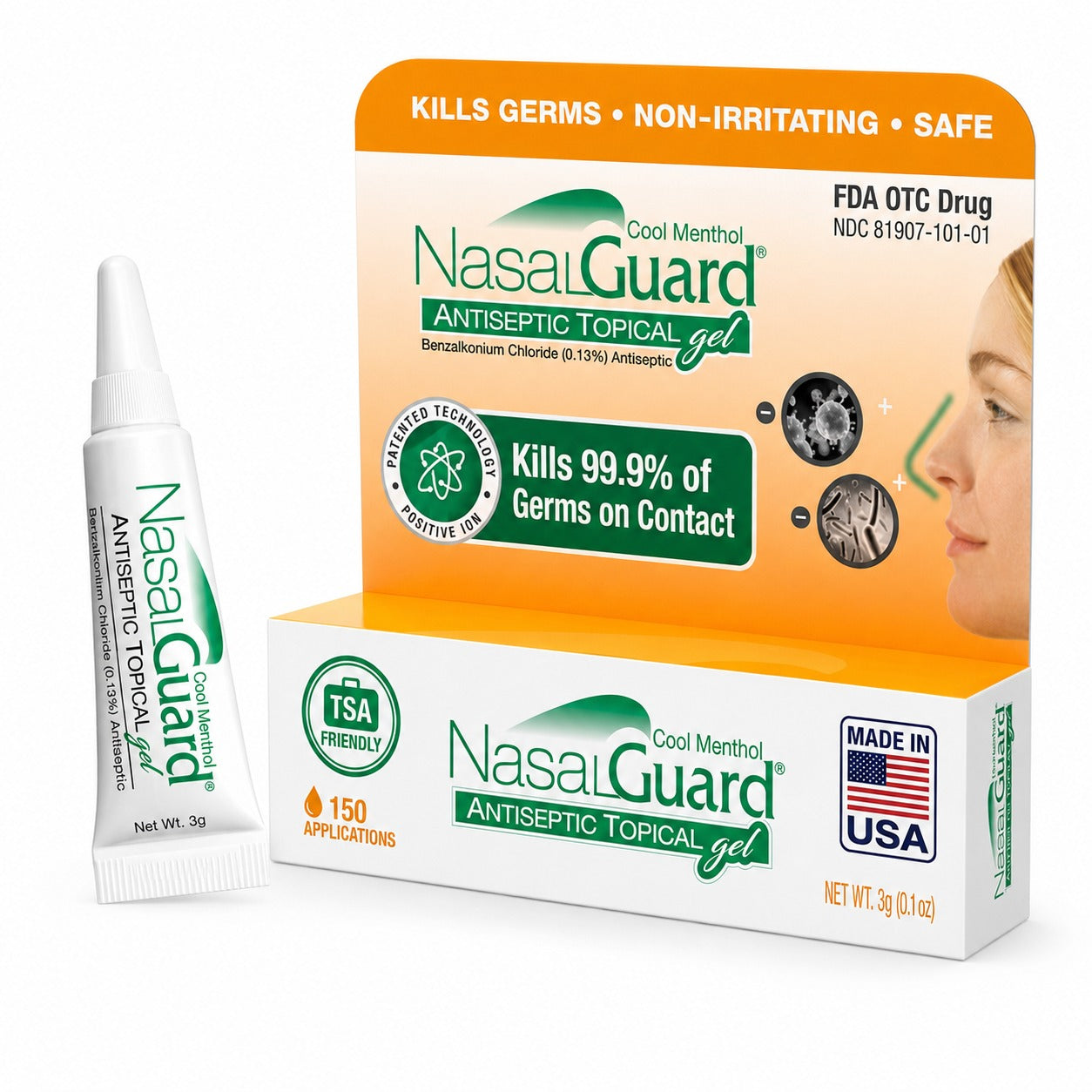
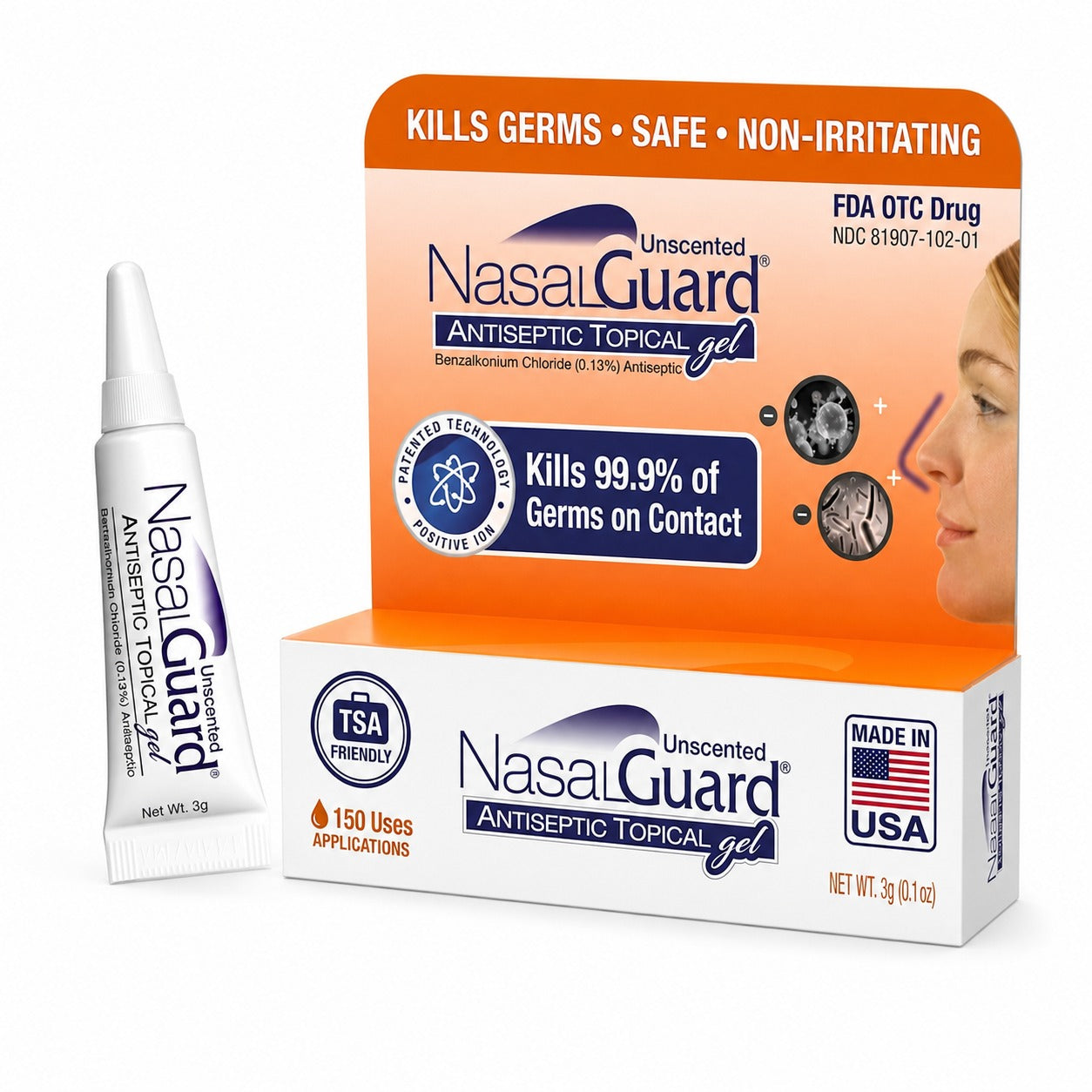
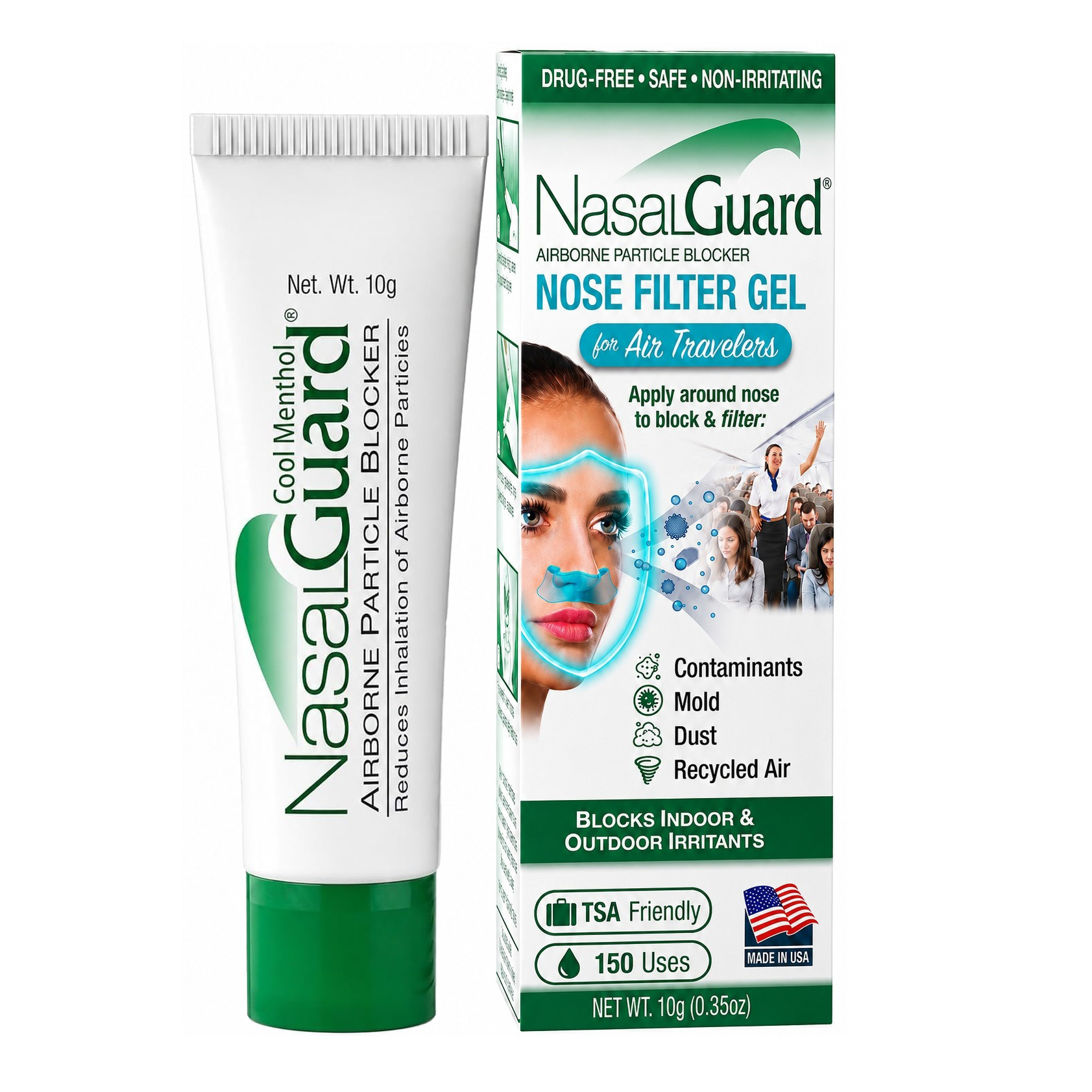
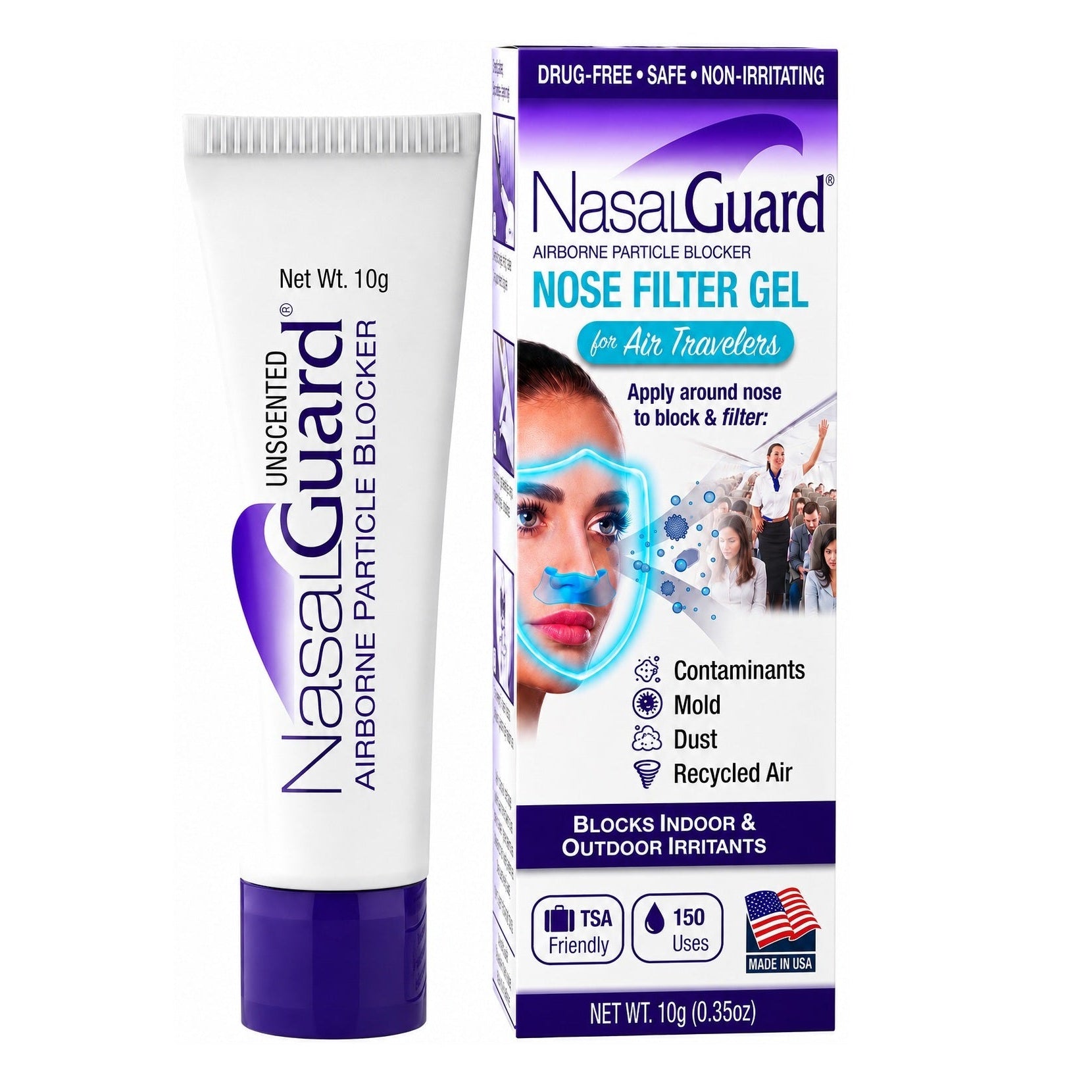
The scent is your call. Unscented suits people who prefer nothing to smell, and Cool Menthol has menthol and fragrance for a cool feel.
Wet skin is the one thing to plan around. Washing your face or wiping the area removes the gel, and that is your cue to apply it again.
What the phrase does not mean
A technical-sounding term can lead people to assume more than it says. So here is what positive ion technology is not telling you:
It is not a health claim. NasalGuard Airborne Particle Blocker is not a medicine or a drug. It is an externally applied barrier gel, and it does not stand in for anything your healthcare professional has recommended. Please keep following that advice.
It does not change where the gel goes. It is not intended to be inserted into the nose.
It does not describe air cleaning. The phrase is about a gel on your skin. It says nothing about the air in a room, and it sits alongside what you already do for your home's air, like changing a furnace filter.
It does not set a time. For how long to expect it to stay in place, use the directions on the current product label.
This article covers the Airborne Particle Blocker line. NasalGuard also makes a separate product with its own label, and the wording here does not carry over to it.
Within the line, the barrier approach is the same, and the differences are practical:
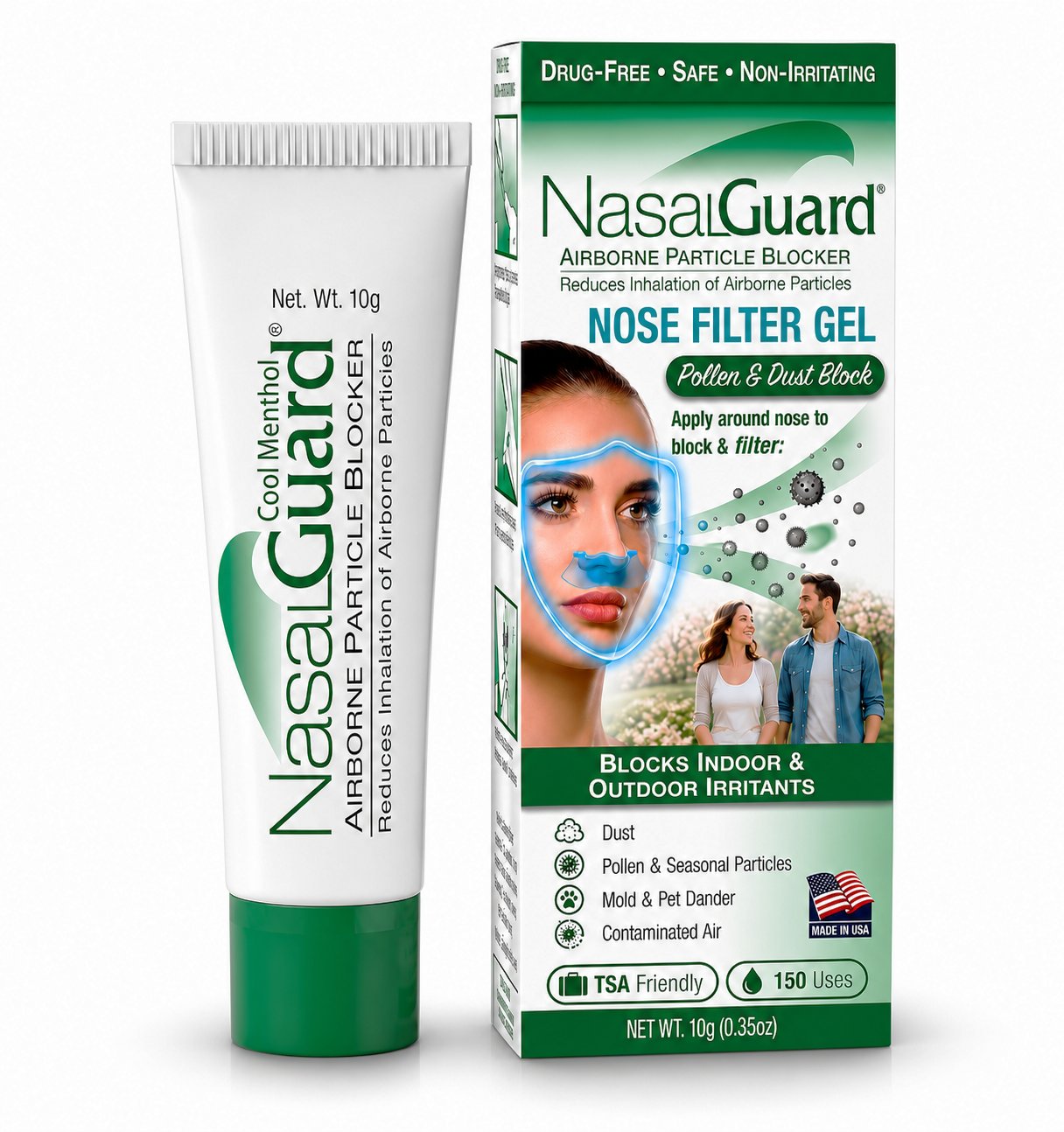
Tube size: 3g for a pocket or carry-on, or 10g for a tube that stays in one place, like by the back door.
Three questions to ask of any product wording
When you read a description of a gel like this one, these questions will tell you a lot:
Does it name the exact product? A claim should point to a specific product and version.
Does it say where the product goes? Ours says around the outside of the nostrils and above the upper lip.
Is the language measured? Words like "helps" and "designed to" describe a barrier step. Absolute promises should make you look closer.
If a phrase still leaves you unsure, go back to the current label and directions, which are the final word on how to use the product.
Frequently asked questions
What is positive ion technology?
It is the name of the approach used in NasalGuard Airborne Particle Blocker. NasalGuard uses positive ion technology to create an invisible gel barrier around the outside of the nostrils, designed to help reduce contact with everyday airborne particles such as pollen, dust, and pet dander.
Does NasalGuard go inside the nose?
No. Use it only as directed. Apply it around the outside of the nostrils and above the upper lip. NasalGuard Airborne Particle Blocker is not intended to be inserted into the nose, and it stays on the skin once you have spread it into a thin layer.
Is NasalGuard a medicine?
No. NasalGuard Airborne Particle Blocker is not a medicine or a drug. It is an externally applied barrier gel designed to help reduce contact with everyday airborne particles. It does not stand in for anything your healthcare professional has recommended, so please keep following that advice.
Does positive ion technology need a battery or a device?
No. There is nothing to charge or switch on. NasalGuard is a topical gel in a small tube. You place a small amount on a fingertip, spread it between the thumb and finger, and apply it around the outside of the nostrils and above the upper lip.
How long does NasalGuard last?
Use the duration and reapplication directions on the current product label. Reapply according to those directions and after the area becomes wet, for example after you wash your face. Since the gel sits on the skin, wiping the area also removes it, so apply it again if that happens.
Think of the one setting where you would use a barrier step most, then start there. NasalGuard® Airborne Particle Blocker is an invisible, drug-free gel applied around the outside of the nostrils and above the upper lip to help reduce inhalation of everyday airborne particles such as pollen, dust, and pet dander.
Christine Walek writes for the NasalGuard editorial team about air quality, travel, and the everyday airborne particles we share space with. Articles are reviewed against current product labeling before publishing.