We've sent you an email with a link to update your password.
Reset your password
We will send you an email to reset your password.
NasalGuard for Pet Owners: A Simple Winter Routine at Home
Christine Walek
0 comments
The walk is done, the leash is back on its hook, and the dog has already claimed the warm end of the couch. In winter, pets and people share the same few rooms for more of the day, and the throw blanket on that couch gets a lot of use.
This guide covers NasalGuard® for pet owners: where it fits into a winter day at home, how to apply it, the house habits that go with it, and which tube to keep where.
Pet dander and winter at home
Pet dander is made of tiny flakes of skin that dogs, cats, and other furry pets shed as part of everyday life. Pet dander is among the biological sources of indoor particles, alongside pollen and mold spores.
It does not stay in one place. The settled dust can be easily kicked up into the air by cleaning, vacuuming, and other activities like walking and crawling. In a home with a pet, add a dog shaking off at the door, a cat landing on the bed, and a few laps of the hallway after dinner.
None of that is a reason to change how you live with your pet. It is a reason to know which parts of the day stir things up, so you can plan around them.
Where pet dander settles at home
Every home is different, but the same spots tend to collect the most:
The pet bed and favorite blanket, wherever your pet naps
Upholstered furniture, especially the cushion your pet has claimed
Rugs and carpets along the routes your pet walks every day
The grooming spot, whether that is the back step or the bathroom floor
The entryway, where wet paws come in after a walk
A winter routine with NasalGuard
NasalGuard® Airborne Particle Blocker is a barrier step for time around airborne pet dander. It uses positive ion technology to create an invisible gel barrier around the outside of the nostrils, designed to help reduce contact with everyday airborne particles.
The moments pet owners tend to plan around are the ones that stir things up:
Before brushing or grooming, indoors on days too chilly to do it outside
Before washing the pet bed and throws, since gathering and shaking them out moves a lot at once
Before the weekly vacuum of rugs and furniture
Before a long evening on the couch with a pet curled up beside you
The steps:
Place a small amount on a fingertip. The gel is milky white at this point.
Spread it between the thumb and finger.
Apply around the outside of the nostrils and above the upper lip, where it goes on invisibly.
Reapply according to the current directions and after the area becomes wet, such as after washing your face or coming in from a snowy walk. NasalGuard is not intended to be inserted into the nose, and the label on your tube is the place to check how much to use and when to reapply.
Three steps before brushing or vacuuming. Follow the current label directions for your version.
House habits that pair with it
A barrier step sits alongside the way you keep the house. Here are a few everyday habits that help reduce indoor particles:
Dust with a damp cloth. Dampening the cloth helps keep settled dust from going back into the air.
Vacuum with a filter. A filter can help keep some vacuumed dust from escaping the vacuum back into the air.
Air the house out on mild days. Frequent cleaning and ventilation are effective ways to reduce dust. A few minutes with a window cracked on a sunny afternoon counts.
Wash throws and pet bedding on a set day. A fixed day of the week means it does not depend on memory.
Keep a towel by the door. Drying paws after a snowy walk keeps the entryway cleaner.
Brush outside when the weather allows. A dry, mild afternoon on the back step keeps loose fur out of the living room.
A simple setup: a 10g tube next to the grooming brush, and a 3g tube in your coat pocket for visits to friends with pets.
Frequently asked questions
When should pet owners apply NasalGuard?
Before the parts of the day that move the most pet dander around, such as brushing, washing pet bedding, vacuuming, or a long stretch on the couch with your pet. Place a small amount on a fingertip, spread it between the thumb and finger, and apply around the outside of the nostrils and above the upper lip. Use as directed.
Does NasalGuard go inside the nose?
No. NasalGuard is not intended to be inserted into the nose. Apply a small amount around the outside of the nostrils and above the upper lip. The gel is milky white on your fingertip and goes on invisibly once spread. Reapply according to the current directions and after the area becomes wet.
Is NasalGuard a medicine?
No. NasalGuard Airborne Particle Blocker is not a medicine or a drug. It is an externally applied barrier gel, designed to help reduce contact with everyday airborne particles such as pet dander. If you have questions about your own health, talk with a healthcare professional and keep following their advice.
Which NasalGuard should pet owners choose?
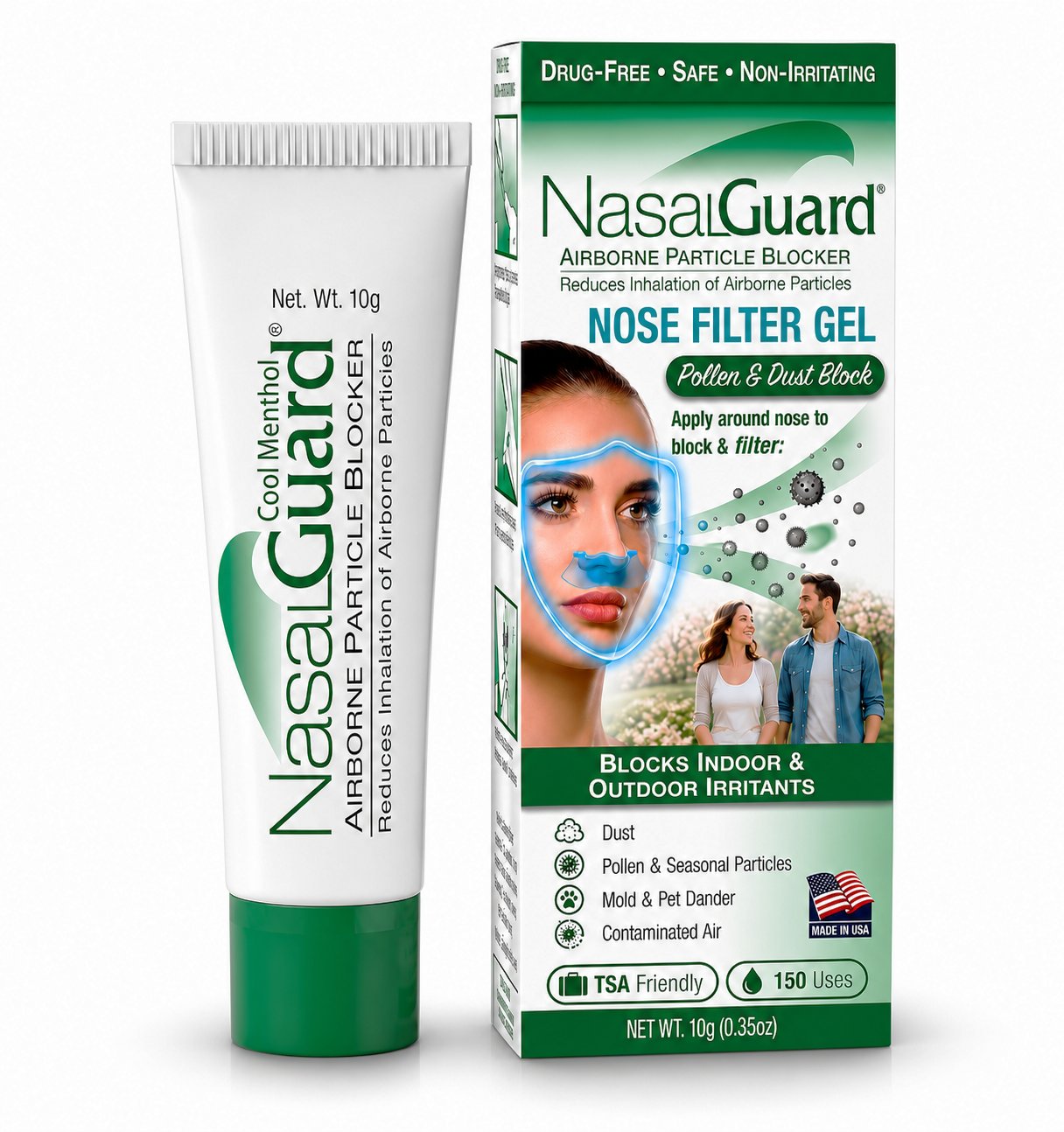
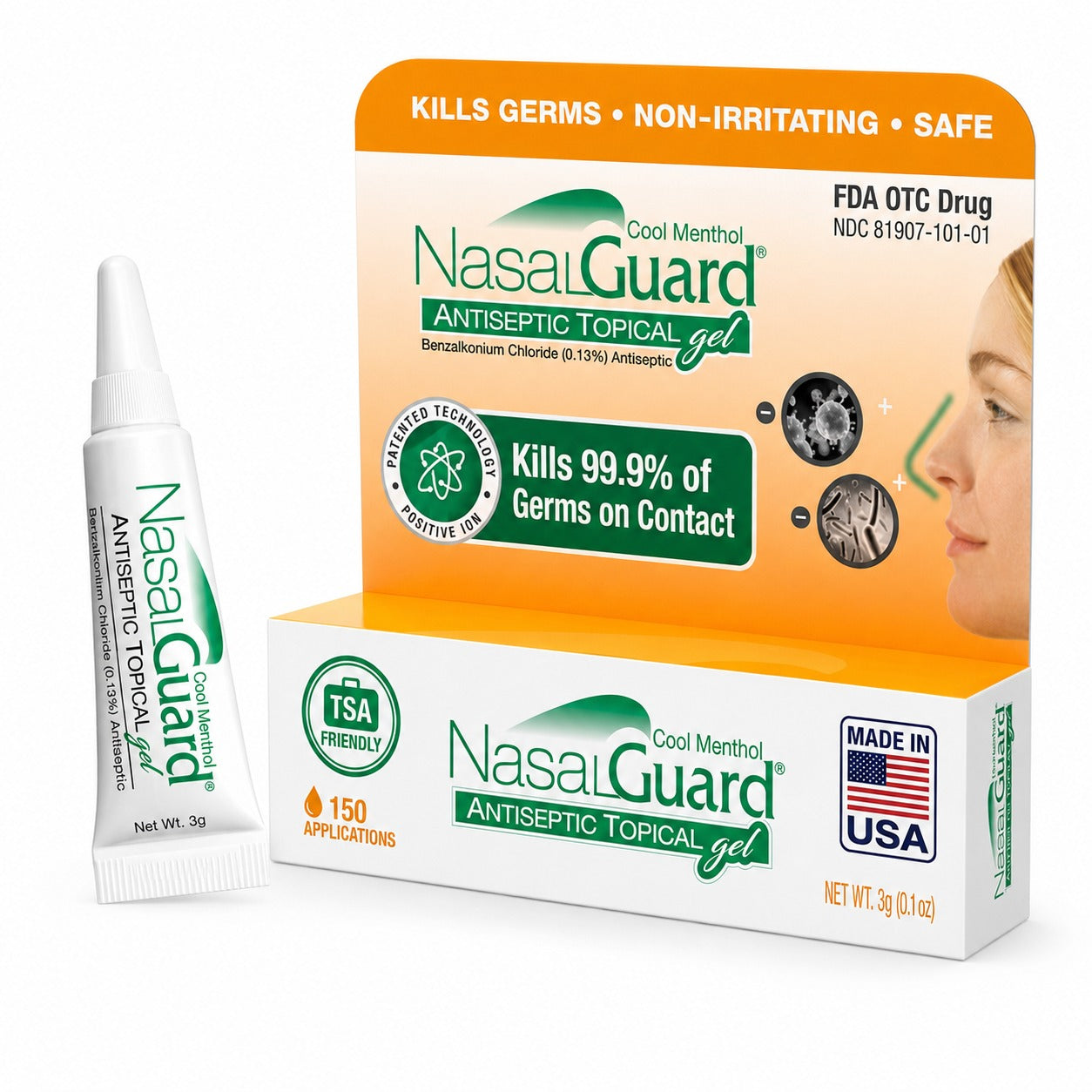
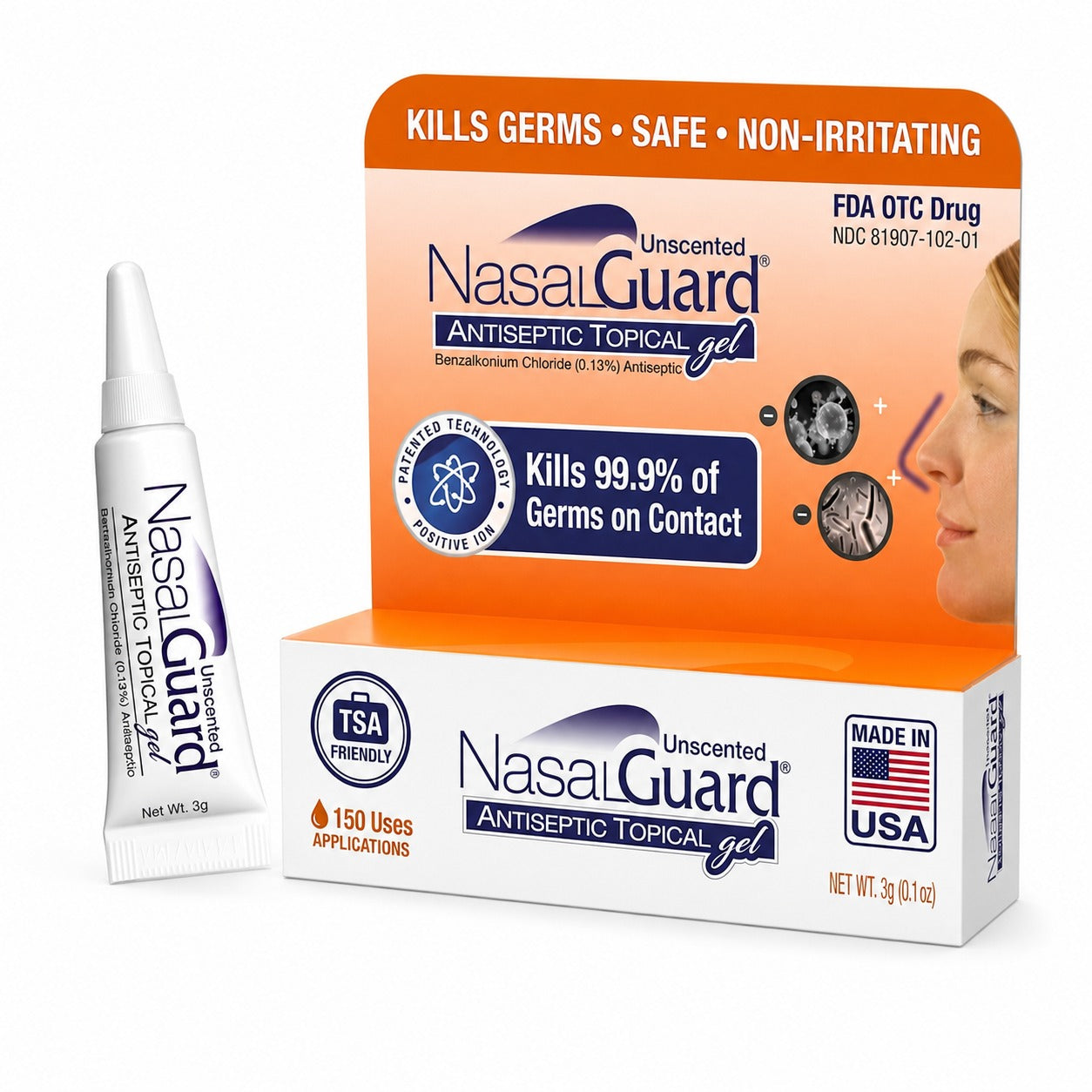
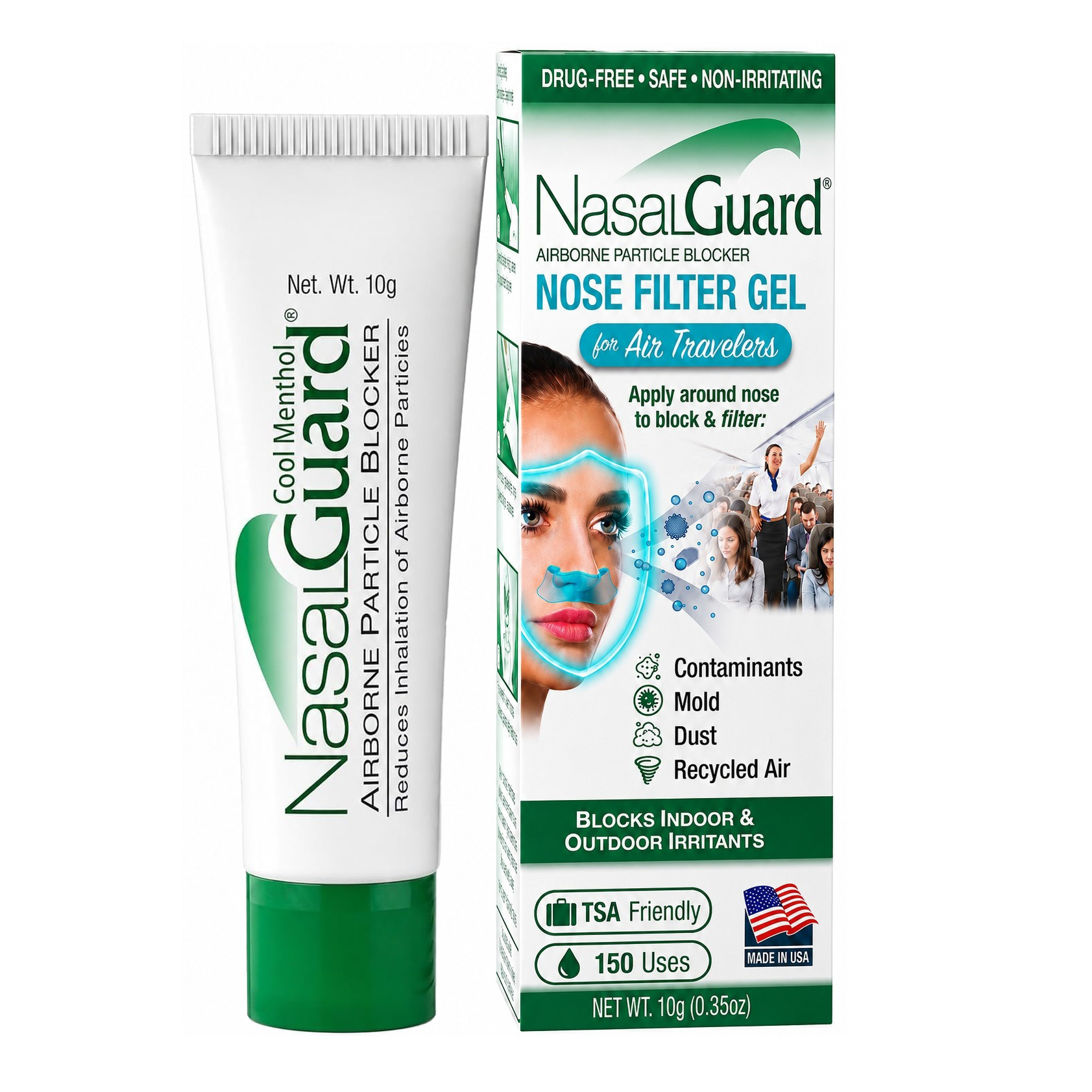
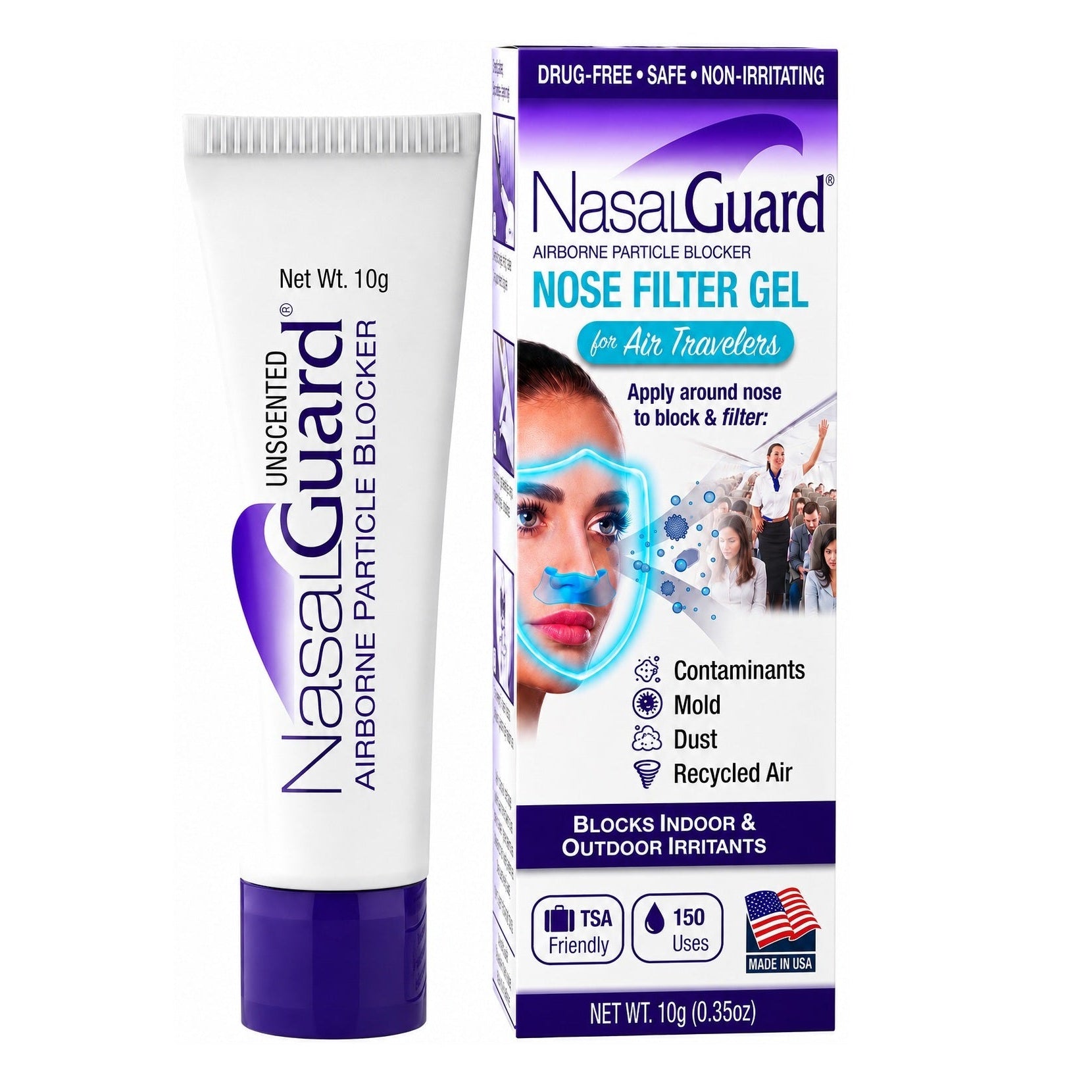
For time at home, choose NasalGuard Pollen & Dust Block. Pick Unscented for no added scent or Cool Menthol for a menthol scent, then a size: a 10g tube to keep by the leash hook or grooming brush, or a 3g tube for a coat pocket. Every version is applied the same way.
Your next step
Tonight, set a tube next to the grooming brush so it is already part of the routine before the next brushing. NasalGuard® Pollen & Dust Block is a barrier step for time around airborne pet dander. Use it as directed. See Pollen & Dust Block Unscented.
Christine Walek writes for the NasalGuard editorial team about air quality, travel, and the everyday airborne particles we share space with. Articles are reviewed against current product labeling before publishing.