We've sent you an email with a link to update your password.
Reset your password
We will send you an email to reset your password.
Nasal Gel for the Office: How NasalGuard Fits a Desk Day
Christine Walek
0 comments
By late October the office heat is on, the windows are sealed for the season, and everyone arrives with coats that spent the commute on a train seat or a car headrest. Dust settles on keyboards and shelf tops, and whatever rode in on sleeves and scarves stays in the room with you until five.
If you have searched for a nasal gel for days like that, this guide explains what NasalGuard® Airborne Particle Blocker is, what it is not, and how it fits into a normal desk day.
What a nasal gel like NasalGuard is
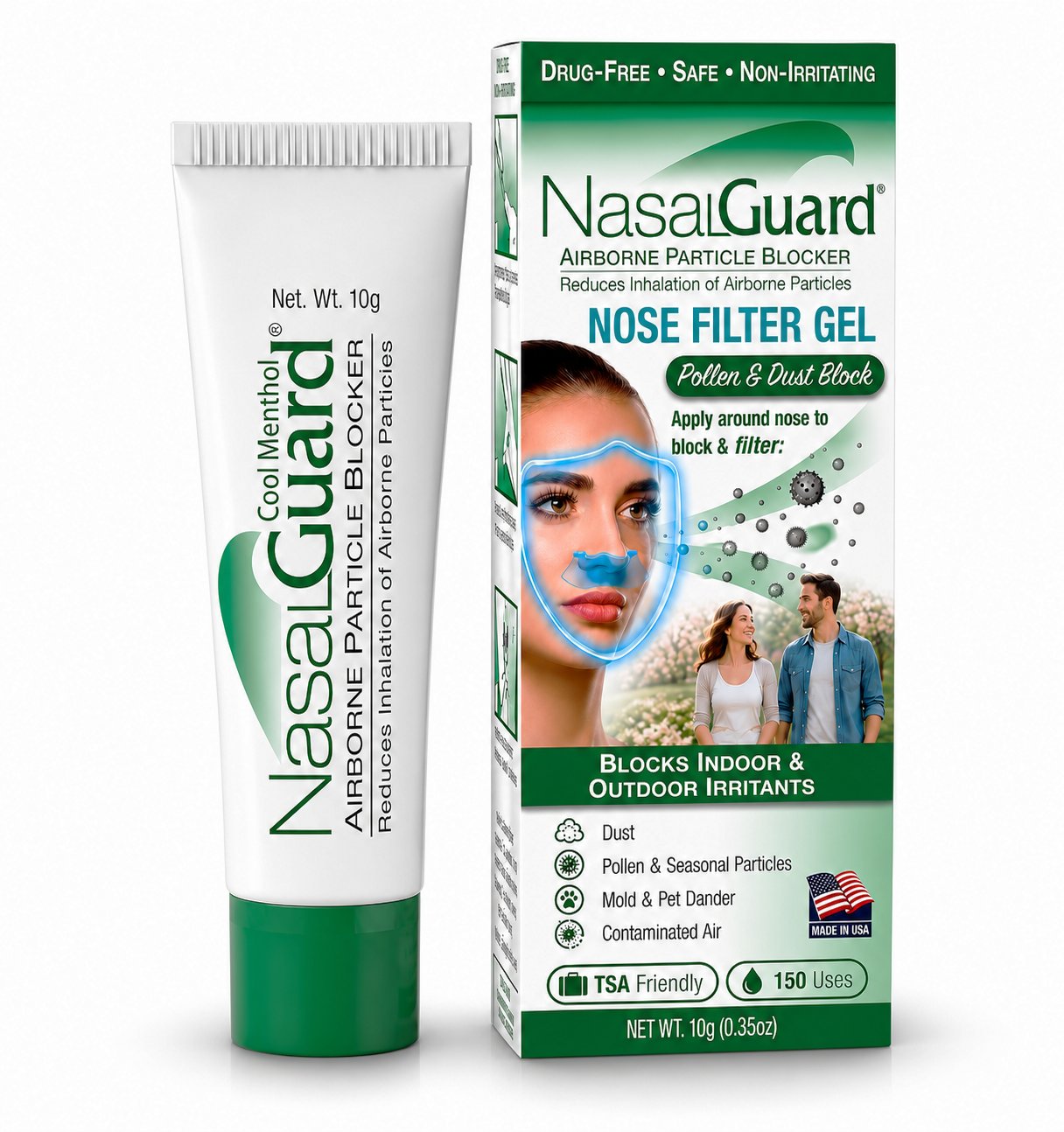
"Nasal gel" covers a lot of products, so it helps to be specific. NasalGuard® Airborne Particle Blocker is an invisible, drug-free gel applied around the outside of the nostrils and above the upper lip to help reduce inhalation of everyday airborne particles such as pollen, dust, and pet dander.
Three details define it:
It is externally applied. The gel goes around the outside of the nostrils and above the upper lip, following the current product directions.
It uses positive ion technology. Positive ion technology creates an invisible gel barrier around the outside of the nostrils, designed to help reduce contact with everyday airborne particles.
It looks different in the tube than on your face. The gel is milky white when it comes out of the tube. Once you spread it, it goes on invisibly, so nobody across the conference table will see it.
If you want the longer explanation of how the barrier works, our article Does NasalGuard Work? covers it step by step.
What it isn't
Knowing the limits makes it easier to decide whether a product fits your day. Here is what NasalGuard is not:
What the gel is and is not, at a glance. Use as directed.
Not a medicine or a drug. It is a topical gel that forms a barrier step on the skin.
Not intended to be inserted into the nose. It stays around the outside of the nostrils and above the upper lip.
Not a change to your building's air. It does nothing to the office ventilation or filters. Those stay in your facilities team's hands, and any guidance your workplace gives still applies.
The easiest routines hang off things you already do. A workday has several natural checkpoints:
A simple desk-day rhythm built around the current product directions.
Before you leave home. Apply after you wash your face and before you put on your coat. Place a small amount on a fingertip, spread it between the thumb and finger, and apply around the outside of the nostrils and above the upper lip.
On the commute. Nothing to do. The gel is already on, and the tube can ride in a coat pocket or bag.
Midday. If you washed your face after the gym, walked back from lunch in the rain, or wiped your nose, the area got wet. The directions call for reapplying after the area becomes wet, so this is the moment.
Afternoon. Reapply according to the current directions on your tube. The label, not a rule of thumb, sets the timing.
Washing your hands before you apply makes sense at any point in the day, especially at a shared desk.
Where to keep the tube at work
A tube you cannot find at 2 p.m. does not help much. A few options that work for office days:
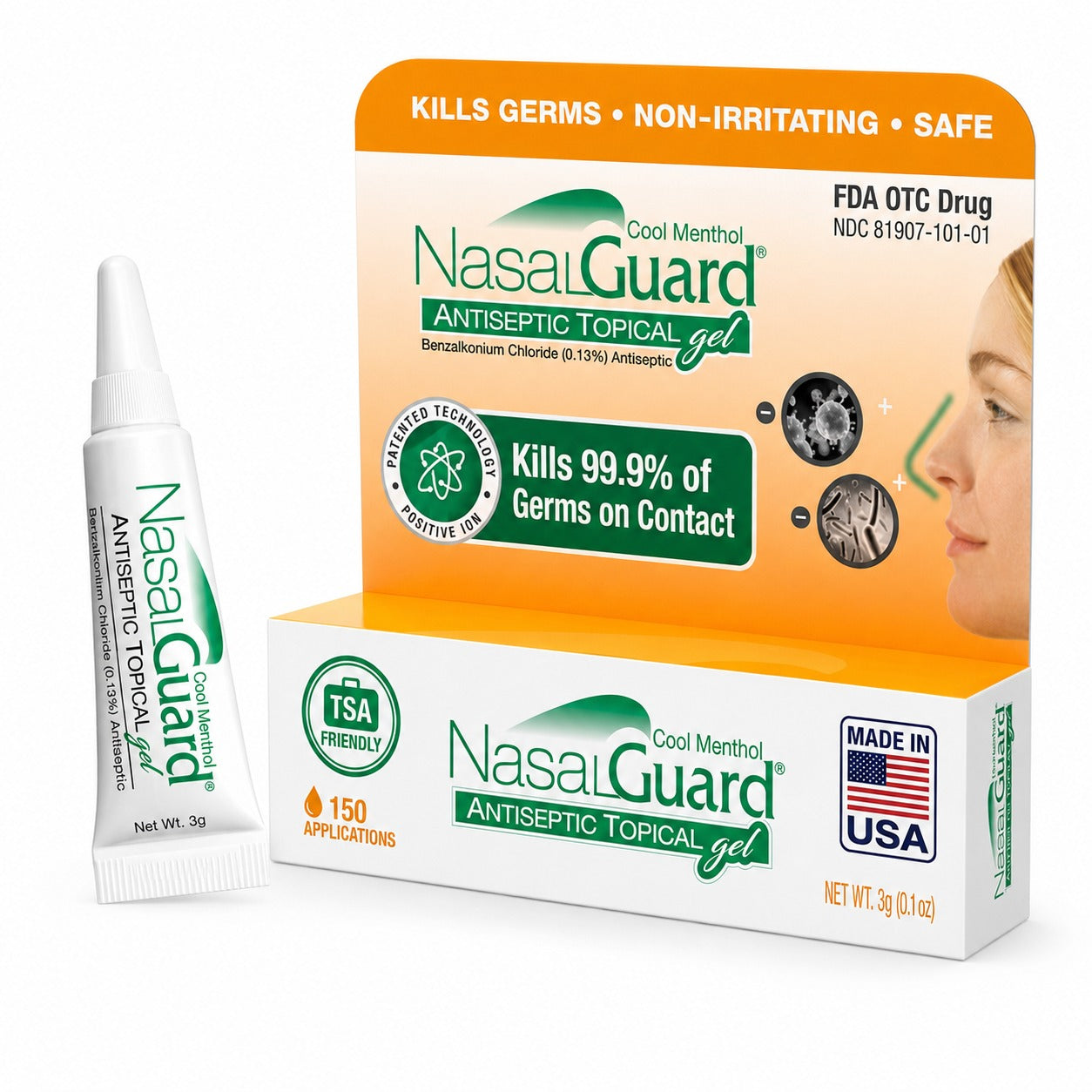
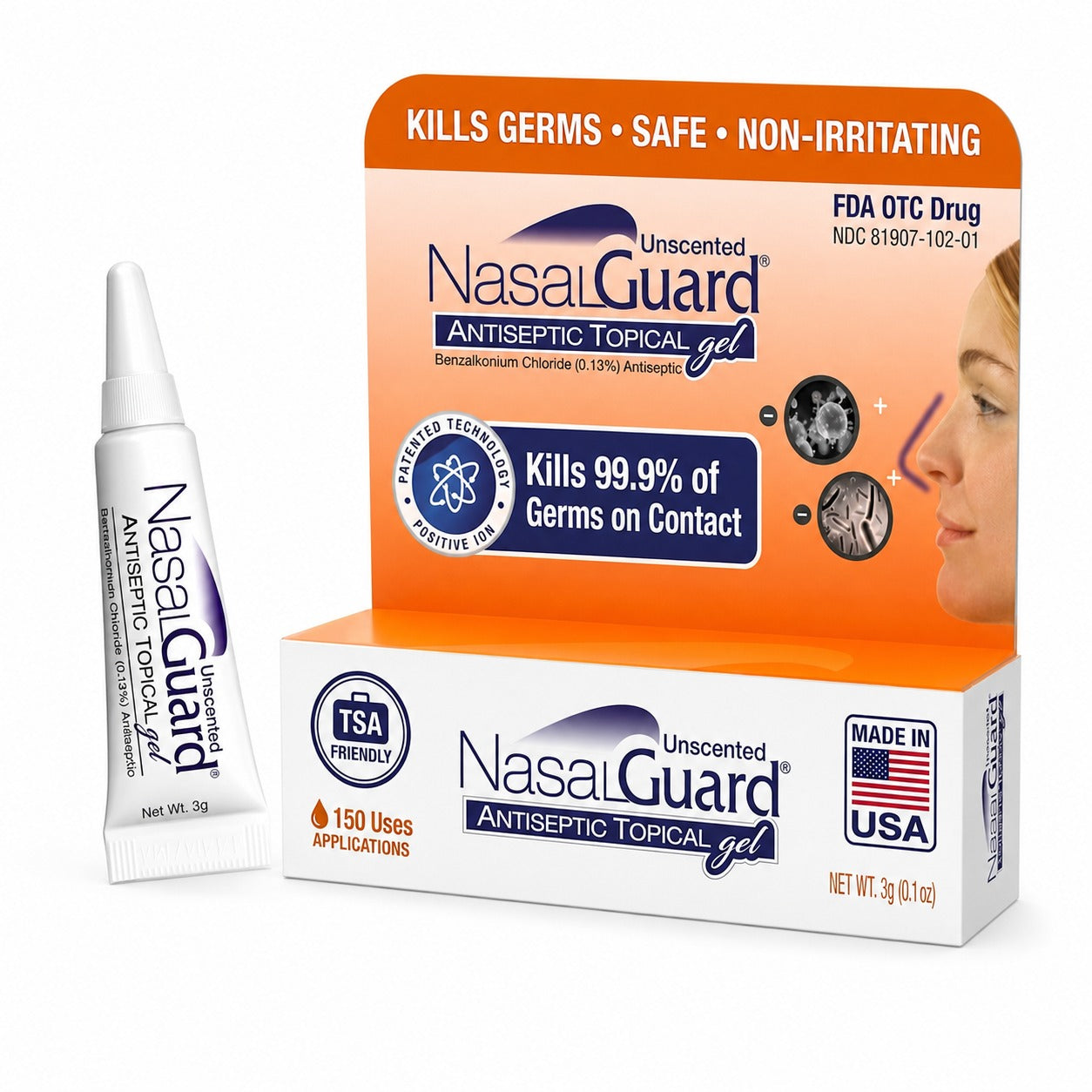
Coat pocket or work bag. The 3g tubes are small enough to sit in a pocket next to your keys, so the tube goes wherever you do.
Desk drawer. If you sit at the same desk every day, a second tube in the drawer means you never have to remember to pack it.
At home. The 10g tube suits a bathroom shelf for the morning application, with a 3g tube for the bag.
Check the label for storage directions, and keep the cap on so the tube stays clean in a bag full of pens and chargers.
Unscented or Cool Menthol for shared spaces
Scent matters more in an open-plan office than it does at home. NasalGuard Airborne Particle Blocker comes in two versions:
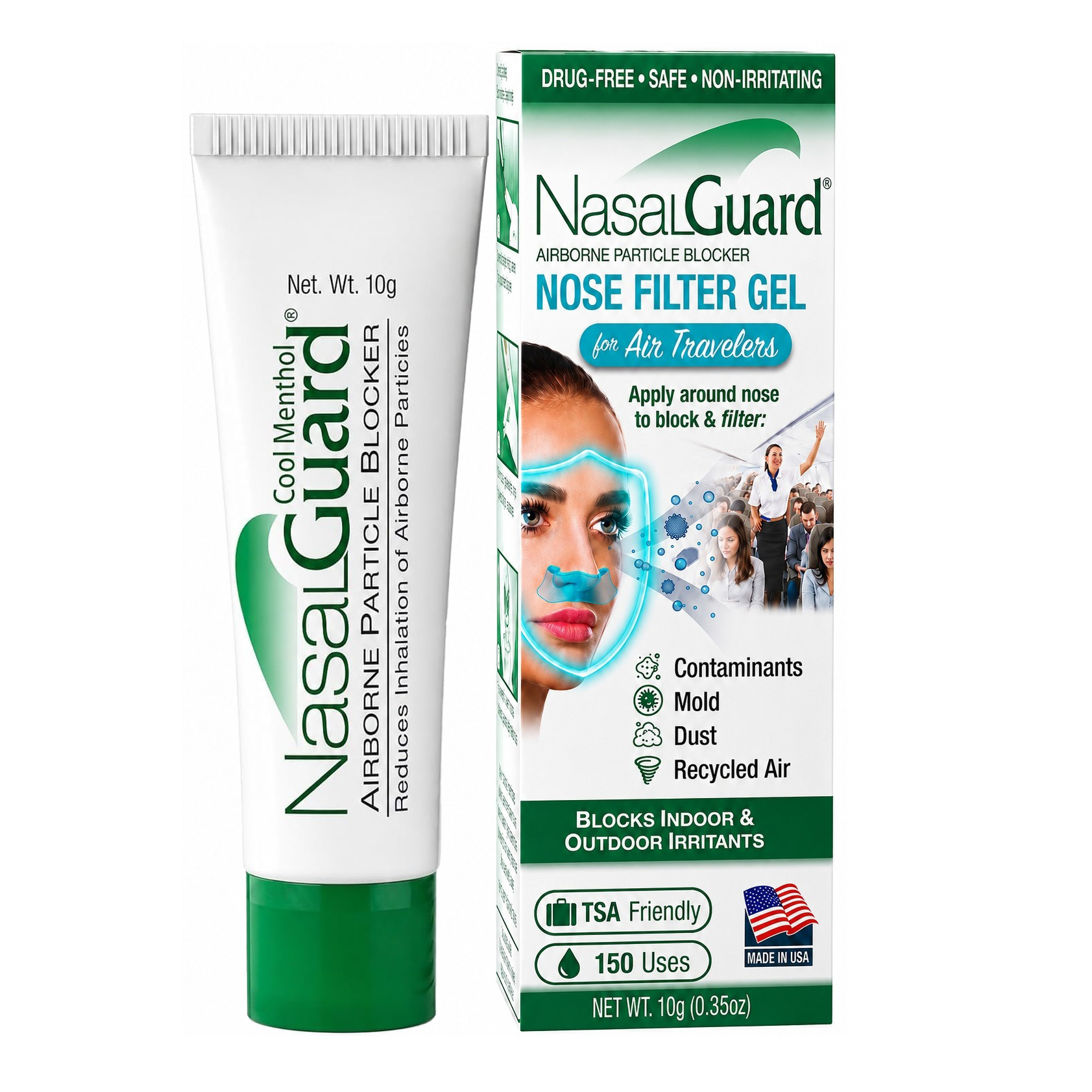
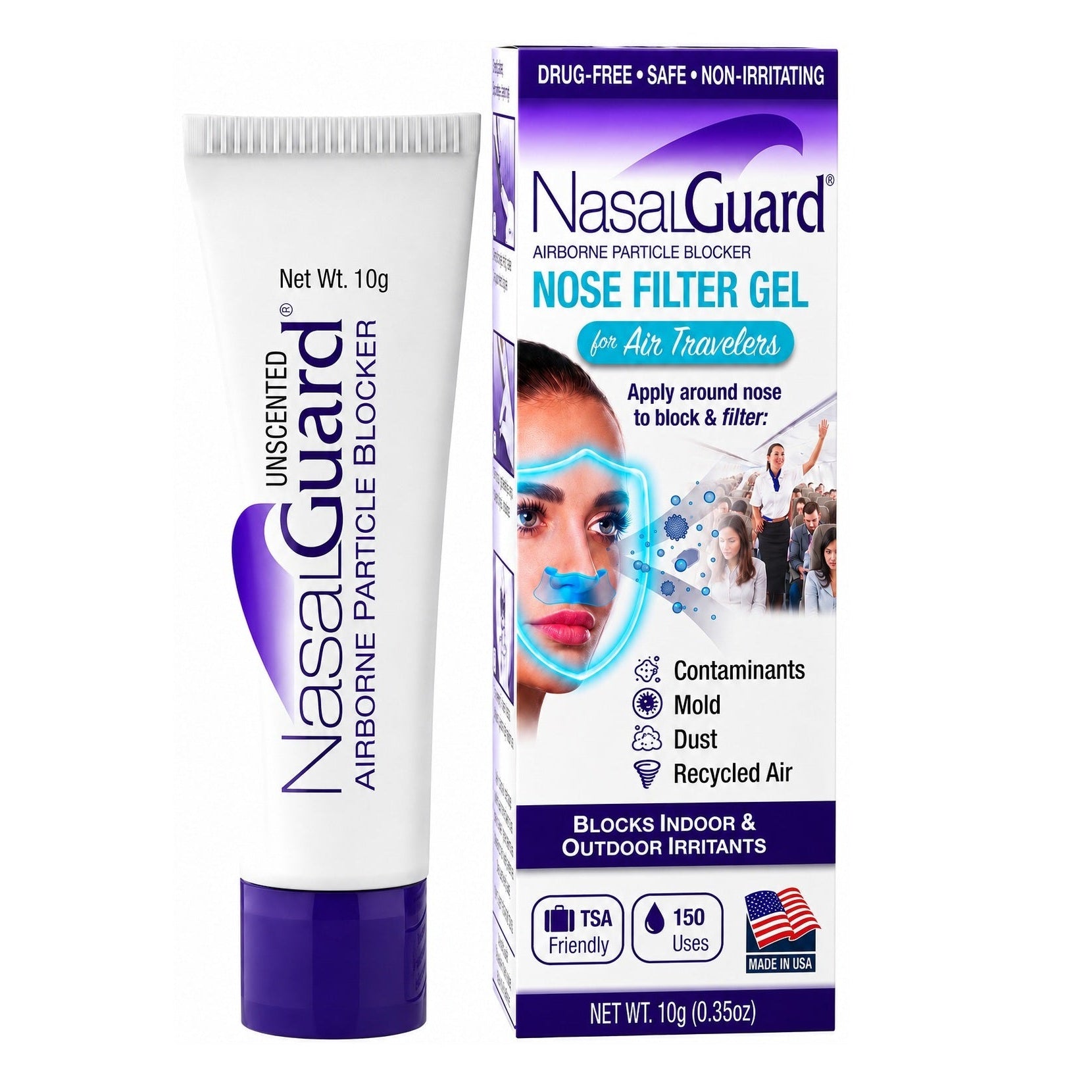
Unscented. A good fit if you sit close to coworkers, share a small office, or simply prefer nothing noticeable.
Cool Menthol. Has a menthol scent that some people like as a cue that the gel is on. Try it at home first so you know how it feels before a long meeting.
Both go on the same way and both are applied around the outside of the nostrils and above the upper lip. Pick the one you will actually reach for each morning.
Frequently asked questions
Is NasalGuard a medicine?
No. NasalGuard Airborne Particle Blocker is not a medicine or a drug. It is a drug-free topical gel applied around the outside of the nostrils and above the upper lip. It uses positive ion technology to create an invisible gel barrier designed to help reduce contact with everyday airborne particles such as pollen, dust, and pet dander.
Does NasalGuard go inside the nose?
No. NasalGuard is not intended to be inserted into the nose. Place a small amount on a fingertip, spread it between the thumb and finger, and apply around the outside of the nostrils and above the upper lip. Follow the current directions on your tube for how much to use and when to reapply.
Will coworkers notice I'm wearing a nasal gel?
The gel is milky white in the tube, but it goes on invisibly once you spread it between your thumb and finger and apply it. The Unscented version has no added scent, which suits shared offices. Cool Menthol has a menthol scent that people sitting very close may notice.
How often should I reapply nasal gel during the workday?
Follow the current directions on your NasalGuard tube, which set the timing. Reapply after the area becomes wet, for example after washing your face, a workout, walking in the rain, or wiping your nose. Keeping a tube in your bag or desk drawer makes the midday reapplication easy.
Your next step: put a tube where your keys live tonight, and apply it tomorrow morning right after you wash your face. Place a small amount on a fingertip, spread it between the thumb and finger, and apply around the outside of the nostrils and above the upper lip. Reapply according to the current directions and after the area becomes wet. See NasalGuard Airborne Particle Blocker.
Christine Walek writes for the NasalGuard editorial team about air quality, travel, and the everyday airborne particles we share space with. Articles are reviewed against current product labeling before publishing.