We've sent you an email with a link to update your password.
Reset your password
We will send you an email to reset your password.
Dusty Holiday Decorations: How to Unpack Without the Dust
Christine Walek
0 comments
The bin has been in the attic since January. You pull the lid, lift out the first strand of garland, and a soft gray haze drifts up into the light from the window. Eleven months of settled dust just went airborne, right where you are standing.
Dusty holiday decorations are one of the most predictable dust events of the year, and a little planning keeps most of that dust out of your living room. Here is how to unpack, clean, and pack back up so next year starts cleaner.
Why holiday decorations get so dusty
Decorations spend most of the year in the dustiest corners of a house: attics, garages, basements, and the top shelf of a closet. Those spaces see little cleaning and a lot of temperature swings, and cardboard boxes shed their own fibers every time they are moved.
Dust does not stay put once you disturb it. The EPA notes that settled dust "can be easily kicked up into the air by cleaning, vacuuming, and other activities like walking and crawling." Shaking out a garland or fluffing the branches of an artificial tree is exactly that kind of activity, concentrated into one afternoon.
Some things collect more than others:
Artificial trees and garland. Hundreds of bristles hold dust the way a brush does.
Fabric items. Tree skirts, stockings, and table runners trap dust in the weave.
Anything stored loose. Wreaths hung on a garage wall or boxes with open tops collect the most.
Pick where you unpack
The single most useful choice is where you open the bins. Every bit of dust you shake loose outdoors or in a garage is dust that never settles on your couch.
Open bins outside or in the garage when you can. A porch, driveway, or open garage door gives loose dust somewhere to go.
If you have to unpack indoors, pick a room with an open window or a running exhaust fan. The EPA's indoor air guide says that "increasing the amount of fresh air brought indoors helps reduce pollutants inside."
Keep the dusty step and the decorating step apart. Shake, fluff, and wipe in one place, then carry the clean pieces to the room where they will live.
Lay down an old sheet. It catches what falls and folds up for a shake outside.
Shake, fluff, and wipe in one place, then decorate in another. Source: U.S. EPA.
Timing helps too. Unpacking on a calm, mild afternoon makes an open window or garage door practical. On a windy day, unpack in the garage with the door partly open rather than out in the gusts.
Clean dusty holiday decorations by material
Different materials need different handling. Work from the dustiest pieces to the cleanest, and finish everything before it goes up.
Artificial trees and garland
Fluff each section outdoors or in the garage, where the dust can drift away. A soft brush or a vacuum with a brush attachment on low suction lifts what fluffing leaves behind. Check the manufacturer's care tag first, especially on pre-lit trees, and keep water away from any section with wiring.
Glass and plastic ornaments
A microfiber cloth picks up dust instead of pushing it into the air. For grimy pieces, a barely damp cloth works on plain glass and plastic. Skip water on hand-painted, glittered, or vintage pieces and use a dry, soft paintbrush instead.
Fabric decorations
Tree skirts, stockings, and table linens are often machine washable; follow the care label. Items that cannot be washed can go outside for a good shake and an hour of fresh air.
Lights and electrical pieces
Unplug before you clean. A dry cloth or a soft brush is enough for strands and plug-in figures. This is also the moment to check cords for damage before anything gets plugged in for the season.
The cleanup after decorating
Even a careful unpacking leaves some dust behind, and the EPA's suggestions for indoor dust fit this moment well:
Vacuum the area once the decorations are up. The EPA suggests you "consider using a vacuum with a filter to reduce dust build-up."
Wipe flat surfaces with a damp cloth. Mantels, shelves, and side tables near where you unpacked catch the most.
Keep ventilating for a bit. Leaving a window cracked or a fan running for a short while after the dusty work helps clear what is still in the air.
Pack it back cleaner in January
Next year's dust problem gets decided when the decorations come down. A few habits in January make the next unpacking much easier.
Clean before you store. A quick wipe or shake before packing means you are not sealing this year's dust in for next year.
Use lidded plastic bins. Closed lids keep dust out far more effectively than open cardboard boxes, and plastic does not shed fibers.
Bag the tree. A zippered tree storage bag or a large covered bin keeps bristles cleaner than an open cardboard box does.
Store somewhere dry. Damp attics and basements are hard on stored fabric and paper. The EPA suggests keeping indoor humidity between 30 and 50 percent and using a humidity gauge from a hardware store to check.
Label the bins. Knowing what is inside means fewer bins opened and fewer rounds of dust next year.
A few January habits make next year's unpacking easier. Source: U.S. EPA, Care for Your Air.
Frequently asked questions
How do you get dust off an artificial Christmas tree?
Fluff each section outdoors or in a garage so loose dust drifts away from your living space. Then go over the branches with a soft brush or a vacuum brush attachment on low suction. Check the care tag before using any moisture, and keep water away from pre-lit sections and wiring.
Should I unpack holiday decorations inside or outside?
Outside or in the garage is easier on your indoor air, since the dust you shake loose can drift away instead of settling on furniture. If you have to unpack indoors, choose a room where you can open a window or run an exhaust fan, and lay down an old sheet to catch what falls.
How should I store decorations so they stay clean?
Clean items before packing, then use lidded plastic bins and a zippered bag for an artificial tree. Store everything somewhere dry. The EPA suggests keeping indoor humidity between 30 and 50 percent, which a simple humidity gauge can confirm.
Why does my house seem dustier after decorating?
Unpacking stirs up dust that settled in storage over months, and some of it lands on nearby surfaces. A vacuum pass with a filter vacuum, a damp wipe of flat surfaces, a check of your filter, and some extra ventilation usually bring things back to normal.
Before you open the first bin
Pick your unpacking spot today: a garage, a porch, or a room with a window that opens. Set out an old sheet, a microfiber cloth, and the vacuum, and open the bins there first.
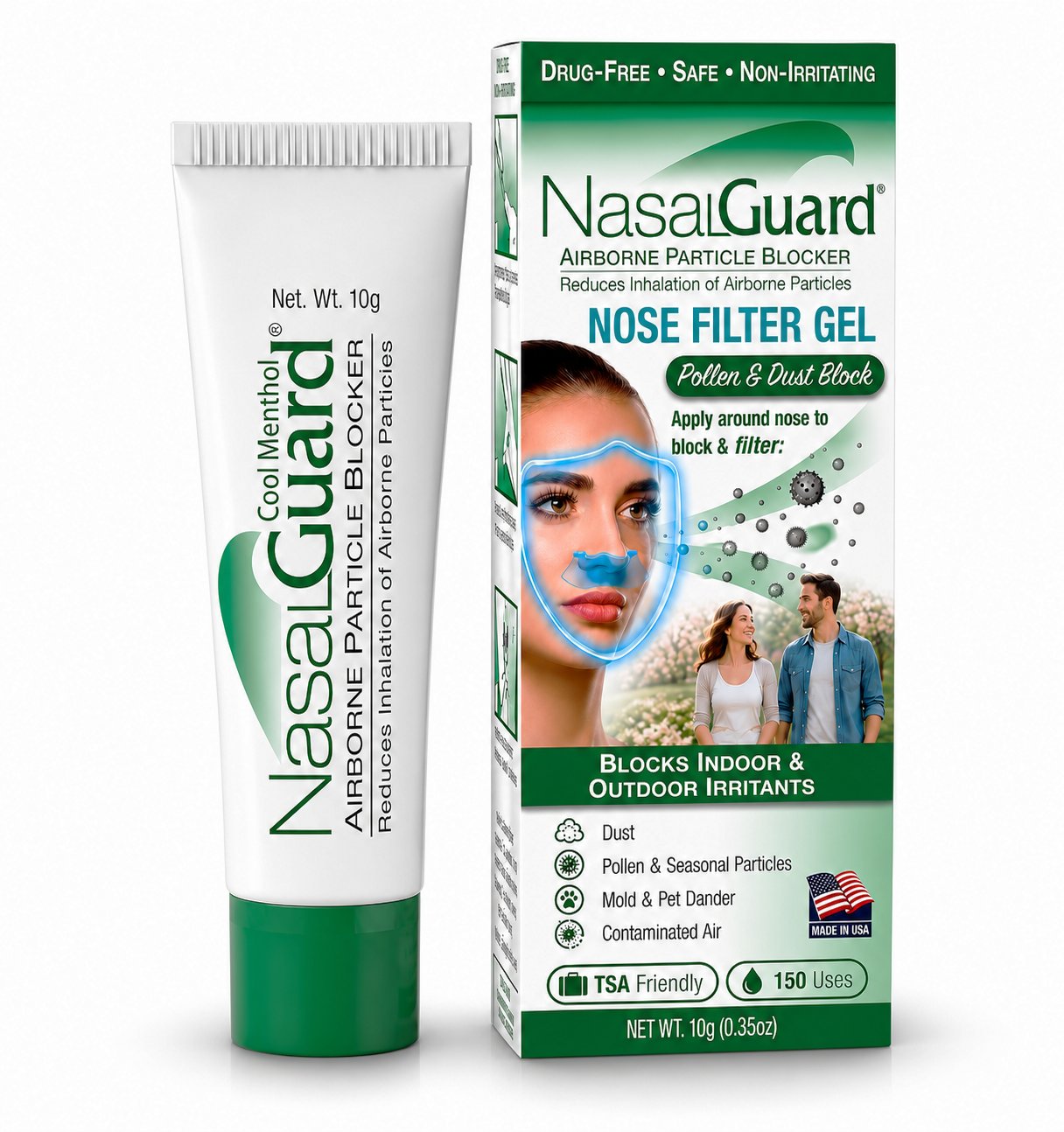
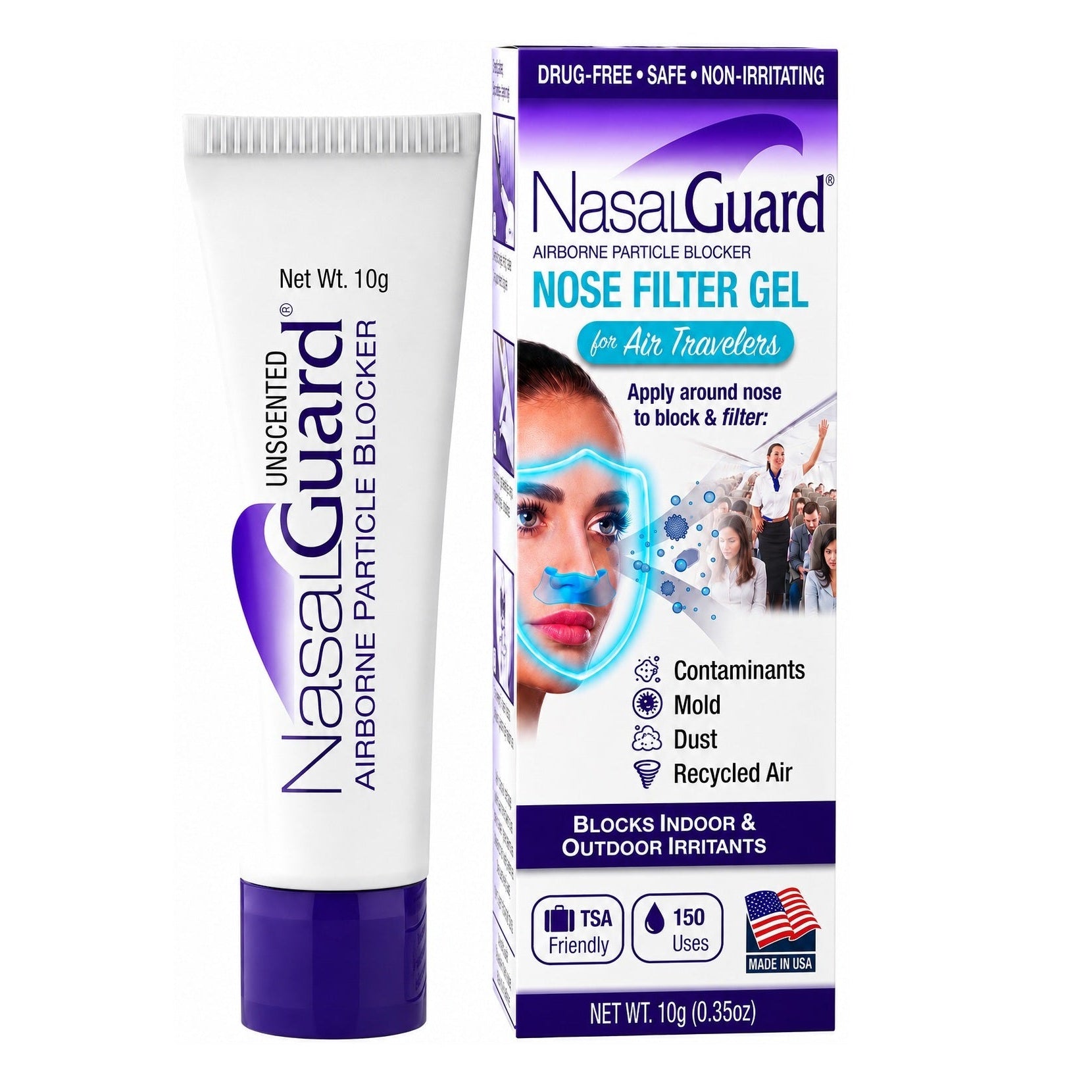
If you like to add a personal step on dusty days, NasalGuard® Airborne Particle Blocker is an invisible, drug-free gel applied around the outside of the nostrils and above the upper lip to help reduce inhalation of everyday airborne particles such as pollen, dust, and pet dander. Use it as directed. For more on everyday dust, see our guide to dust and airborne particles, or browse all NasalGuard products.
Christine Walek writes for the NasalGuard editorial team about air quality, travel, and the everyday airborne particles we share space with. Articles are reviewed against current product labeling before publishing.