We've sent you an email with a link to update your password.
Reset your password
We will send you an email to reset your password.
Real Christmas Tree Care: Keep the Needles On All Season
Christine Walek
0 comments
Most cut Christmas trees sold on retail lots are harvested in the first couple of weeks of November, according to Penn State Extension. By the time one stands in your living room in mid-December, it has been off the stump for weeks and is sitting in the warmest, driest air of the year.
A handful of habits on tree day decide whether a real Christmas tree keeps its needles on the branches or drops them into the carpet. Real Christmas tree care comes down to four things: pick a fresh one, shake it outdoors, get a fresh cut into water fast, and keep it away from heat. Here is the order to do them in, with the numbers from the people who grow and study these trees.
Pick a fresh tree at the lot
Run a branch loosely through your hand. On a fresh tree the needles bend and stay attached. If they pull out easily, or the color looks dull and lifeless, Penn State Extension suggests the tree may be past its prime, so move on to the next one.
Then lift the tree a few inches and bounce the trunk on the ground. A shower of brown needles from deep inside the tree is normal. Every needled evergreen sheds its oldest needles each year, and they collect near the trunk. A shower of green needles from the outer branches is the sign to keep looking.
Cutting your own at a local farm is the surest way to start fresh. Penn State Extension also notes that locally grown trees are often harvested closer to Thanksgiving, which buys you a little more time indoors.
Shake it outside, not in the living room
Those loose brown needles have to land somewhere, and the porch is a better place than the rug. Penn State Extension's advice is to shake them out thoroughly before the tree comes indoors. Ohio State University's forestry program notes that sellers often do this for you, by hand or with a mechanical shaker, so ask before the tree is netted.
At home, give it one more shake on the driveway. A few practical extras make the trip tidier:
Lay an old sheet or tarp in the car or truck bed before the tree goes in.
Leave the netting on until the tree is through the door, then cut it off next to the stand.
Wear work gloves. Sap is sticky and slow to wash off.
Tree day in four steps, from the lot to the stand.
Make a fresh cut and get it into water
A cut tree is mostly water. The National Christmas Tree Association (NCTA) points out that more than half of a tree's weight is water when it is cut, and Penn State Extension calls keeping that moisture up the single most important factor in reducing needle loss.
Once the trunk is cut, the clock starts. NCTA says most species can go 6 to 8 hours after cutting and still take up water. Penn State's rule of thumb is simple: if the tree was cut within the past 12 hours, it can go straight into the stand. If it has been longer, recut the base first.
Remove a thin disk from the bottom of the trunk. Penn State says about a quarter inch is enough; NCTA suggests about half an inch.
Cut straight across. A slanted or V-shaped cut makes the tree harder to hold upright and leaves less wood sitting in water.
Skip drilling a hole in the trunk. NCTA says it does not improve water uptake.
Do not shave the sides of the trunk to fit a small stand. The outer layers of wood do most of the work of moving water.
If the tree has to wait a few days before decorating, NCTA suggests a cool spot with the freshly cut trunk standing in a bucket kept full of water. An unheated garage or a shaded porch works well.
Real Christmas tree care starts with the stand
Most needle-drop trouble traces back to a stand that ran dry. NCTA and Penn State Extension use the same sizing rule: about 1 quart of water capacity per inch of trunk diameter. For most Christmas trees, Penn State adds, that means a stand that holds at least 1 gallon.
Measure across the cut end with a ruler before you shop for a stand. By that rule, a trunk 4 inches across calls for about a gallon of capacity, and a 6-inch trunk calls for about a gallon and a half.
Stand capacity by trunk width, using the 1 quart per inch rule from NCTA and Penn State Extension.
The first week is the thirstiest. Penn State notes that a cut tree takes up a surprising amount of water early on, so top it off every day. Check the level, not only whether water is in the basin. With many stands, water can still sit in the bowl after the bottom of the trunk is no longer under it.
Plain water is all the tree needs. Penn State Extension advises against adding sugar, soft drinks, bleach, or store-bought tree preservatives, and both sources say the temperature of the water makes no difference.
Place it away from heat vents and sunny windows
Warm, moving air dries a tree out fast. NCTA recommends keeping it away from fireplaces, heaters, heat vents, and direct sunlight. It also points out that a slightly lower room temperature slows drying, so the tree drinks less each day.
Choose a corner without a floor vent or radiator right next to it.
Use low-heat lights. Penn State notes that newer LED sets give off less heat than older types of lighting.
Look over each light set before it goes on the tree, and retire any strand that looks worn, as NCTA advises.
Turn the tree lights off when you leave the house or go to bed.
Keep needles and dust from spreading
Even a well-watered tree drops a few needles, and tree day stirs up dust from storage bins and ornament boxes that sat in an attic or garage all year. A few habits keep the living room tidy:
Spread a tree skirt or old sheet under the stand before the tree goes up, so stray needles can be carried out in one bundle.
Vacuum fallen needles every few days instead of letting them work into the rug.
Open decoration bins on the porch or in the garage, and wipe dusty lids with a damp cloth before they come inside. Our guide to dusty holiday decorations covers the rest.
Keep checking freshness through the season. Penn State Extension suggests running your fingers along the needles. If they feel dry and brittle, or come off in your hand, the tree is ready to go. NCTA has one firm rule for that day: never burn any part of a Christmas tree in a wood stove or fireplace. Many towns run a curbside pickup or a drop-off site for trees after the holidays.
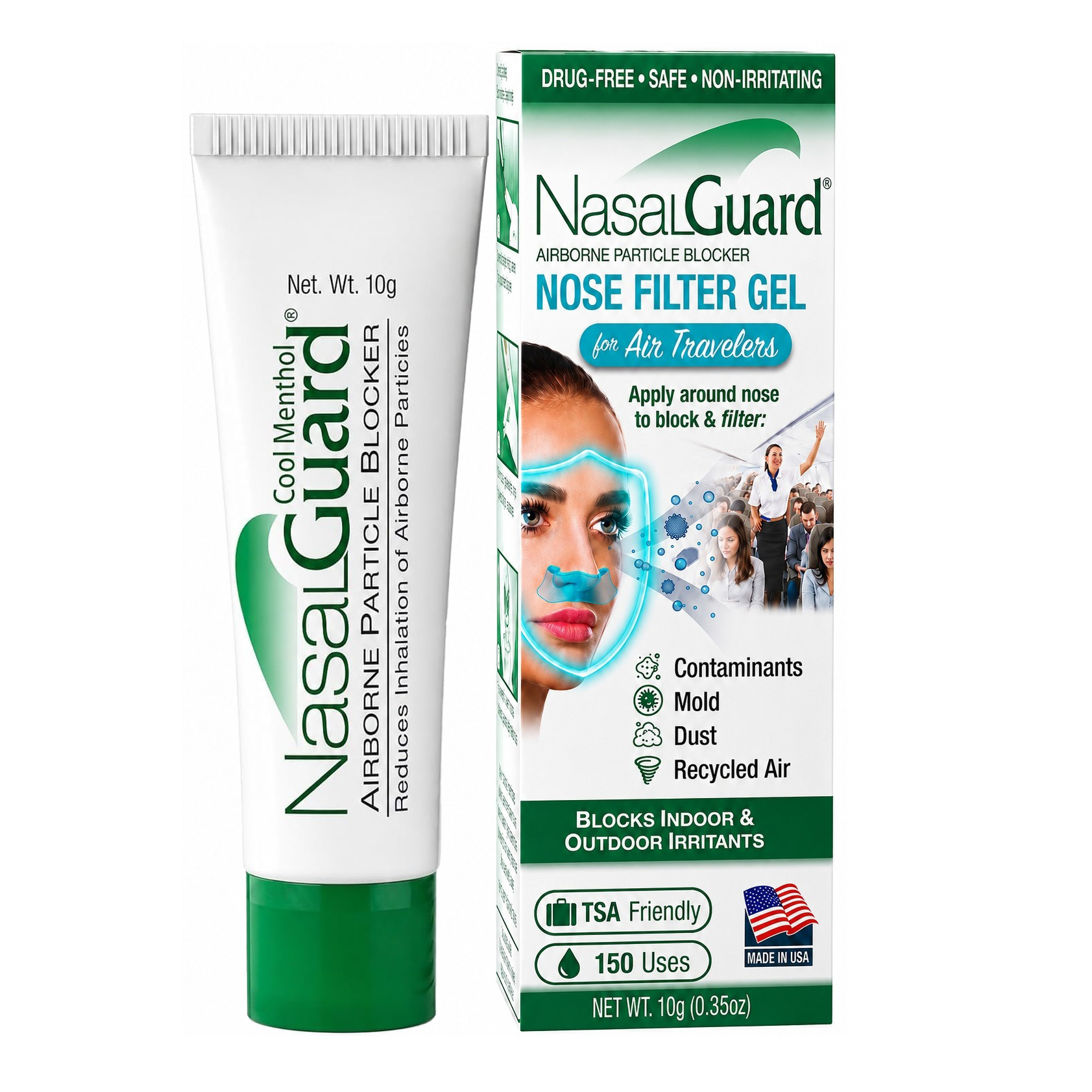
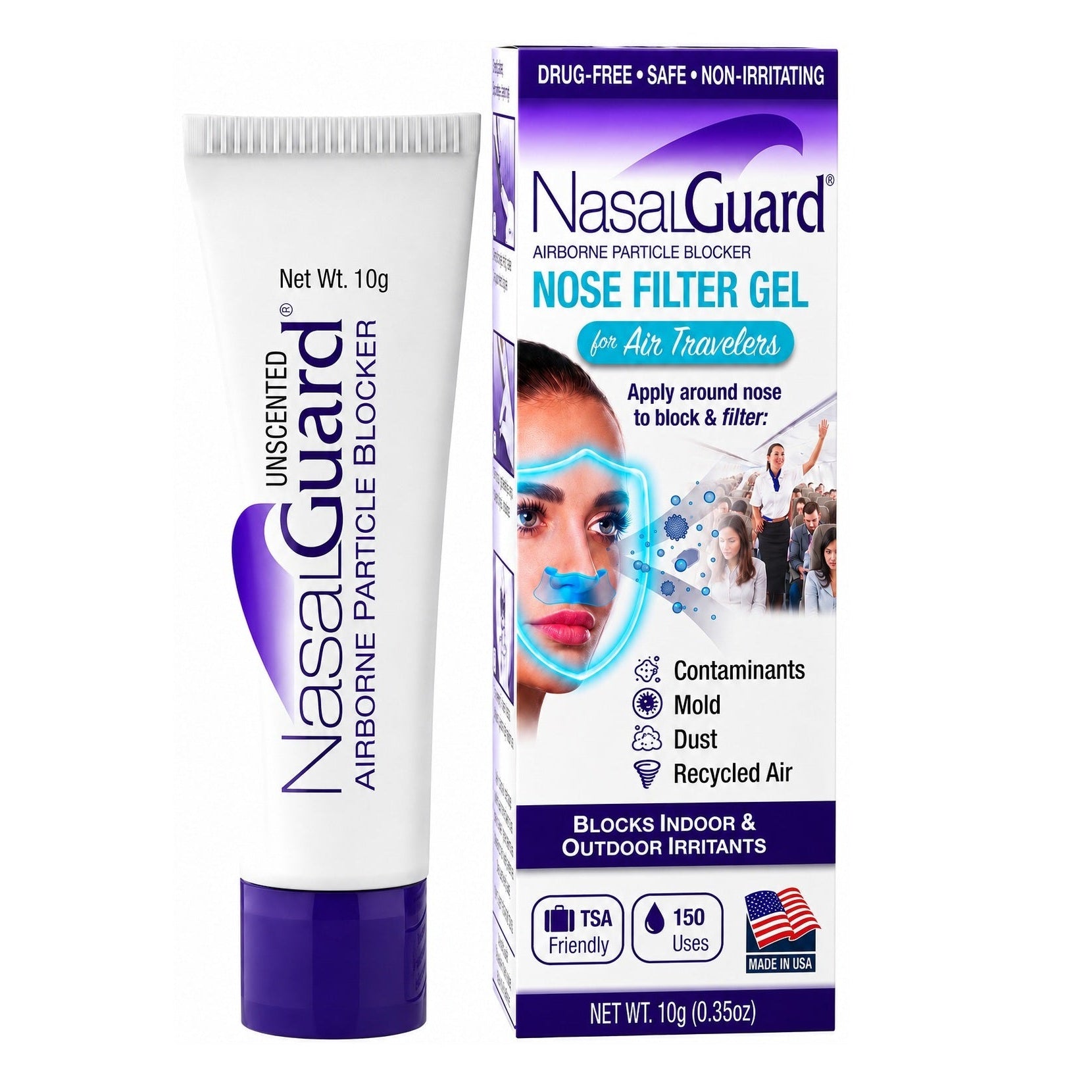
If decorating day keeps you around dusty bins and boxes for hours, a personal barrier step can be part of the routine. NasalGuard® Airborne Particle Blocker is an invisible, drug-free gel applied around the outside of the nostrils and above the upper lip to help reduce inhalation of everyday airborne particles such as pollen, dust, and pet dander. The Pollen & Dust Block version comes in Unscented and Cool Menthol. Use it as directed.
Frequently asked questions
How long can a cut Christmas tree go without water?
The National Christmas Tree Association says most species can go 6 to 8 hours after the trunk is cut and still take up water. Penn State Extension says a tree cut within the past 12 hours can go straight into the stand. Past that point, saw a thin disk off the base first so the tree can drink again.
How much water does a real Christmas tree need?
Plan on a stand that holds about 1 quart of water per inch of trunk diameter, which works out to at least a gallon for most trees. A fresh tree drinks the most during its first week indoors, so check the stand daily and keep the bottom of the trunk under water the whole season.
Should I add anything to Christmas tree water?
No. Penn State Extension says clean water is all a cut tree needs, and it advises against sugar, soft drinks, bleach, and commercial tree preservatives. The temperature of the water does not change how much the tree takes up either, so plain tap water from the kitchen faucet is fine.
Why is my real Christmas tree dropping needles?
Brown needles from the inside of the tree are old needles that every evergreen sheds each year, so shake them out outdoors before setup. Green needles falling from the outer branches usually mean the tree is drying out. Check that the trunk is still sitting in water and move the tree away from heat vents and sunny windows.
Do I need to shake a Christmas tree before bringing it inside?
It helps. Penn State Extension recommends shaking the loose interior needles out thoroughly before the tree comes indoors. Many lots and farms will run it through a mechanical shaker if you ask. Give it one more shake on the porch or driveway at home before you carry it through the door.
Before you head to the lot, measure two things: how much water your stand holds, and how far your chosen corner is from the nearest heat vent. Those two numbers settle most of tree day before it starts.
Christine Walek writes for the NasalGuard editorial team about air quality, travel, and the everyday airborne particles we share space with. Articles are reviewed against current product labeling before publishing.