We've sent you an email with a link to update your password.
Reset your password
We will send you an email to reset your password.
Barn Dust and Hay: Where NasalGuard Fits Your Barn Chores
Christine Walek
0 comments
Break open a bale of hay in a still barn on a winter morning and you can watch the dust hang in the light from the doorway. Barn dust is part of the job for anyone who feeds horses, keeps a few goats or chickens, or helps out at a stable.
This article explains where barn dust comes from, what NasalGuard® Airborne Particle Blocker is and is not, and how it can fit into a barn chore routine as a simple barrier step.
Where barn dust comes from
Most barn dust is ordinary material that gets moved around a lot:
Hay, as flakes are pulled from a bale and shaken into a feeder.
Bedding such as shavings or straw, when stalls are picked out or fresh bedding is spread.
Aisles and floors, when they are swept.
Feed bins and bags, when grain or pellets are scooped.
The animals themselves, which shed hair and dander, especially at grooming time.
Movement is what puts it in the air. Walking, sweeping, dusting, and vacuuming can stir settled dust up into the air. A barn has plenty of the first two, often in a space that is closed up against the wind all winter.
Five everyday sources of barn dust. Source for stirred-up dust: U.S. EPA.
What NasalGuard is
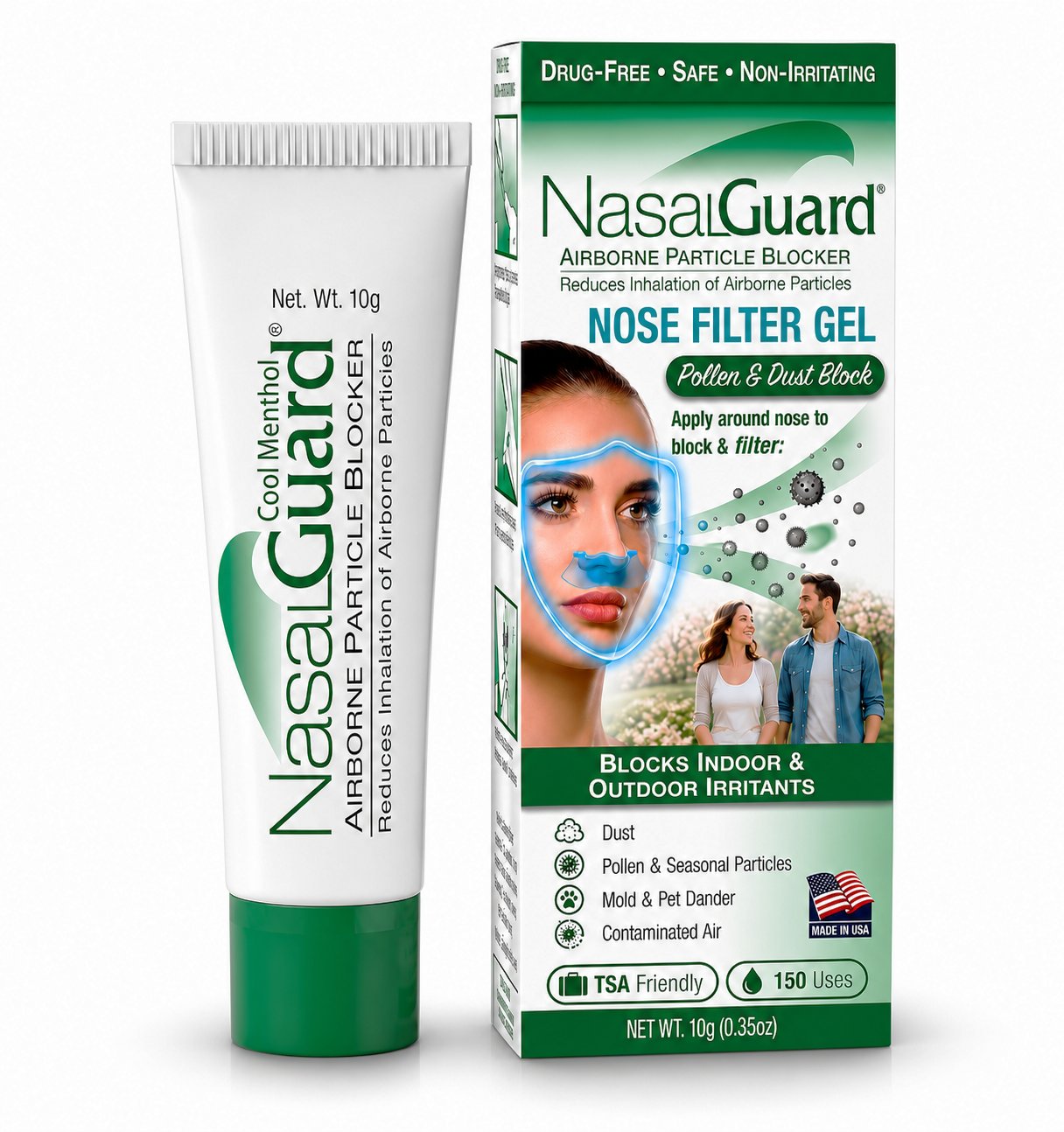
NasalGuard® Airborne Particle Blocker is an invisible, drug-free gel applied around the outside of the nostrils and above the upper lip to help reduce inhalation of everyday airborne particles such as pollen, dust, and pet dander.
It uses positive ion technology, which creates an invisible gel barrier around the outside of the nostrils, designed to help reduce contact with everyday airborne particles. In the tube and on your fingertip the gel is opaque and milky white. Once spread, it goes on invisibly.
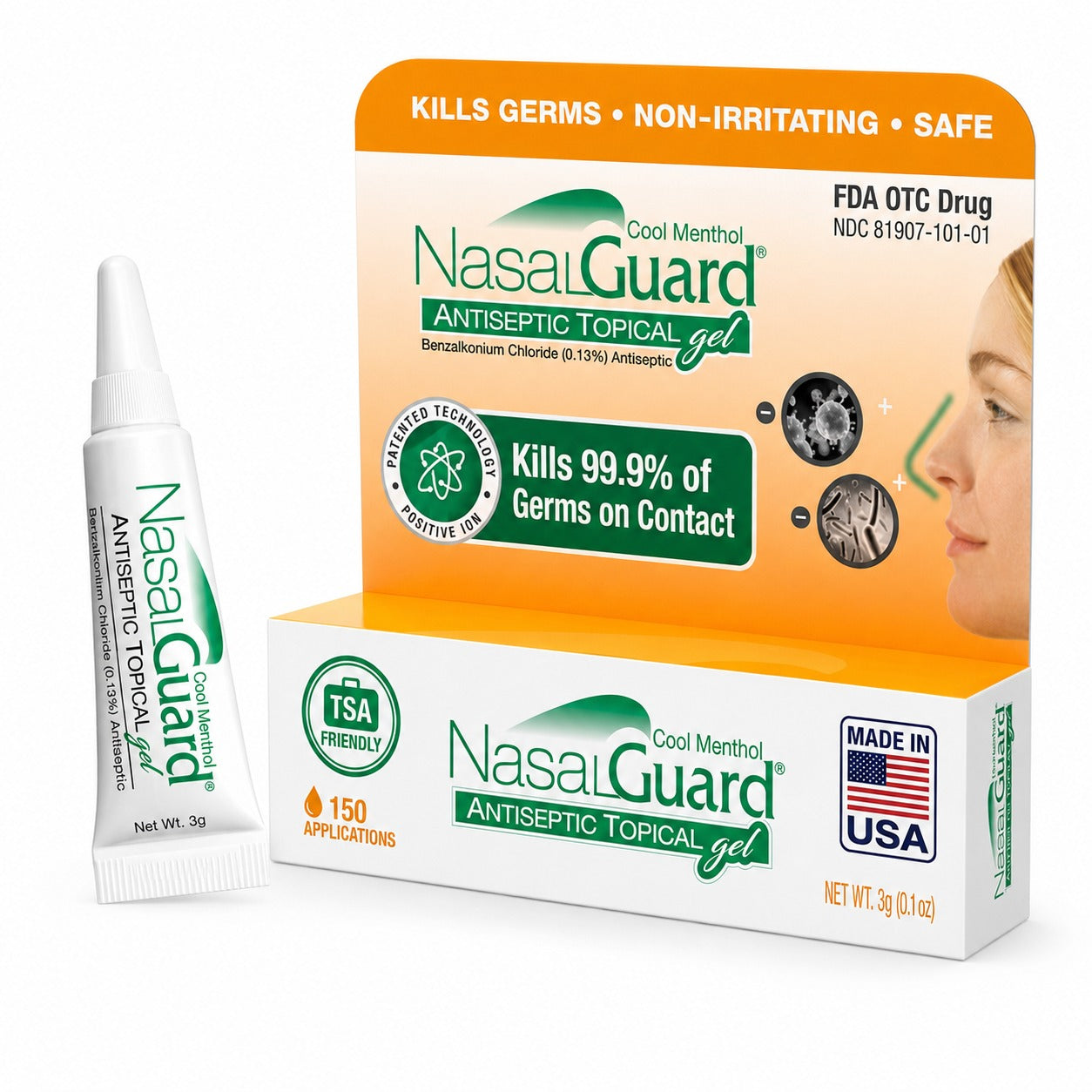
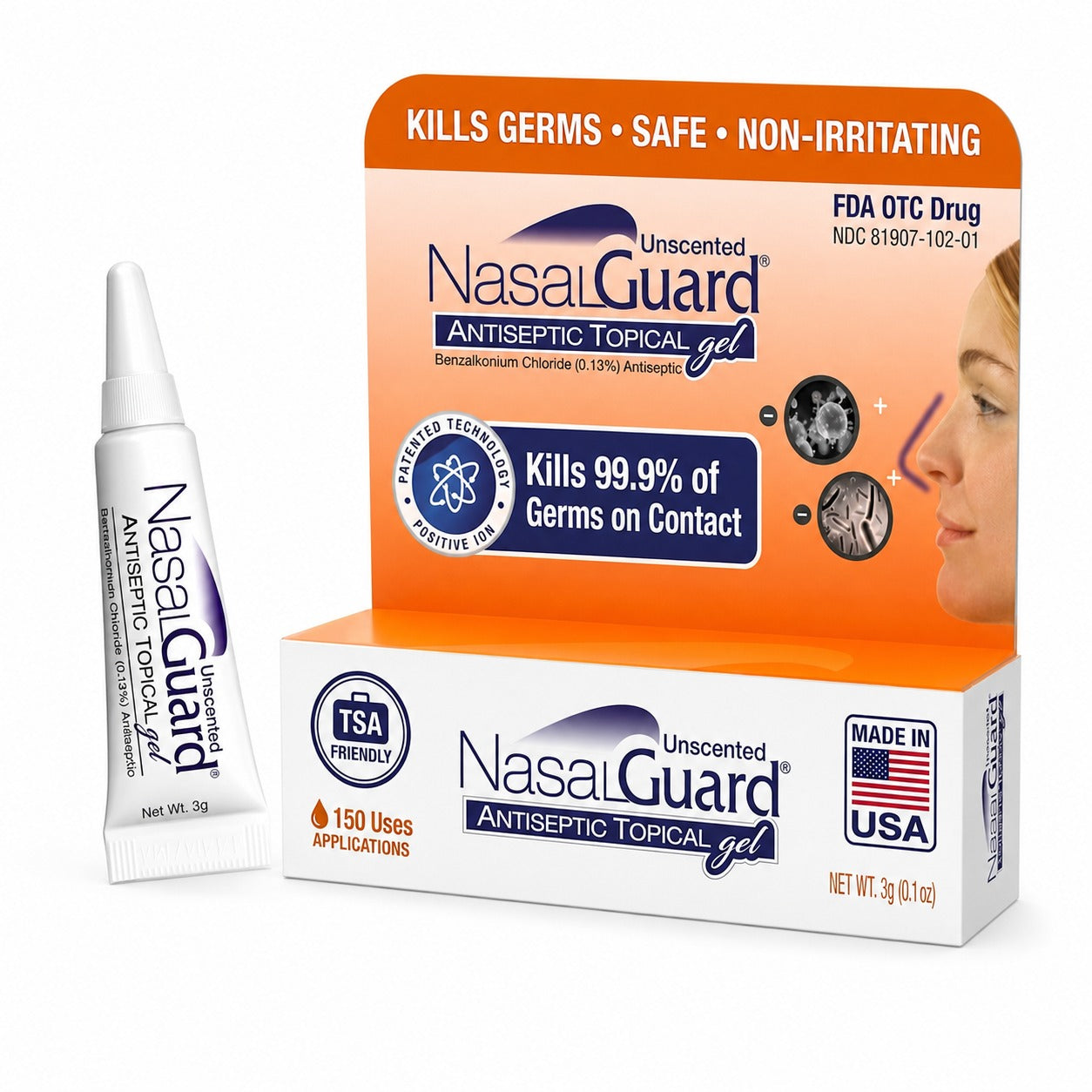
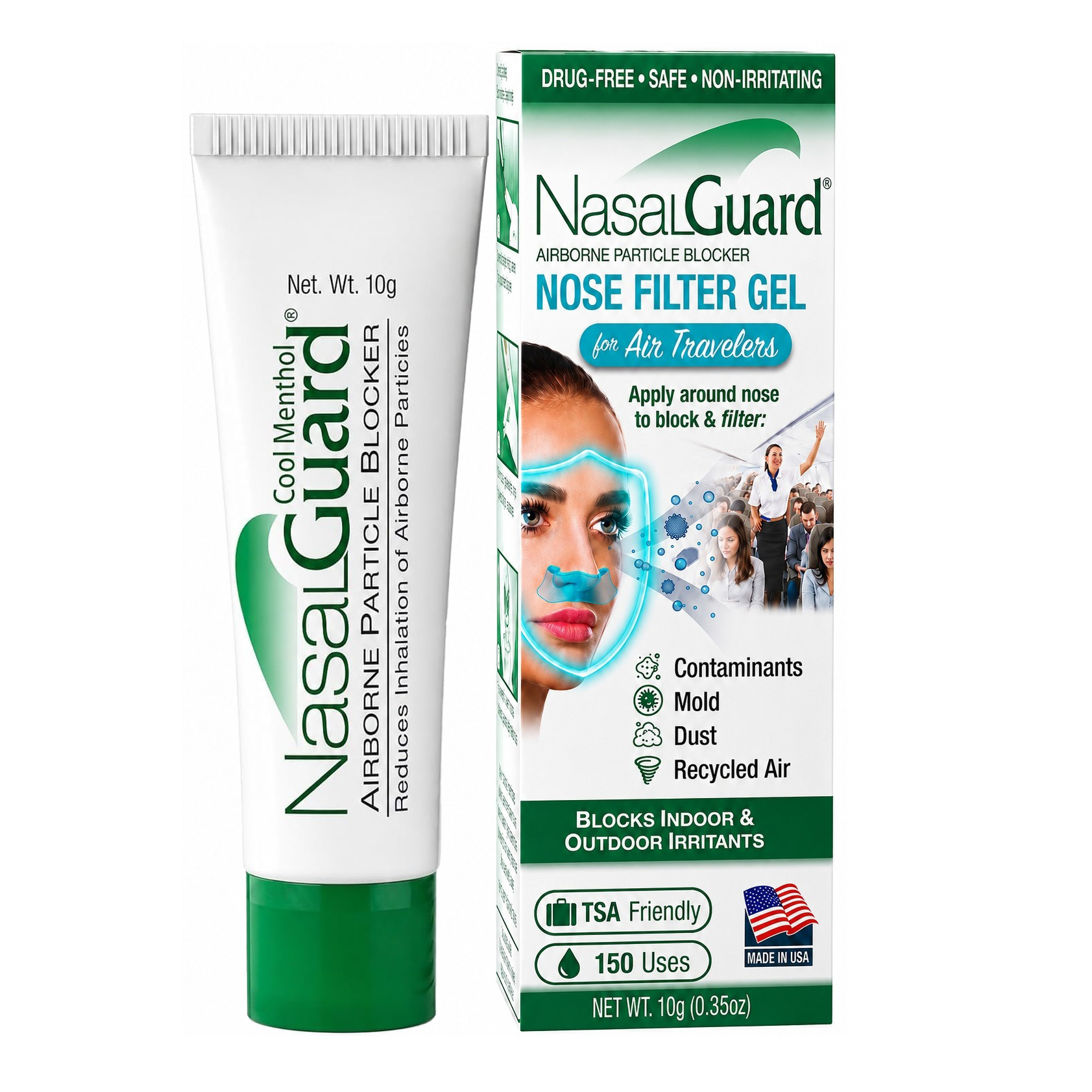
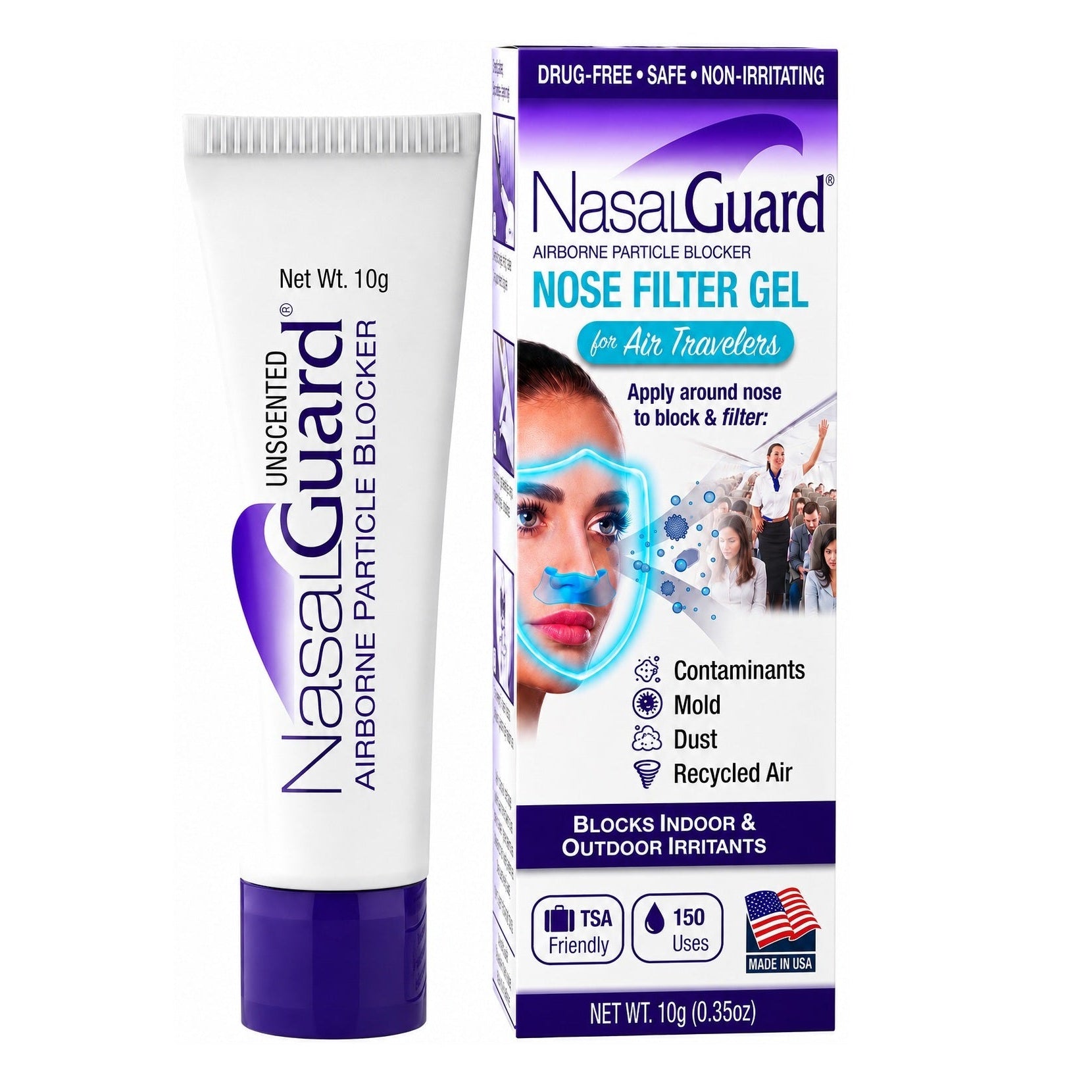
For barn chores, the line to look at is Pollen & Dust Block, packaged for everyday settings like home and yard. It comes in Unscented and Cool Menthol, which has a menthol scent, and in a 3g or 10g tube. If you want the longer explanation, read how the invisible gel barrier works.
What NasalGuard is not
Knowing the limits is as useful as knowing the steps:
It is not a medicine or a drug.
It is not intended to be inserted into the nose. It goes around the outside of the nostrils and above the upper lip only.
It does not change any safety gear, training, or procedures your farm, stable, or veterinarian asks you to follow. Follow those first.
It is not a cleaning step. The barn still needs the same airflow and tidy habits it always did.
If you have questions about whether NasalGuard is right for you, ask your doctor or pharmacist before you use it.
How to apply it before chores
Place a small amount on a fingertip.
Spread it between the thumb and finger.
Apply around the outside of the nostrils and above the upper lip.
Reapply according to the current directions and after the area becomes wet. In a barn, wet covers more than rain: washing your face at the hose, wiping your nose on a sleeve, or working up a sweat stacking bales all count.
Apply before you pull your gloves on. Gel on gloves ends up on everything else.
Apply at the house before chores, around the outside of the nostrils and above the upper lip. Use as directed.
A barn chore routine, step by step
NasalGuard is one small step. The habits around it do most of the work of keeping dust down:
Before you head out: apply NasalGuard at the house with clean, dry hands, and keep the tube in an inside jacket pocket.
Feeding: open bales near the door or in the aisle rather than in a closed stall, and set flakes into the feeder instead of shaking them out overhead.
Stalls: pick out and spread bedding with steady, low movements. Tossing shavings high sends the fine part into the air.
Sweeping: mist the aisle lightly with water first, and sweep toward an open door.
Grooming: groom near the doorway or outside when the weather allows, so loose hair and dander drift outdoors.
After chores: leave barn jackets and boots by the door and wash up. Reapply as directed if your face got wet.
A 3g tube for a jacket pocket, for reapplying after you wash up.
Cool Menthol if you like a menthol scent, Unscented if you would rather not add a scent to the barn.
Frequently asked questions
Is NasalGuard a medicine?
No. NasalGuard Airborne Particle Blocker is not a medicine or a drug. It is a topical gel applied around the outside of the nostrils and above the upper lip, designed to help reduce contact with everyday airborne particles such as dust. Use it as directed, and ask your doctor or pharmacist if you have questions about whether it is right for you.
Does NasalGuard go inside the nose?
No. NasalGuard is not intended to be inserted into the nose. Place a small amount on a fingertip, spread it between the thumb and finger, and apply it around the outside of the nostrils and above the upper lip. The gel is milky white in the tube and goes on invisibly once it is spread.
When should I reapply during barn chores?
Follow the current product directions for when to reapply, and reapply after the area becomes wet. Around the barn that includes washing your face at the hose, wiping your nose, or working up a sweat stacking bales. Keeping a 3g tube in an inside jacket pocket makes this easy to do between jobs.
Can I use NasalGuard along with my usual barn gear?
NasalGuard does not change any safety gear, training, or procedures your farm, stable, or veterinarian asks you to follow, so keep doing those. NasalGuard is a separate, externally applied barrier step for everyday airborne particles such as dust. Apply it at the house before chores and reapply as directed.
Christine Walek writes for the NasalGuard editorial team about air quality, travel, and the everyday airborne particles we share space with. Articles are reviewed against current product labeling before publishing.