We've sent you an email with a link to update your password.
Reset your password
We will send you an email to reset your password.
Winter Break Packing List: A Carry-On Kit for Flying Home
Christine Walek
0 comments
Winter break travel starts in mid-December for a lot of students and families, and the bag usually gets packed the night before. That is when the liquids bag ends up half full of things you will not use and the power bank lands in the checked suitcase.
This winter break packing list sorts a carry-on into three zones, covers the two airport rules that trip people up most (liquids and batteries), and shows where a NasalGuard tube fits.
Pack in three zones
Think about where you need each item, not just whether it fits:
Personal item (under the seat): phone, charger, power bank, earbuds, ID, a layer, snacks, and your liquids bag if you want it close.
Carry-on (overhead bin): laptop, a change of clothes, anything you would hate to lose.
Checked bag: full-size toiletries, shoes, gifts, and the rest of your clothes.
The liquids bag
TSA allows a quart-sized bag of liquids, aerosols, gels, creams, and pastes through the checkpoint, with each container 3.4 ounces (100 milliliters) or less. Anything bigger goes in your checked bag.
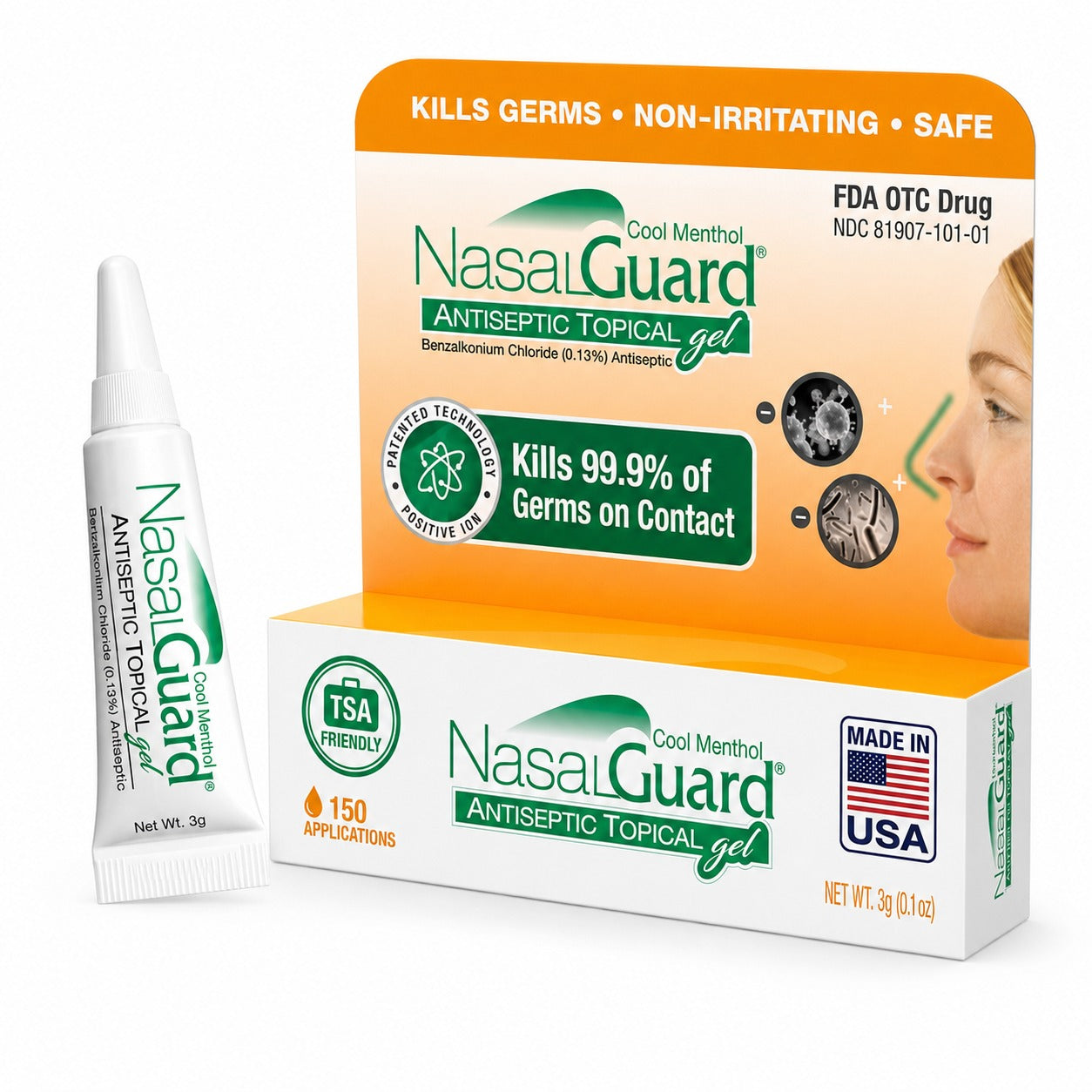
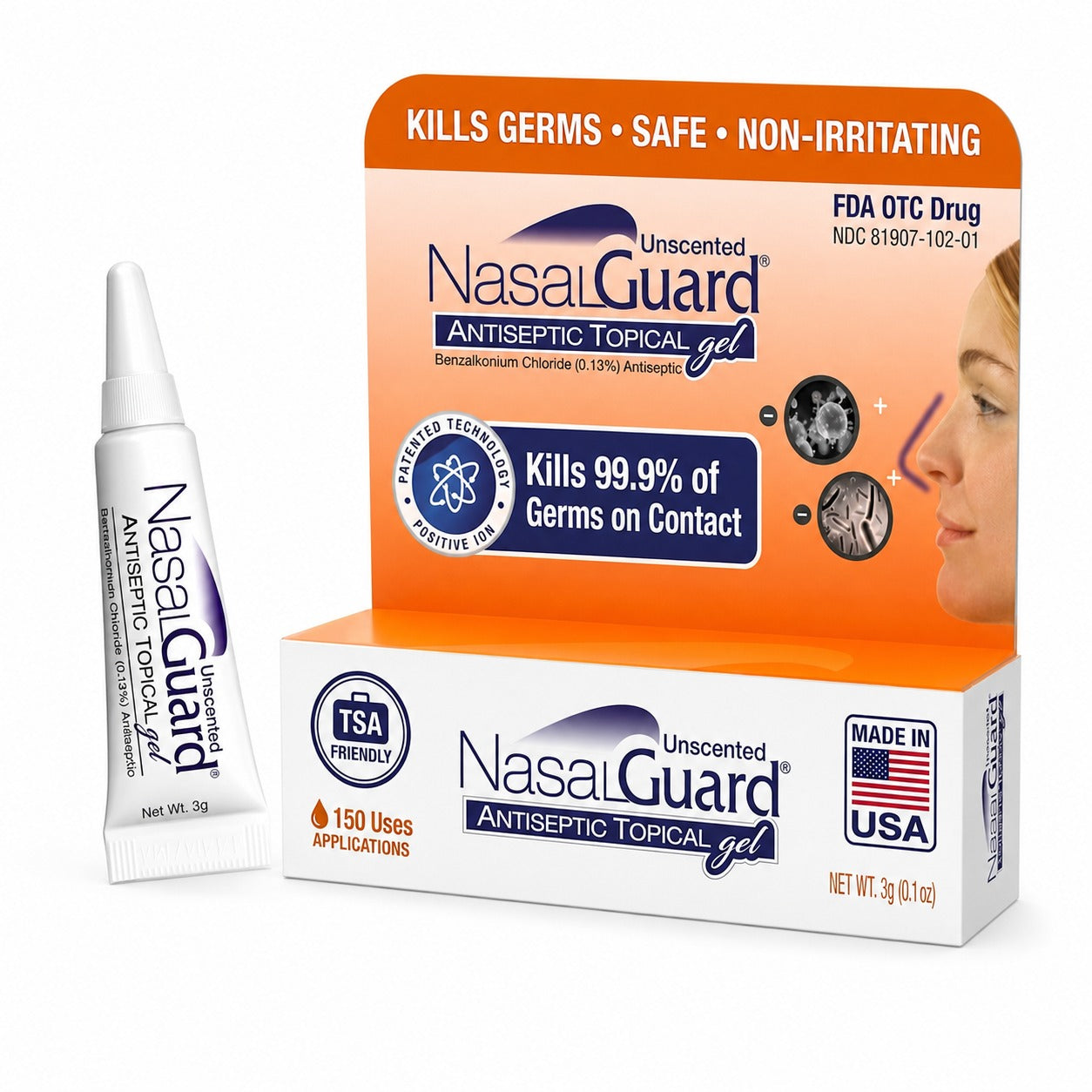
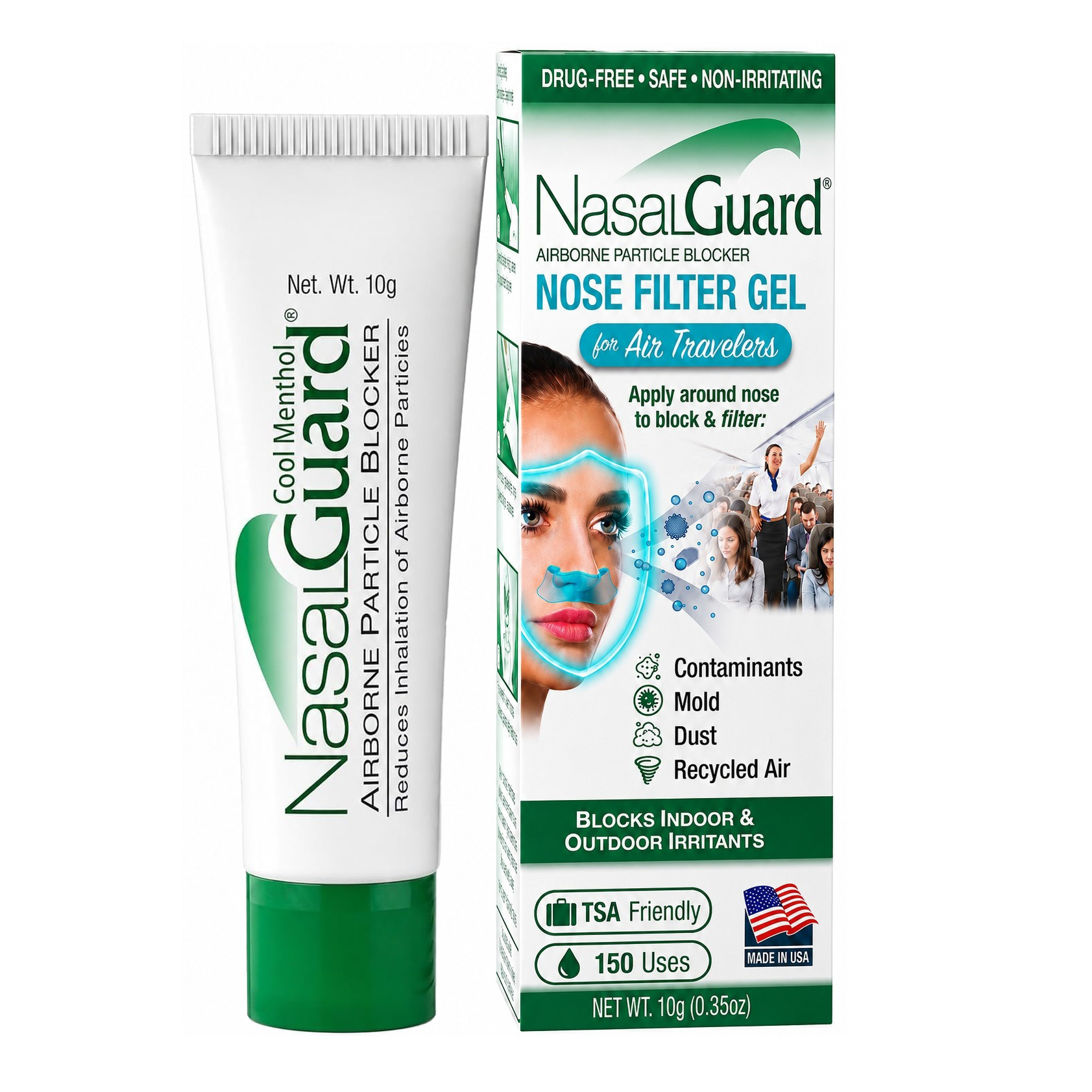
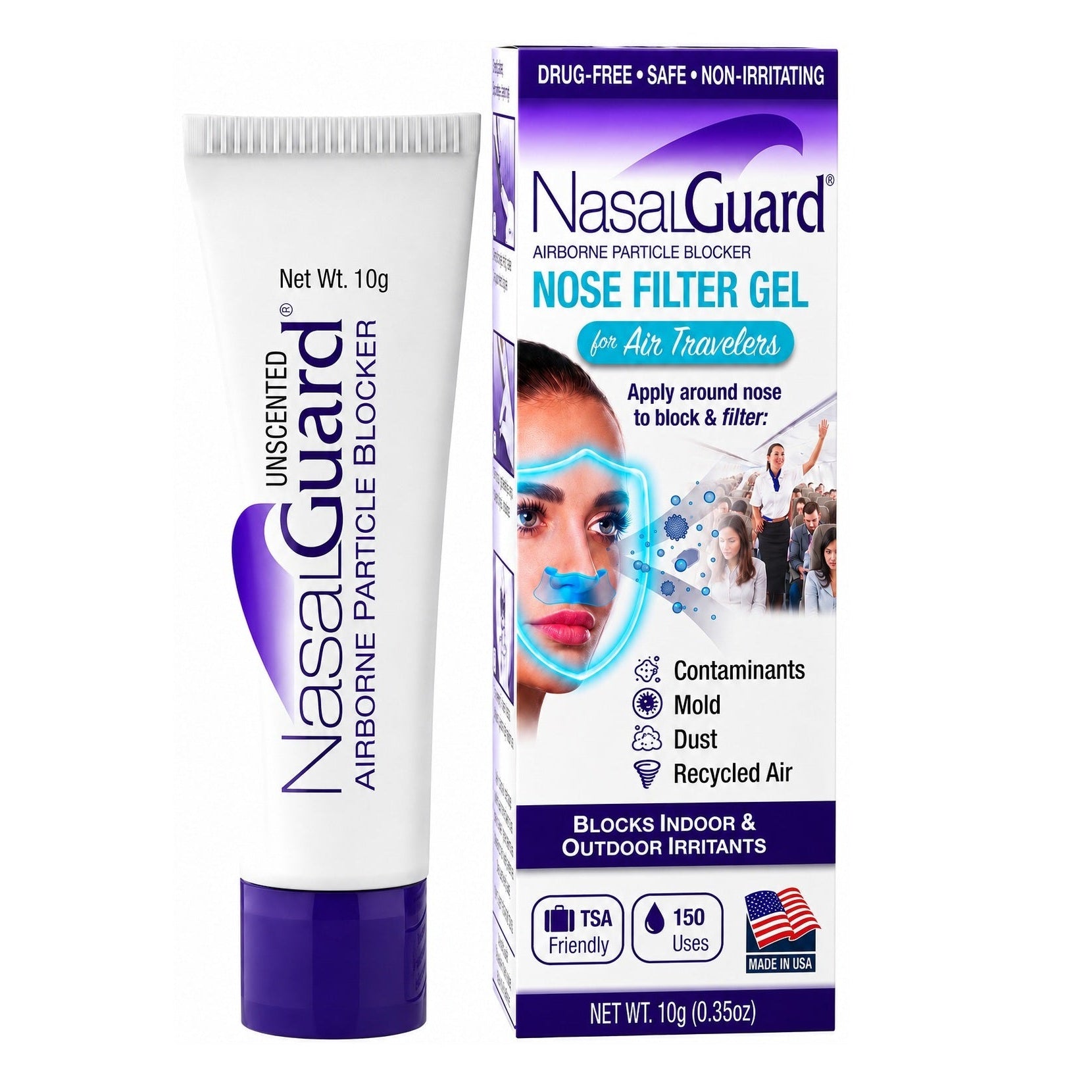
Start with what you will actually use before you reach your destination: toothpaste, lip balm (a solid stick can stay out of the bag), a small moisturizer, contact solution, and a NasalGuard For Air Travelers 3g tube. Leave the rest for the checked bag or buy it when you land.
After screening, move the NasalGuard tube from the liquids bag to a jacket or bag pocket so it is easy to reach. Our guide to bringing gel on a plane covers the 3-1-1 rule in more detail.
Chargers and power banks
The FAA is clear that spare lithium batteries, including power banks and phone charging cases, must be carried in carry-on baggage only. If your carry-on gets checked at the gate or planeside, take the spare batteries and power banks out and keep them with you in the cabin.
Two rules to check before you zip the bag. Sources: TSA Liquids Rule; FAA PackSafe, Lithium Batteries.
A few more details from the FAA's PackSafe page:
Lithium ion batteries are limited to 100 watt hours (Wh) per battery. Most phone power banks fall under that; newer batteries show the Wh number on the case.
Battery terminals need to be kept from touching metal. A battery case, the original packaging, or a snug pouch works.
Airlines can set stricter limits on power banks, so check yours before you fly.
Layers for the airport
Terminals, jet bridges, and cabins can swing between warm and chilly on the same trip. Pack one layer you can put on or take off at your seat: a scarf, a zip fleece, or a sweater. Thick socks help on longer flights. Wear your bulkiest shoes and coat so they are not taking up space in the bag.
Where NasalGuard fits
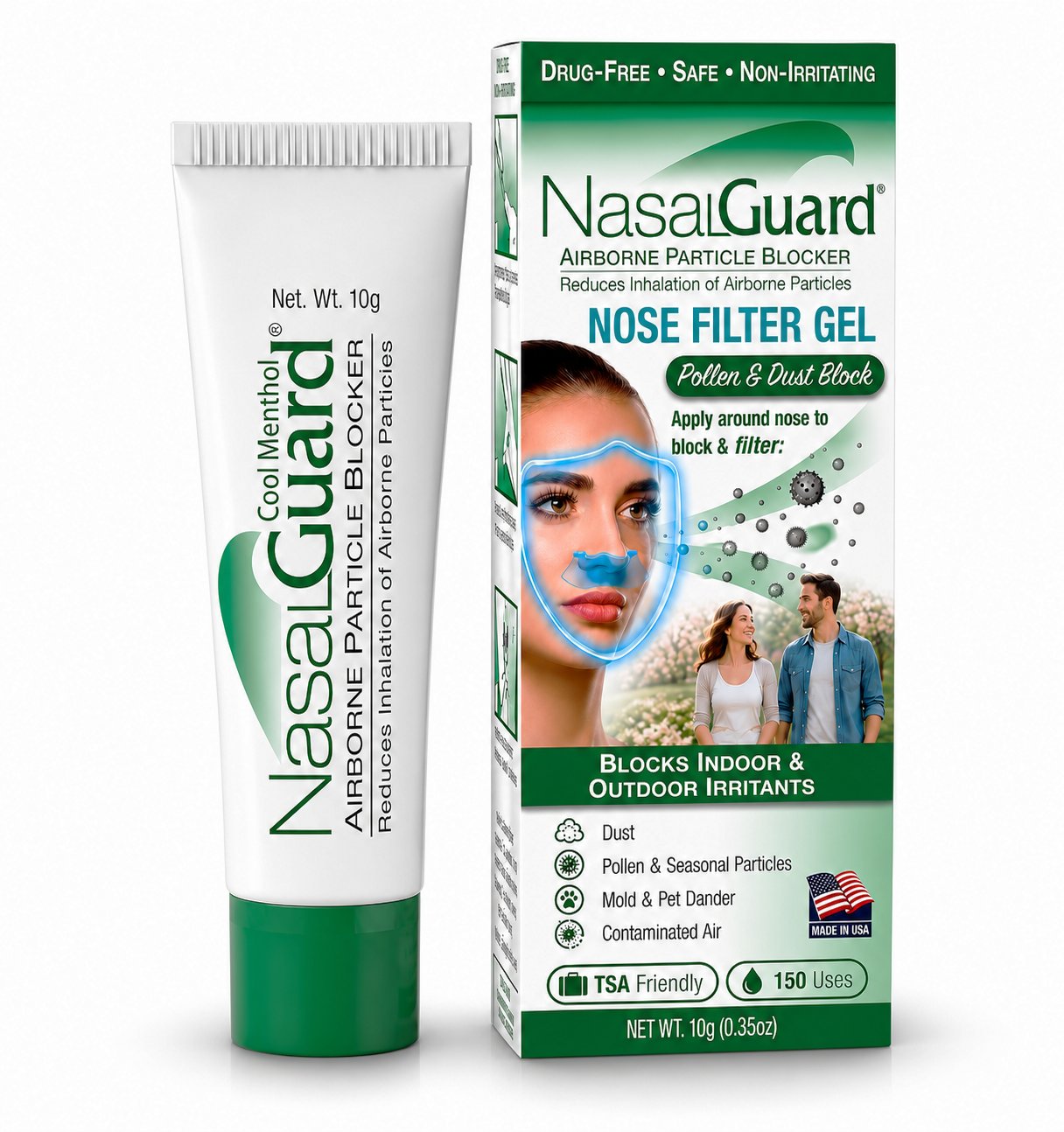
NasalGuard For Air Travelers is a simple, externally applied barrier step for everyday airborne particles at airports, on airplanes, and in other travel settings. It is a milky-white gel in the tube that goes on invisibly once spread.
Three steps, a few seconds. Use as directed.
Place a small amount on a fingertip, spread it between the thumb and finger, and apply around the outside of the nostrils and above the upper lip. Reapply according to the current directions and after the area becomes wet.
A practical rhythm for travel day: apply before you leave for the airport, keep the tube in your pocket after screening, and check the directions before a connection or a long layover. The air travel how-to has a stage-by-stage version.
The full checklist
ID and boarding pass on your phone
Phone charger and cable
Power bank (carry-on only)
Earbuds or headphones
Laptop and laptop charger
Quart-size liquids bag: toothpaste, small moisturizer, contact solution, NasalGuard For Air Travelers 3g
One warm layer and a pair of thick socks
Snacks and an empty water bottle to fill after screening
Yes. TSA allows gels in containers of 3.4 ounces (100 milliliters) or less in one quart-sized bag. The NasalGuard For Air Travelers 3g tube is a small travel-size tube that fits easily in that bag. Check tsa.gov before you fly.
Can a power bank go in checked luggage?
No. The FAA says spare lithium batteries, including power banks and charging cases, must be carried in carry-on baggage only. If your carry-on is checked at the gate, take the power bank out and keep it with you in the cabin.
Which NasalGuard is made for flying?
NasalGuard For Air Travelers is packaged for airports, airplanes, and other travel settings. It comes in Unscented and Cool Menthol, and the 3g tube fits in a quart-size liquids bag.
When should I apply NasalGuard on travel day?
Apply before you head into the setting you are planning for, such as before leaving for the airport or at the gate after screening. Reapply according to the current directions and after the area becomes wet.
Christine Walek writes for the NasalGuard editorial team about air quality, travel, and the everyday airborne particles we share space with. Articles are reviewed against current product labeling before publishing.