We've sent you an email with a link to update your password.
Reset your password
We will send you an email to reset your password.
Nose Barrier for Dust: NasalGuard for Fall Yard Work
Christine Walek
0 comments
The leaves come down all at once in late October, and by the first weekend of November most yards need a full afternoon of raking, blowing, and bagging. Dry leaves crumble, the lawn bag puffs dust every time you stuff it, and the garage you finally clean out has a year of grit on every shelf.
If you have been searching for a nose barrier for dust before that afternoon, this article explains what NasalGuard® Airborne Particle Blocker is designed to do during yard work, what it is not, and how to fit it into a real fall cleanup day.
What a nose barrier for dust is
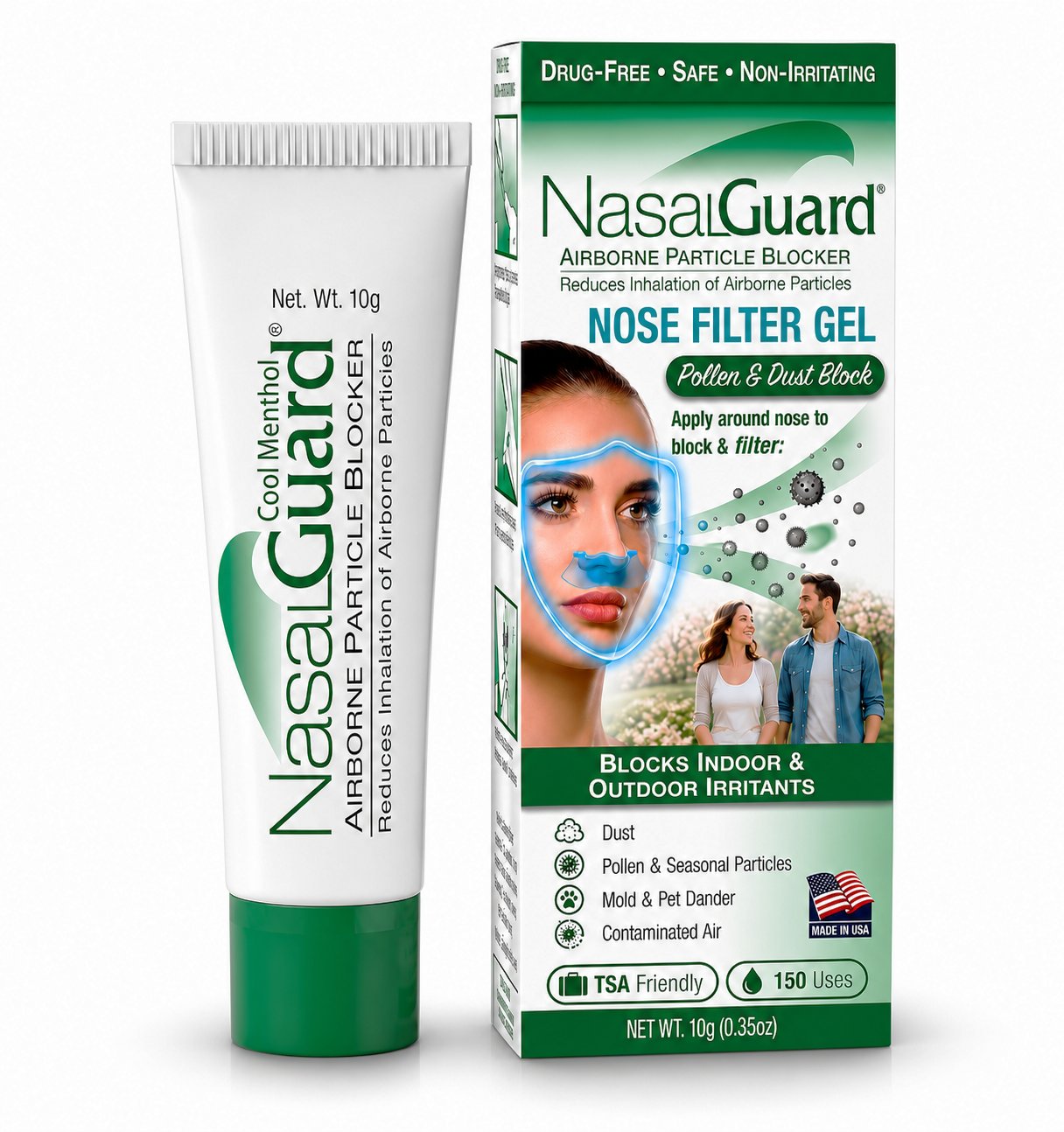
NasalGuard® Airborne Particle Blocker is an invisible, drug-free gel applied around the outside of the nostrils and above the upper lip to help reduce inhalation of everyday airborne particles such as pollen, dust, and pet dander.
It uses positive ion technology to create an invisible gel barrier around the outside of the nostrils, designed to help reduce contact with everyday airborne particles. In a yard, that means the dust that lifts off a dry leaf pile, the grit that blows around when you sweep the driveway, and the pollen still drifting on a warm fall afternoon.
Think of it as a barrier step you add before a dusty job, the same way you pull on gloves before you pick up the rake.
What NasalGuard is not
A few plain answers to the questions people ask before they try it:
It is not a medicine or a drug. It is a topical gel applied externally.
It stays on the outside of the nose. It is not intended to be inserted into the nose; it sits on the skin around the outside of the nostrils and above the upper lip.
It is not your only step. Keep using any gear a job calls for, such as gloves and eye wear, and keep following any advice you have from your doctor.
It is a barrier step, not a wall. It is designed to help reduce contact with everyday airborne particles, so it works alongside the rest of your routine.
There are two NasalGuard product lines with separate labels. Everything here refers to the Airborne Particle Blocker.
Before you start: how to apply it
Apply it before you open the garage door, not halfway through the leaf pile. The gel is milky white in the tube and on your fingertip, then goes on invisibly once spread.
Wash and dry your hands, before the gloves go on.
Place a small amount on a fingertip.
Spread it between the thumb and finger.
Apply around the outside of the nostrils and above the upper lip.
Fingertip, spread, then around the outside of the nostrils and above the upper lip.
A thin, even layer around both nostrils and across the upper lip is the goal. A dab on the tip of the nose misses the spot where air actually comes in.
A fall yard-work day, step by step
Yard work is not one task. It is a string of smaller jobs, and some of them are much dustier than others. Reapply according to the current directions and after the area becomes wet, which on a work day tends to happen at predictable points:
Before you head out. Apply at the sink while your hands are clean.
After a water break. A drink from the bottle or a wipe of your mouth with your sleeve can take the gel with it.
After you sweat or wipe your face. A brisk afternoon of raking still gets warm under a jacket.
Before blowing or bagging. Running a leaf blower and stuffing bags are usually the dustiest parts of the day.
Before the garage or shed. Putting tools away often turns into sweeping out a season of grit.
Five points in a yard-work day to apply or reapply, as directed.
If you take your gloves off to reapply, put them back on right after so the gel is not the last thing your dirty gloves touch.
Habits that kick up less dust
A barrier step fits alongside work habits that keep dust down in the first place. None of these take extra time:
Rake on a damp morning. Leaves that still hold a little dew crumble less than bone-dry leaves in late afternoon.
Keep the wind at your back. Rake and blow so the leaves and dust move away from you.
Bag from the upwind side. Stand so that the puff from a full bag drifts away from your face.
Point the blower low. Aiming it close to the ground moves leaves without throwing dirt into the air.
Shake out gloves and jackets outside, away from the door, before you head in.
Change clothes when you finish, so yard dust stays in the laundry basket and off the couch.
For indoor dust after the yard is done, our guide to dust and airborne particles covers where it collects around the house.
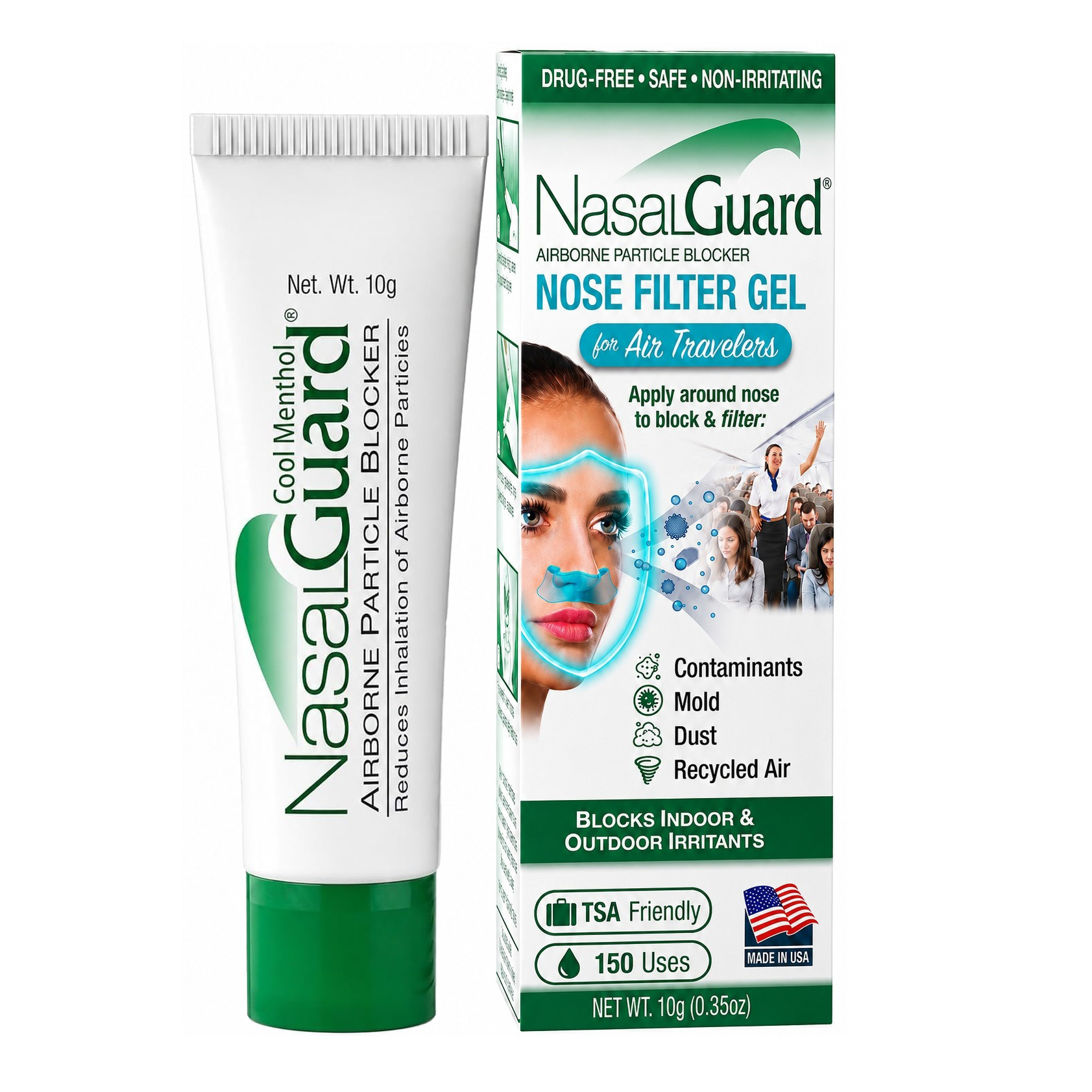
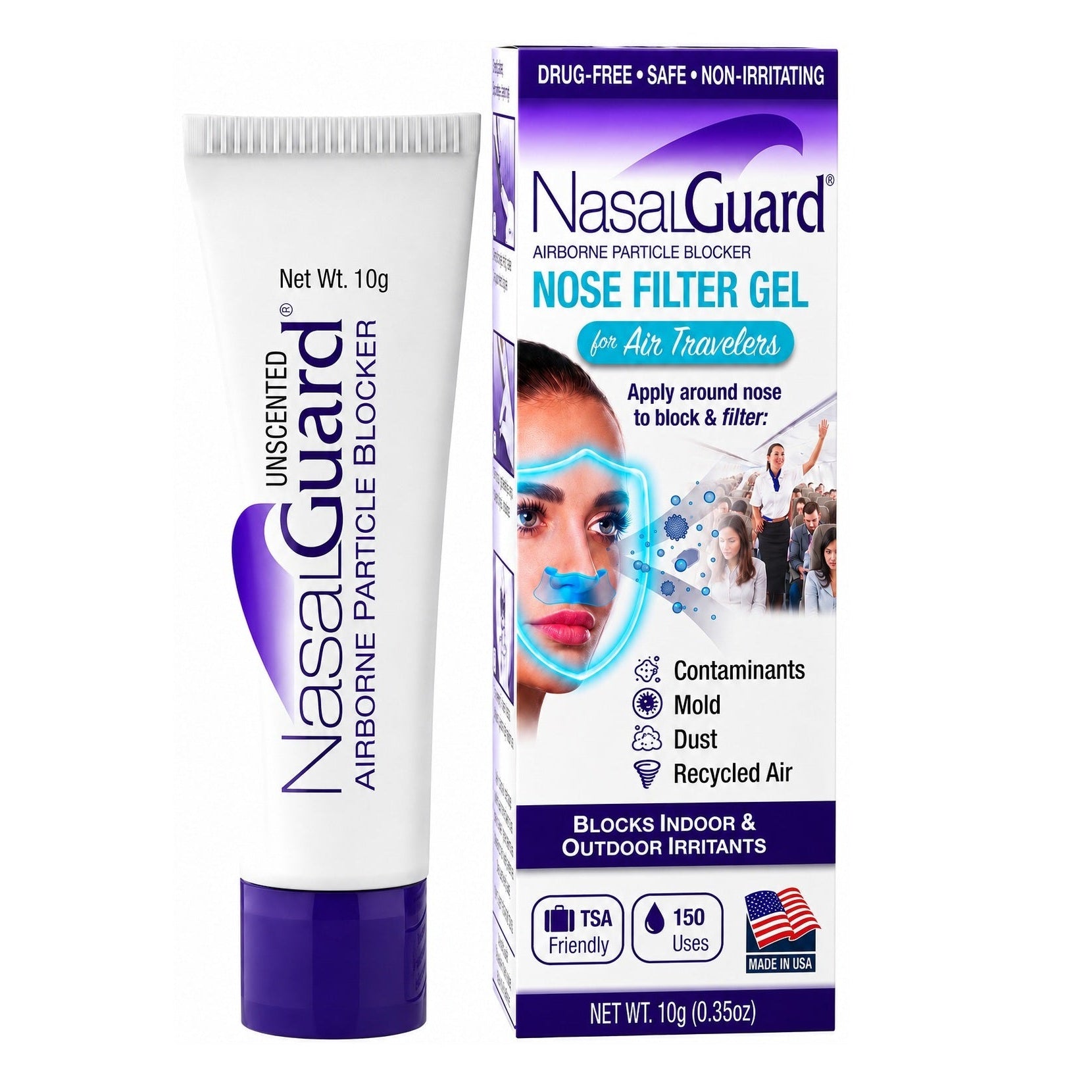
A 10g tube on the garage shelf next to the work gloves, so it is part of getting ready.
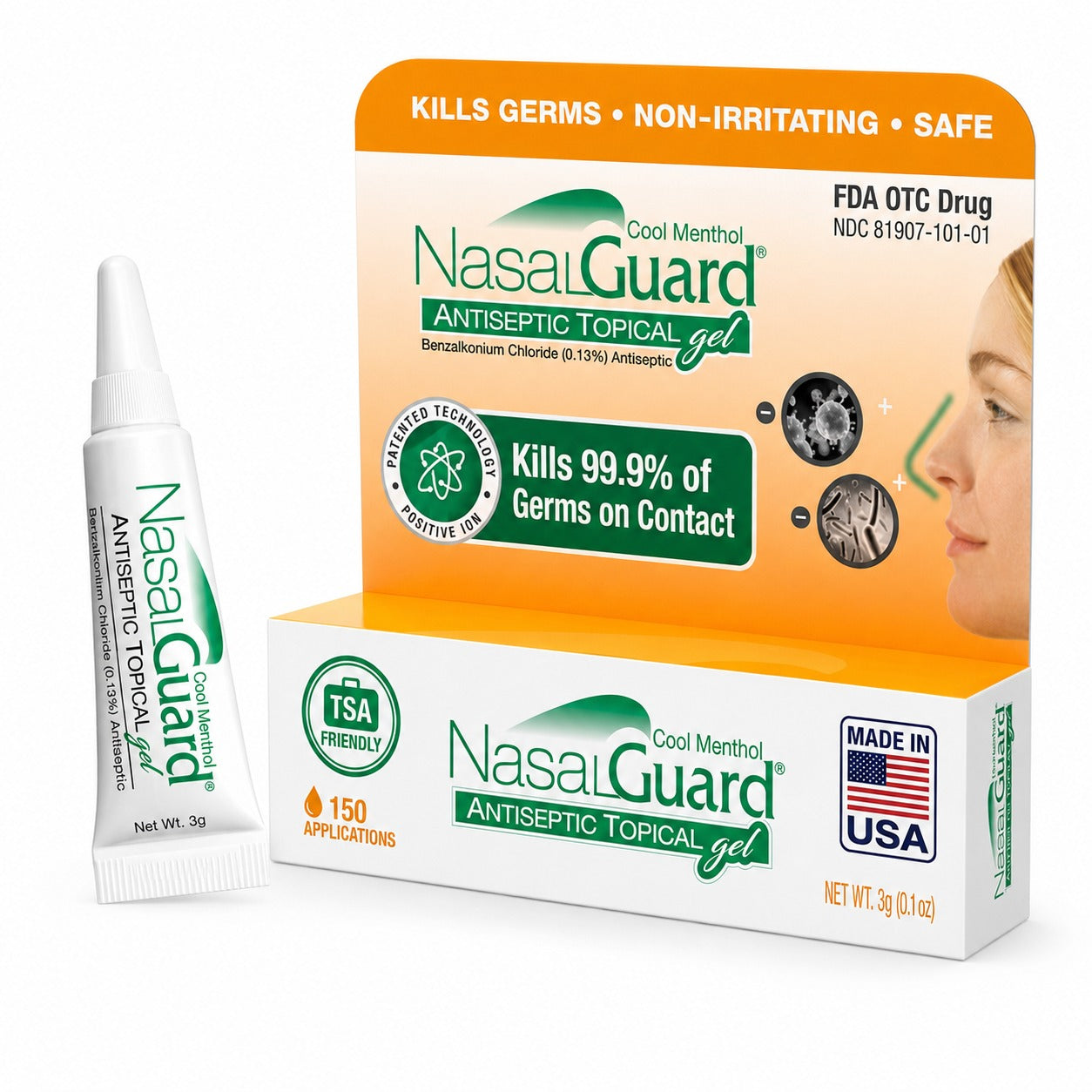
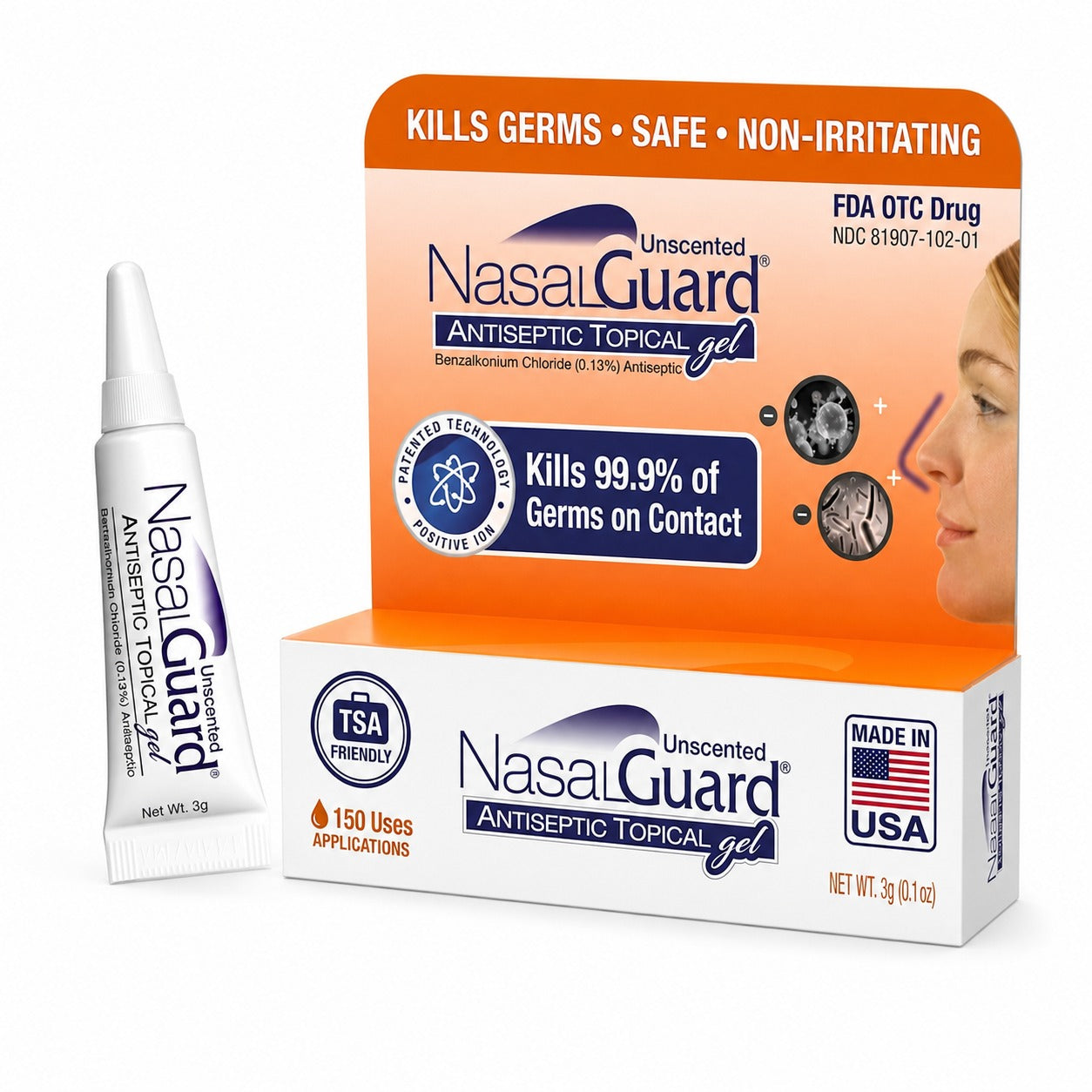
A 3g tube in your jacket pocket for reapplying out in the yard without walking back inside.
Pick the scent you will actually use. Some people like a cool feel while they work; others want nothing they can smell. Small tubes are easy to misplace in a big garage, so give yours one permanent spot.
Frequently asked questions
Can I use NasalGuard for yard work?
Yes. NasalGuard Airborne Particle Blocker is designed to help reduce inhalation of everyday airborne particles such as pollen and dust, which makes it a fit for raking, blowing leaves, and garage cleanup. Apply it around the outside of the nostrils and above the upper lip before you start, and use it as directed.
Does NasalGuard go inside the nose?
No. NasalGuard is applied around the outside of the nostrils and above the upper lip. It is not intended to be inserted into the nose. Spread a small amount between your thumb and finger first so it goes on as a thin, even layer.
Is NasalGuard a medicine?
No. NasalGuard Airborne Particle Blocker is not a medicine or a drug. It is an externally applied topical gel that creates an invisible gel barrier designed to help reduce contact with everyday airborne particles. If you have questions about your health, talk with a healthcare professional.
When should I reapply NasalGuard while working outside?
Reapply according to the current product directions and any time the area becomes wet. During yard work, that usually means after a water break, after you wipe sweat from your face, and before the dustiest jobs like blowing or bagging leaves.
Before your next leaf weekend, put a tube on the garage shelf beside your work gloves so applying it becomes part of gearing up. You can see every version on the NasalGuard products page or read the NasalGuard FAQs.
Christine Walek writes for the NasalGuard editorial team about air quality, travel, and the everyday airborne particles we share space with. Articles are reviewed against current product labeling before publishing.