We've sent you an email with a link to update your password.
Reset your password
We will send you an email to reset your password.
Nose Guard Gel: What a Topical Nose Barrier Is and Isn't
Christine Walek
0 comments
Type "nose guard," "nasal blocker," or "nostril guard" into a search bar and you get a jumble of results: sports face guards, clip-on gadgets, and a few gels. People searching for a nose guard gel usually want something simpler, a thin layer they can put on before raking leaves or boarding a plane, and then forget about.
This guide explains what a topical nose barrier gel is, where it goes, what NasalGuard® Airborne Particle Blocker looks and feels like, and what to check on the label before you use one.
What "nose guard gel" usually means
The search terms vary, but they point to the same idea: a step at the nose, the place where outside air comes in, for times you know you will be around airborne particles. People use all of these words for it:
Nose guard or nose guard gel
Nose barrier
Nasal blocker or nostril blocker
Particle blocker gel
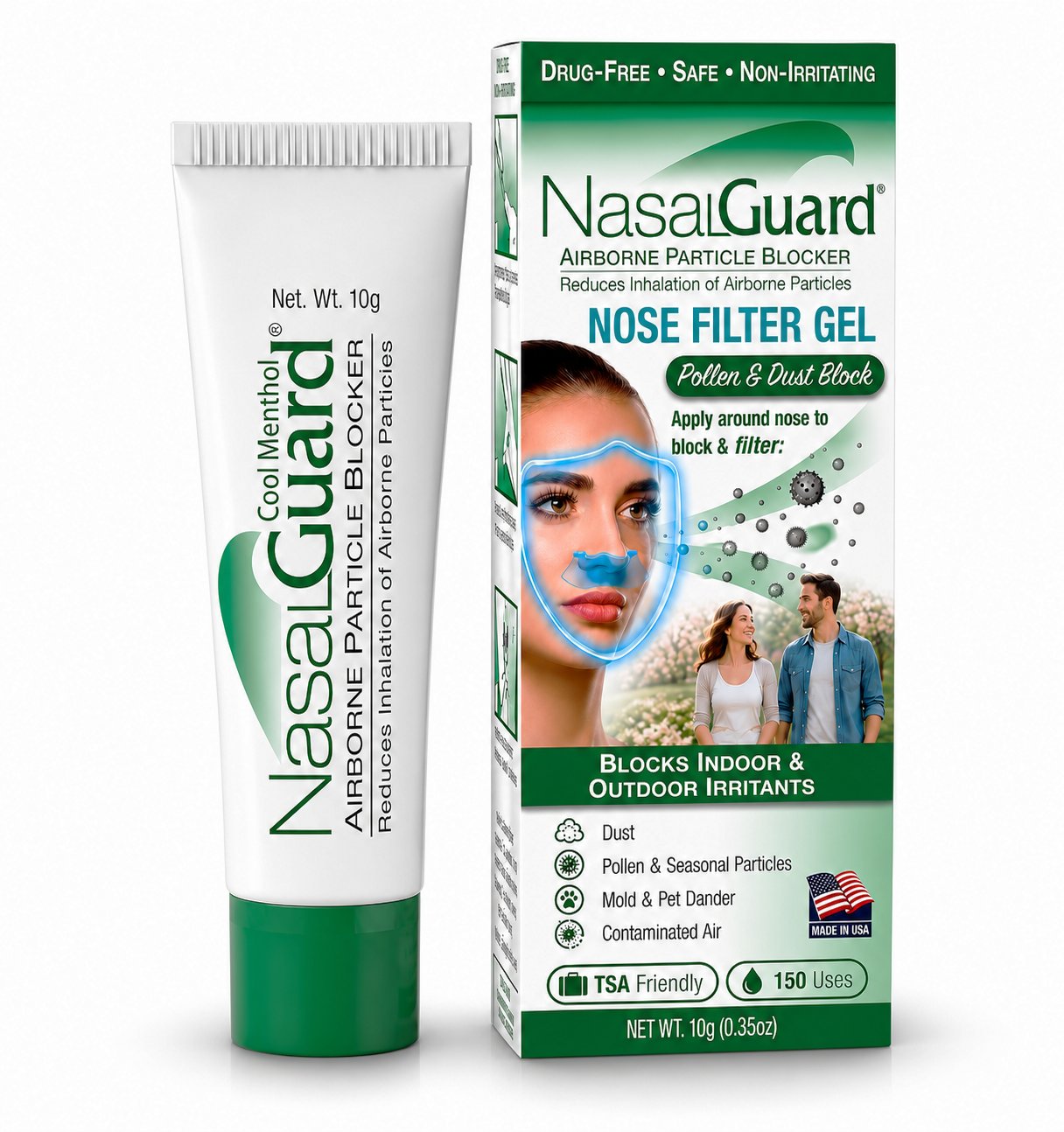
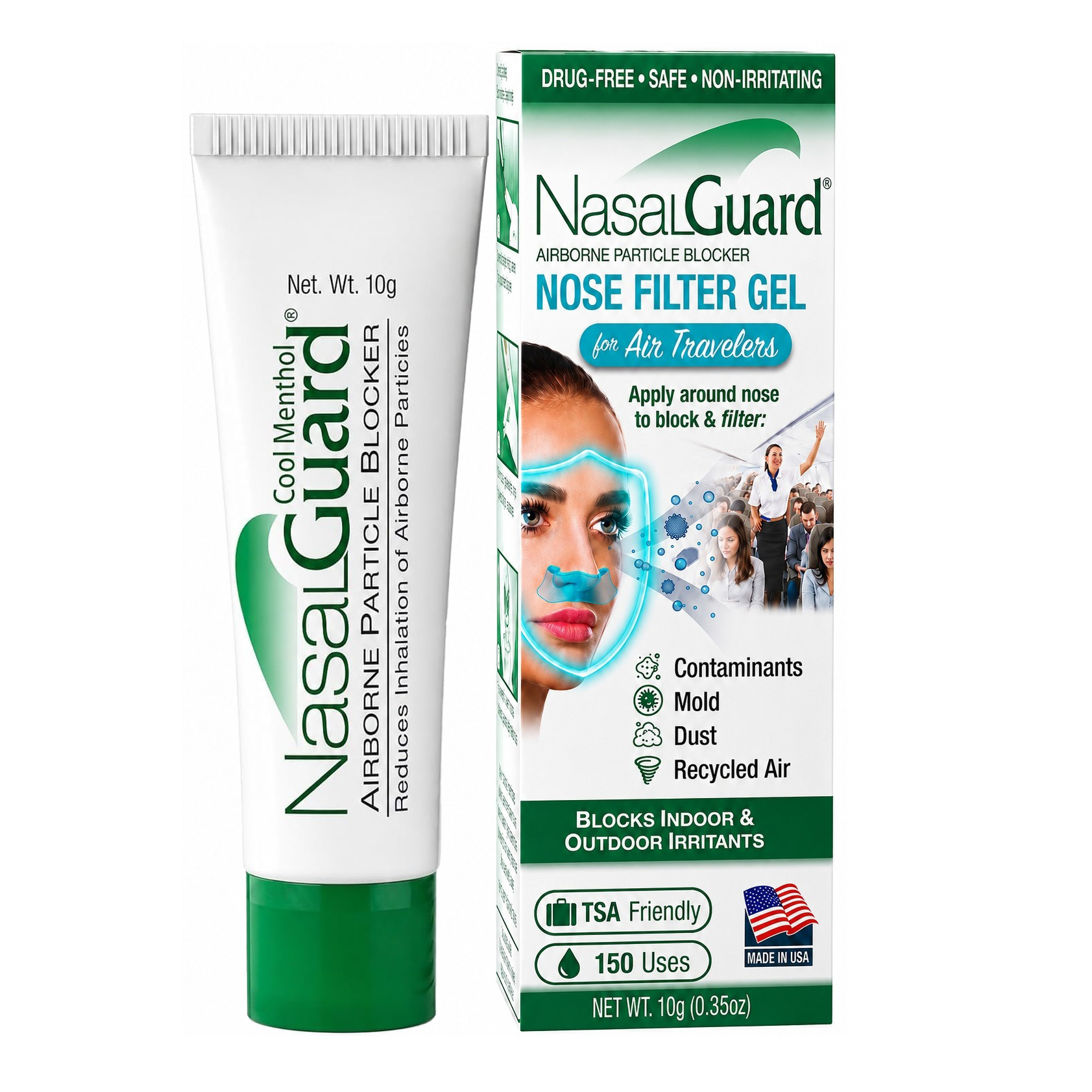
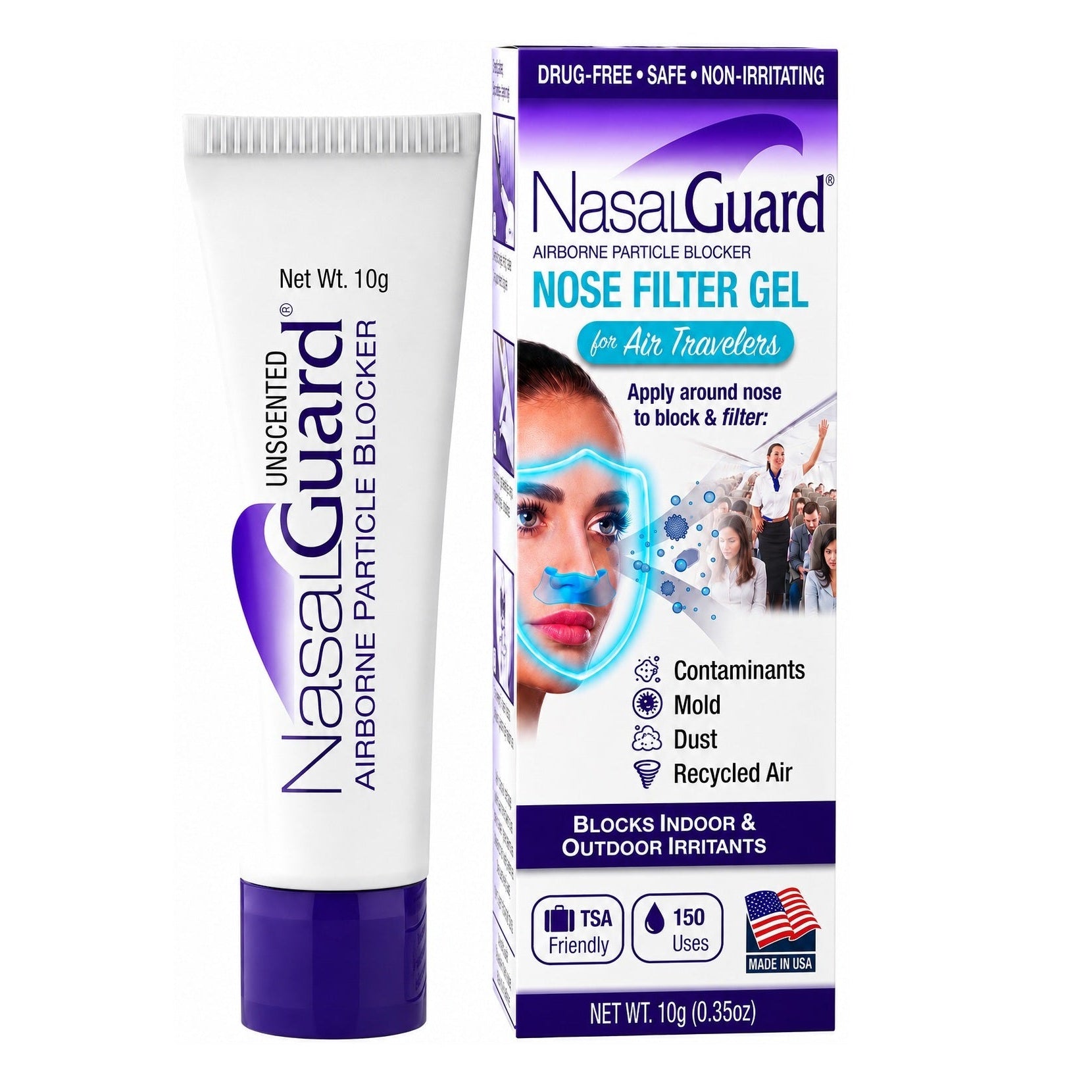
A gel version is topical. You apply it to the skin, the way you would lip balm, and it stays on the outside of the nose. NasalGuard Airborne Particle Blocker is one of these: an externally applied gel that creates an invisible gel barrier around the outside of the nostrils.
What to do with this: when you compare search results, check first whether a product goes on the skin or somewhere else. That one detail tells you which kind of product you are looking at.
Where a nose barrier gel goes
For NasalGuard, placement is specific. The gel goes around the outside of the nostrils and above the upper lip, and it is not intended to be inserted into the nose.
The steps:
Place a small amount on a fingertip.
Spread it between the thumb and finger.
Apply around the outside of the nostrils and above the upper lip.
Reapply according to the current directions and after the area becomes wet, such as after washing your face.
How NasalGuard's gel barrier is designed to work
NasalGuard uses positive ion technology to create an invisible gel barrier around the outside of the nostrils, designed to help reduce contact with everyday airborne particles such as pollen, dust, and pet dander.
Because the barrier sits where air enters the nose, coverage matters more than quantity. A thin, even layer around both nostrils and across the upper lip is what the product is built for. A thick dab on the tip of the nose misses the point.
Think of it as one barrier step that sits alongside what you already do about the air around you, such as keeping a clean filter in the furnace and dusting with a damp cloth.
What it is, and what it is not
NasalGuard Airborne Particle Blocker stays on the outside of the nose.
It is a topical gel, applied externally, that creates an invisible gel barrier around the outside of the nostrils. It is drug-free, which simply describes what is in the tube.
It is not a medicine or a drug, and it is not intended to be inserted into the nose. It is also not a stand-in for advice from your healthcare provider, so keep following whatever they have recommended.
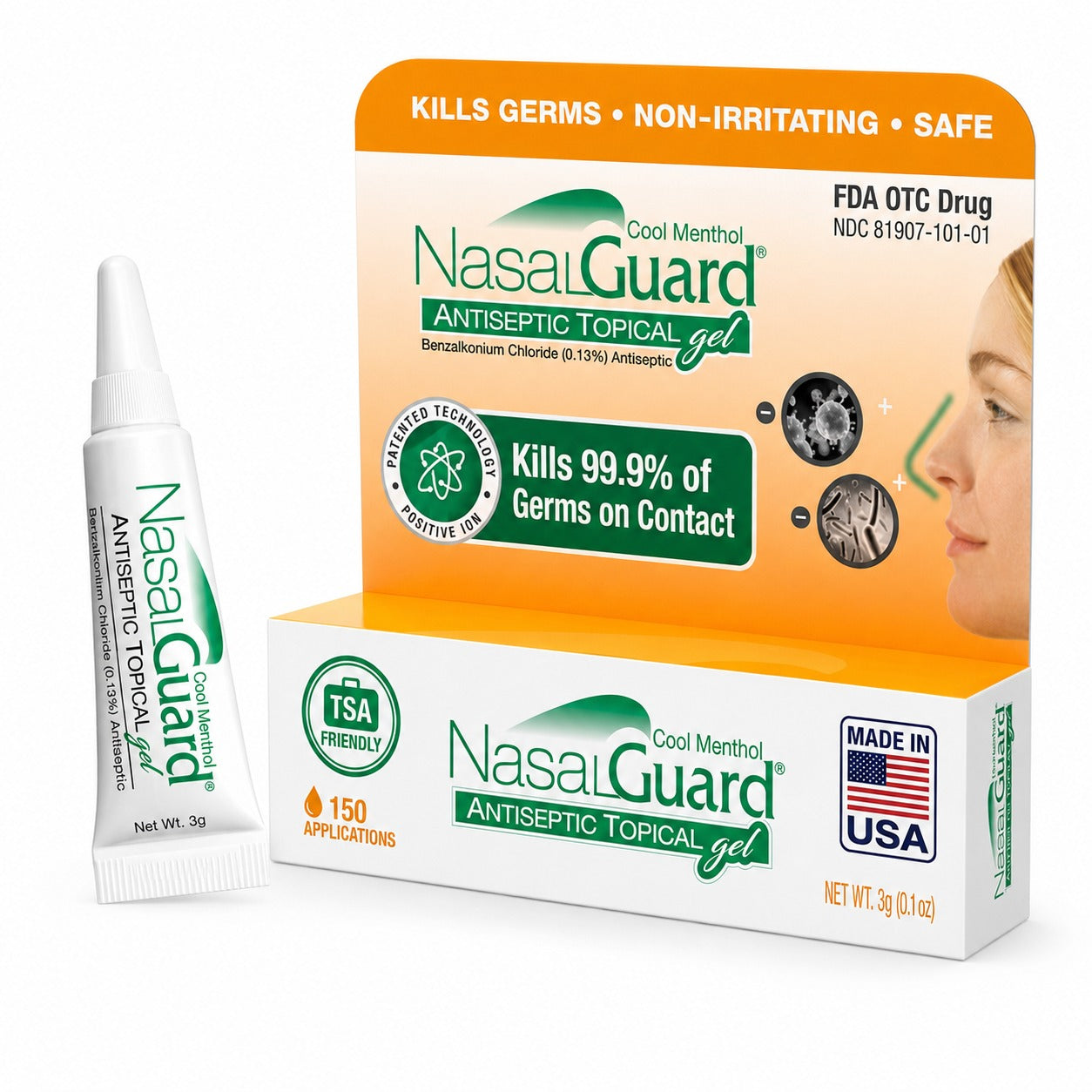
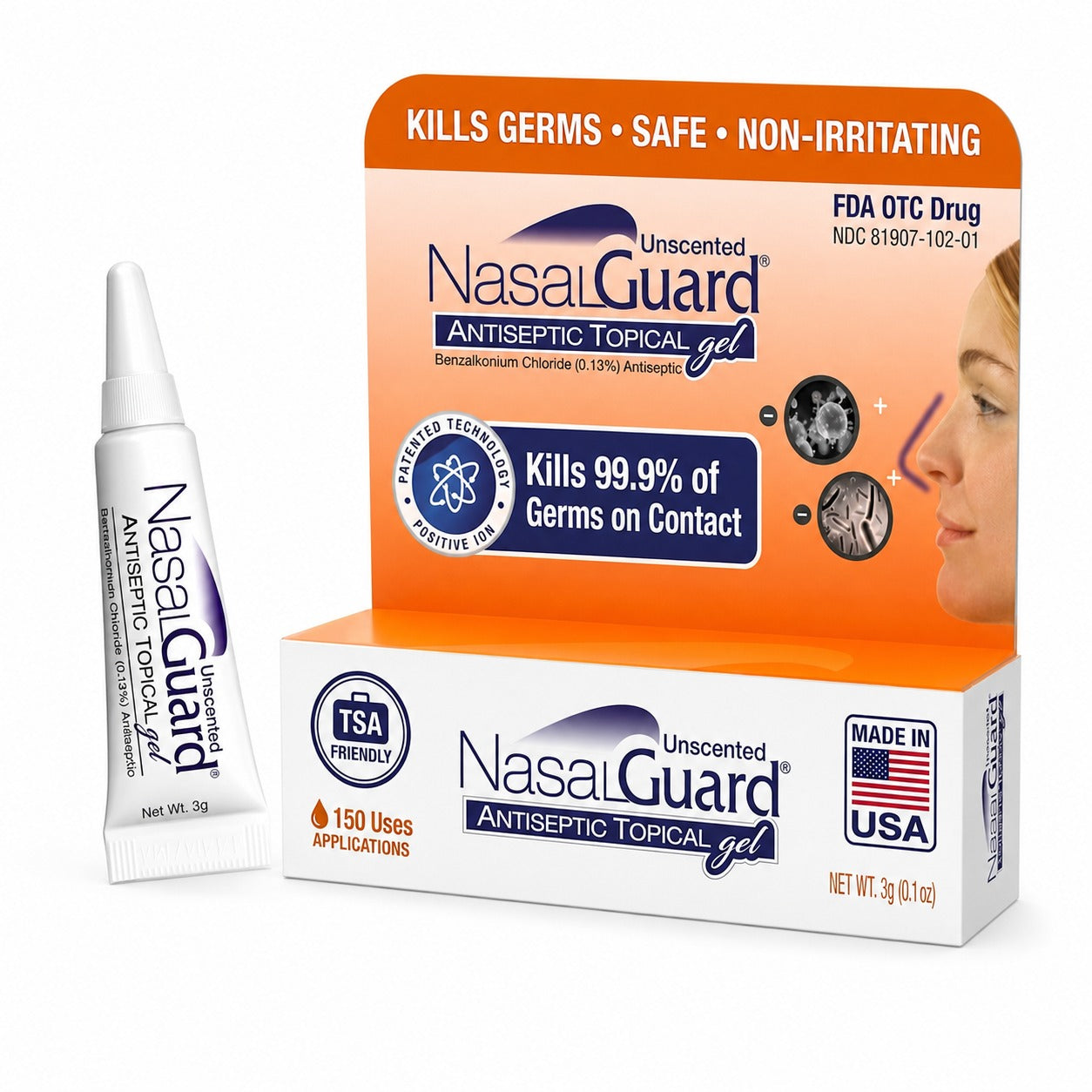
NasalGuard makes two separate product lines with different labels. Everything in this article is about the Airborne Particle Blocker, including the For Air Travelers versions.
What it looks and feels like
NasalGuard gel is opaque and milky white when it comes out of the tube and when it sits on your fingertip. That is normal. Once you spread it between your thumb and finger and apply it, it goes on invisibly, so nobody across the table can tell you are wearing it.
Two scents are available:
Unscented, for people who want nothing they can smell
Cool Menthol, for people who like a cool, fresh feel
Tubes come in 3g and 10g sizes. The 3g tube fits a pocket, glove box, or small bag. The 10g tube suits people who use it most days or want one tube at home and one in the car.
Four things to check on the label
Whatever you buy, the label is where the real answers live. Before you use a nose barrier gel for the first time, look for these:
Four label checks before you use a nose barrier gel for the first time.
The exact product and variant. The name should tell you the product line, the scent, and the tube size.
Where to apply it. For NasalGuard, that is around the outside of the nostrils and above the upper lip.
When to reapply. Follow the directions on the current label, and reapply after the area becomes wet.
Who to ask with questions. If you have a question about your own health, ask your healthcare provider before you start something new.
When you are deciding where a gel fits into your week, it helps to name the moments first. People tend to reach for NasalGuard before yard work and leaf cleanup, a dusty day at an outdoor event, clearing out a garage, time around pets, a crowded commute, or a day of air travel. Our guide to when to use an airborne particle blocker gel walks through those settings.
Frequently asked questions
What is a nose guard gel?
A nose guard gel is a topical gel applied to the skin around the nose rather than placed inside it. NasalGuard Airborne Particle Blocker is one example: an externally applied gel that uses positive ion technology to create an invisible gel barrier around the outside of the nostrils, designed to help reduce contact with everyday airborne particles.
Does NasalGuard go inside the nose?
No. Apply a small amount around the outside of the nostrils and above the upper lip. NasalGuard is not intended to be inserted into the nose. Spread the gel between your thumb and finger first so it goes on as a thin, even layer, and use it as directed on the current label.
Why does NasalGuard look white in the tube?
NasalGuard gel is opaque and milky white in the tube and on your fingertip. That is how it is supposed to look. Once you spread it between your thumb and finger and apply it around the outside of the nostrils and above the upper lip, it goes on invisibly.
Is NasalGuard a medicine?
No. NasalGuard Airborne Particle Blocker is not a medicine or a drug. It is an externally applied topical gel designed to help reduce contact with everyday airborne particles such as pollen, dust, and pet dander. If you have questions about your health, talk with your healthcare provider.
Your next step
Pick the one setting where you would use a nose barrier gel most, then choose a scent and size to match. For everyday use at home, outdoors, and on the road, start with NasalGuard® Airborne Particle Blocker: an invisible, drug-free gel applied around the outside of the nostrils and above the upper lip to help reduce inhalation of everyday airborne particles such as pollen, dust, and pet dander. Prefer a cool feel? Try Cool Menthol. More questions are answered in the NasalGuard FAQs.
Christine Walek writes for the NasalGuard editorial team about air quality, travel, and the everyday airborne particles we share space with. Articles are reviewed against current product labeling before publishing.