We've sent you an email with a link to update your password.
Reset your password
We will send you an email to reset your password.
Heating Season Dust: What Happens When You Turn On the Heat
Christine Walek
0 comments
The first chilly night of the year, the thermostat clicks, the vents start breathing warm air, and the whole house smells faintly like a hot toaster. That smell is heating season dust: months of it, settled on the furnace and in the ductwork while you ran the air conditioner or nothing at all.
Below is where that dust comes from, what actually moves it around your rooms, and the short list of habits that keep it in check from October to April.
Why the first run of the furnace smells like dust
A furnace sits idle for months. Dust drifts onto the burners, the heat exchanger, and the blower. When the system fires up for the first time, that layer warms and you smell it in every room within a few minutes.
For most homes the smell fades after the first day of steady running. Open a window for a little while if it bothers you. If a burning smell lingers for days or gets stronger, switch the system off and have an HVAC technician check it.
Where indoor dust really comes from
It is tempting to blame the ducts for everything. The EPA's guidance on duct cleaning points out that most of the dirt in ducts sticks to the duct surfaces rather than blowing into living spaces. Everyday life puts more particles into your air than the ducts do. The EPA lists cooking, cleaning, and simply moving around the house, along with air coming in from outdoors.
In a typical home in late fall that means:
Fibers from blankets, rugs, and the sweaters that just came out of storage
Pet dander and hair, which you notice more once everyone spends more time indoors
Tracked-in soil and leaf bits from the yard
Cooking particles, especially from searing and frying
Outdoor pollution and pollen that drift in through doors and gaps
Dust raised by fall cleaning projects, like clearing out closets or the garage
Forced-air heat mostly moves existing dust around. Every time the blower runs, room air is pulled into the return vents and pushed back out of the supply vents, and the filter is the one spot along the way where dust gets caught.
The blower pulls room air through the filter on every cycle. Source: US EPA.
Your furnace filter is the main lever
If you change one thing this season, make it the filter.
Pick the right MERV rating
MERV stands for Minimum Efficiency Reporting Value. It is a 1 to 16 scale that rates how well a filter captures particles between 0.3 and 10 microns, and a higher number means a filter catches smaller particles better. The EPA suggests that if you upgrade, you choose a filter rated at least MERV 13, or the highest rating your system's fan and filter slot can handle.
Higher MERV numbers catch smaller particles. Source: US EPA.
Denser filters need a fan strong enough to push air through them. If you are not sure, ask an HVAC professional before jumping several MERV levels.
Change it on schedule, then check it monthly
The EPA's advice is short: change filters regularly, and more often if they clog. During heating season a quick monthly look tells you more than the calendar does. Slide the filter out and hold it up to a light. If it looks gray and you can barely see through it, replace it.
Close the gaps
A filter only works on air that passes through it. The EPA notes that missing filters and gaps around the filter let air bypass it. Make sure the filter is the exact size for the slot, that the airflow arrow points toward the furnace, and that the access door closes snugly.
Do you need your ducts cleaned before winter?
Probably not. The EPA recommends cleaning air ducts only as needed rather than on a routine schedule. It names the situations where cleaning is worth considering:
Substantial mold you can see inside the ducts or on other parts of the system
Signs of insects or rodents in the ductwork
Ducts clogged with heavy dust and debris, or particles puffing out of the supply registers
A dusty return grille on its own is normal. Vacuum it and move on. If you do hire a cleaner, the EPA says to fix the underlying cause first, such as a moisture problem, or the issue tends to come back.
Seven habits that keep heating season dust down
Run the heat once on a mild day. Burning off the summer dust layer with the windows cracked beats doing it on the first freezing night.
Vacuum with a HEPA vacuum. The EPA recommends a high-efficiency or HEPA vacuum so you are not blowing fine dust back into the room as you clean.
Dust top to bottom, damp cloth first. Shelves, then surfaces, then floors.
Wash stored bedding and throws before using them. Months in a closet leaves a layer of dust on fabric.
Use a doormat and a shoes-off rule. Leaf season tracks a surprising amount of yard into the house.
Turn on the range hood when you cook. It pulls cooking particles out before the furnace spreads them around.
Seal registers during renovation work. The EPA advises covering supply and return registers and not running the system during dusty projects until the cleanup is done.
For the jobs that stir up dust on purpose
Some fall chores are dust generators no matter how careful you are: swapping the filter, clearing out the attic, sorting the garage, raking a dry yard. A filter and a vacuum help with the air in the house. For time spent right in the middle of the dust, some people add a personal step.
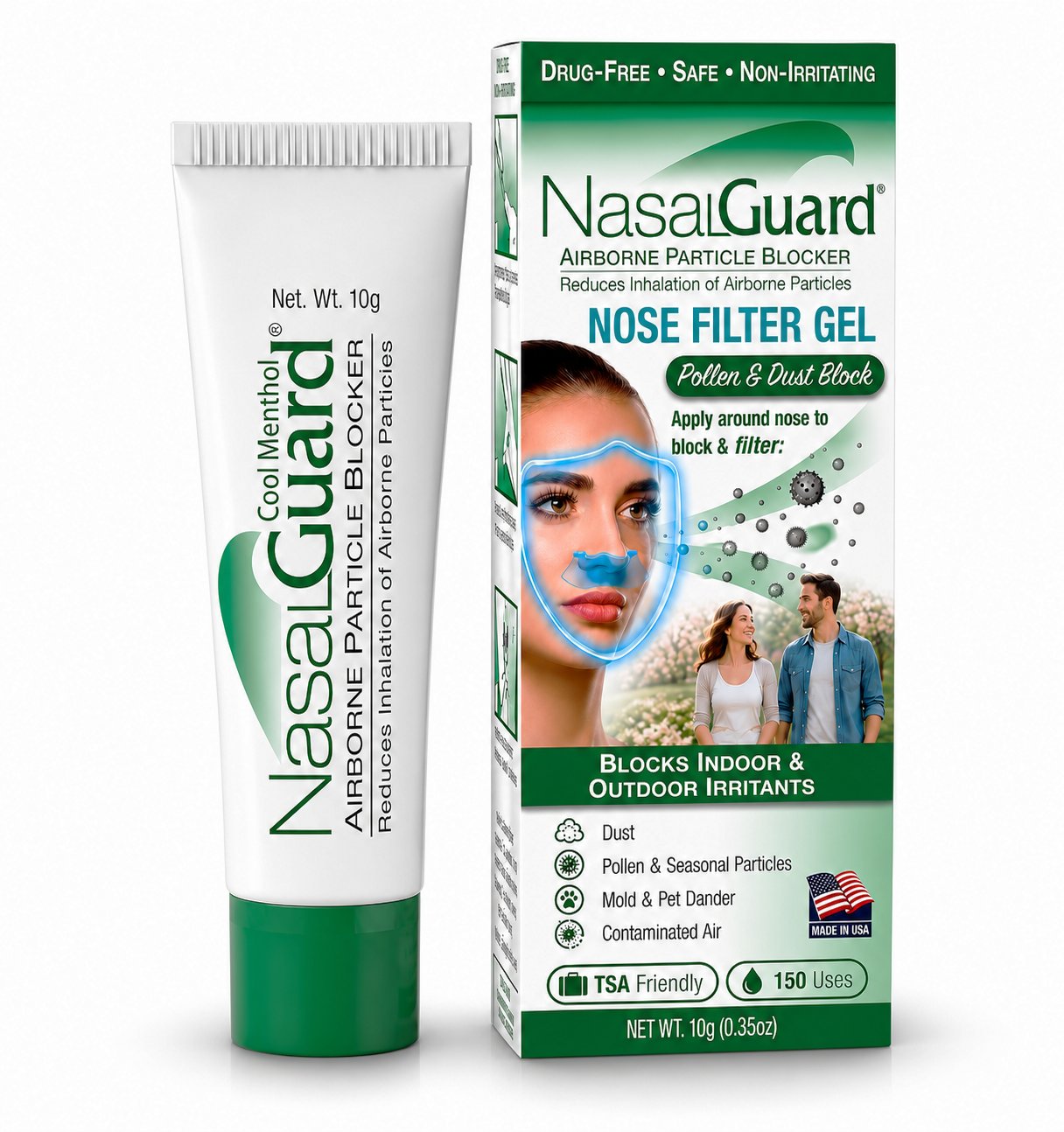
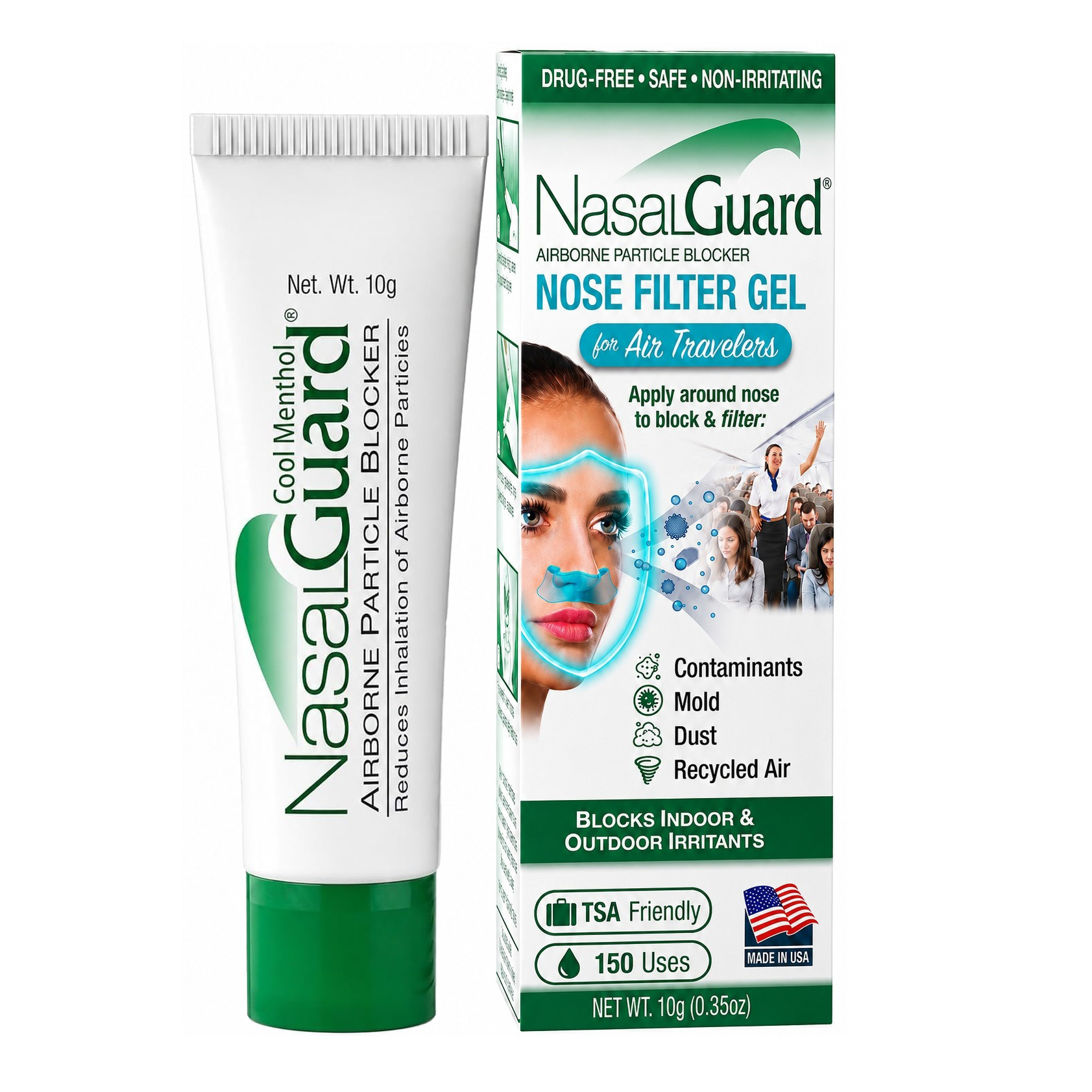
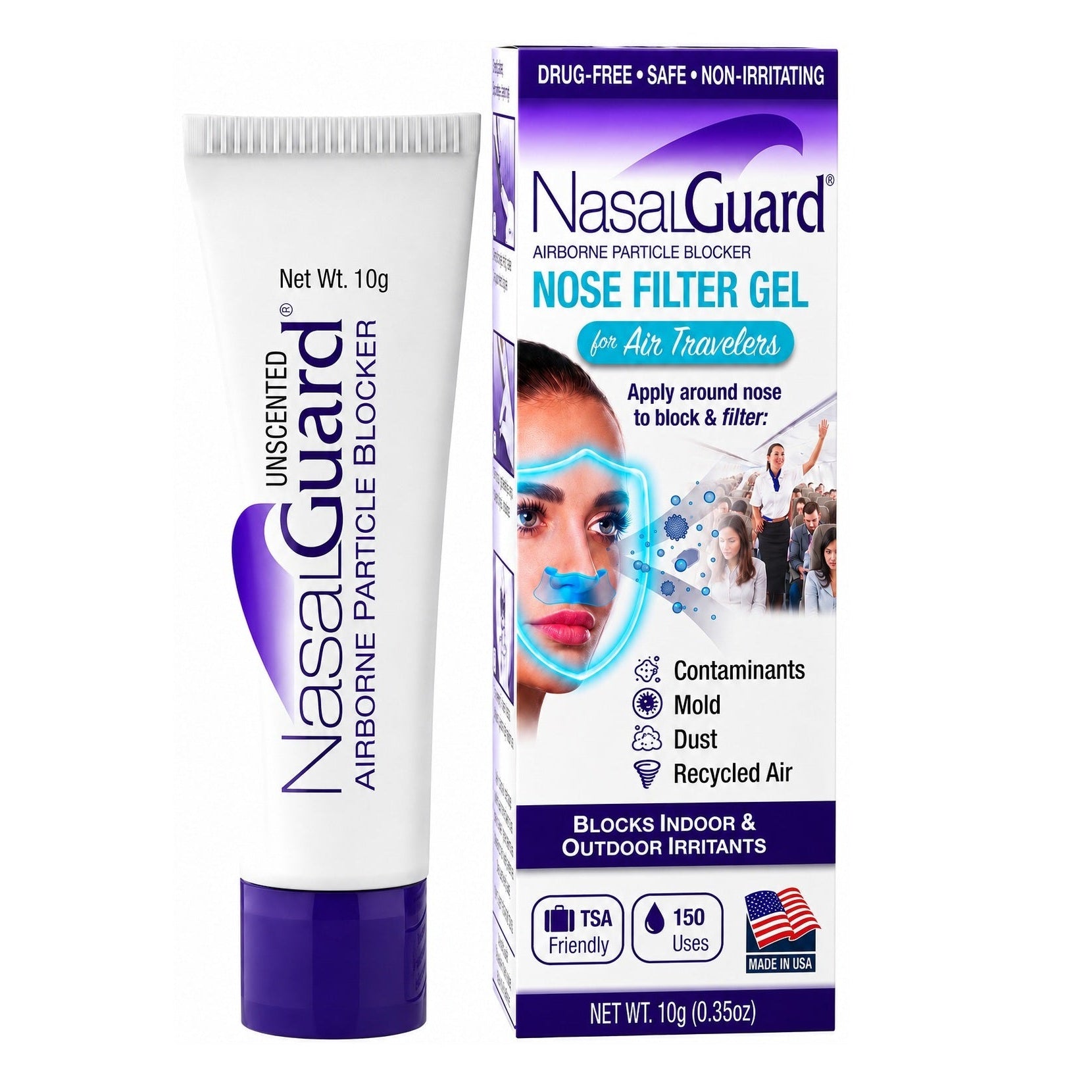
NasalGuard® Airborne Particle Blocker is an invisible, drug-free gel applied around the outside of the nostrils and above the upper lip to help reduce inhalation of everyday airborne particles such as pollen, dust, and pet dander. Use it as directed.
Frequently asked questions
Why does my house smell like dust when I turn on the heat?
Over the warm months, dust settles on the furnace and inside the vents. The first few times the system runs, that layer warms up and you smell it. The smell usually fades after the first day or so. If a burning smell sticks around or gets stronger, turn the system off and call an HVAC technician to take a look.
How often should I change my furnace filter in winter?
Follow the filter and furnace manufacturer's schedule, and check the filter monthly while the heat runs most days. The EPA advises changing filters regularly and more often if they clog. Homes with pets, renovation work, or a lot of foot traffic usually need more frequent changes.
What MERV rating should my furnace filter be?
The EPA suggests a filter rated at least MERV 13, or the highest rating your system's fan and filter slot can handle. Higher-rated filters are denser, so check with an HVAC professional before upgrading if you are not sure your system can move air through one.
Do I need my air ducts cleaned before winter?
Usually not. The EPA recommends cleaning ducts only as needed, for example when there is substantial visible mold, signs of pests, or heavy dust and debris clogging the ducts. A dusty return grille is normal and can be vacuumed.
Your next step
Before the first freeze, pull your furnace filter, check its size and MERV rating, and buy two replacements so the next change takes two minutes instead of a trip to the store.
Christine Walek writes for the NasalGuard editorial team about air quality, travel, and the everyday airborne particles we share space with. Articles are reviewed against current product labeling before publishing.