We've sent you an email with a link to update your password.
Reset your password
We will send you an email to reset your password.
Nasal Barrier Cream or Gel? How NasalGuard Looks and Feels
Christine Walek
0 comments
People searching for a nasal barrier cream are often looking for something they can see going on: a white product they smooth around the nose so they know it is there. NasalGuard® Airborne Particle Blocker fits part of that picture, and the rest surprises people the first time they use it.
Here is what NasalGuard looks like, how it feels going on, where it goes, and what it is designed to do, so you know what to expect before you buy a tube.
Is NasalGuard a cream or a gel?
NasalGuard is a topical gel. In the tube it is opaque and milky white, which is why many people describe it as a nose barrier cream when they first see it. The difference shows up when you apply it: a thin layer spreads out and goes on invisibly, without leaving a white mask on the skin.
So if you were picturing a thick white cream that stays visible, NasalGuard behaves differently. If you were picturing something light that does not show once it is on, that is closer to what you get.
What you see at each step
Three moments, three different looks:
In the tube. A small amount comes out opaque and milky white.
On your fingertip. A small white dab. Spreading it between your thumb and finger thins it out.
Once applied. Around the outside of the nostrils and above the upper lip, the thin layer is invisible.
Milky white in the tube and on the fingertip, invisible once spread.
That change is a quick way to check your application. A visible white film usually means the layer is thicker than it needs to be.
Where it goes
NasalGuard is applied on the skin, outside the nose: around the outside of both nostrils and above the upper lip. It is not intended to be inserted into the nose.
Around the outside of the nostrils and above the upper lip. Use as directed.
The application steps are short:
Place a small amount on a fingertip.
Spread it between the thumb and finger.
Apply around the outside of the nostrils and above the upper lip.
Reapply according to the current directions and after the area becomes wet, for example after washing your face or coming in from the rain.
How much to use
The amount is small. Follow the current product directions for how much to use and when to reapply. Two practical notes from the way the gel behaves:
Spreading it between thumb and finger first makes the thin, even layer easier than dabbing straight from the tube.
If white is still visible after you apply, smooth it out further rather than adding more.
Clean, dry fingertips make the small dab easier to control, and a mirror helps the first few times until the placement feels routine. After that, most people can apply it in a few seconds without one.
Because the 3g tube is small, many people keep one in a pocket or bag and a 10g tube at home.
Unscented or Cool Menthol
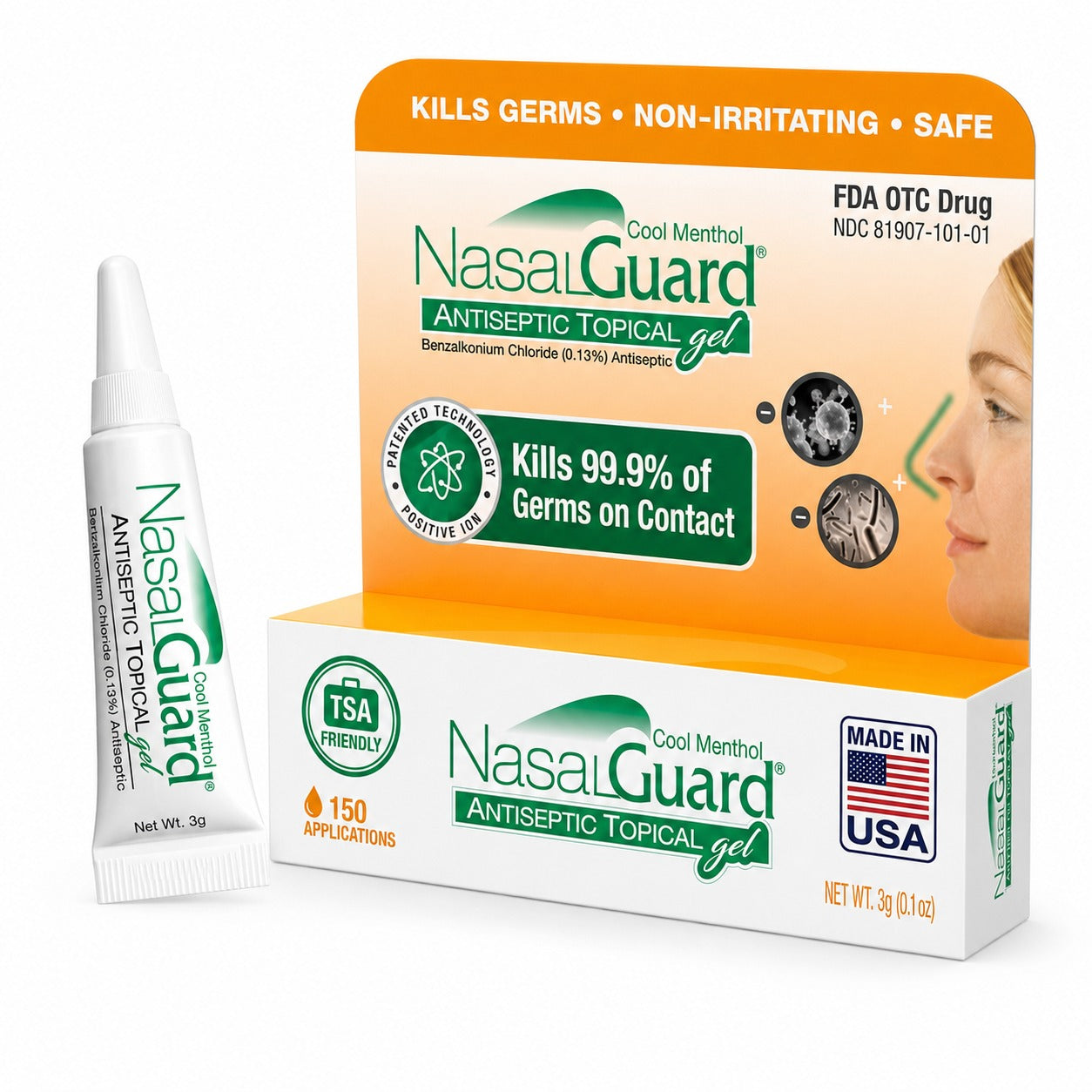
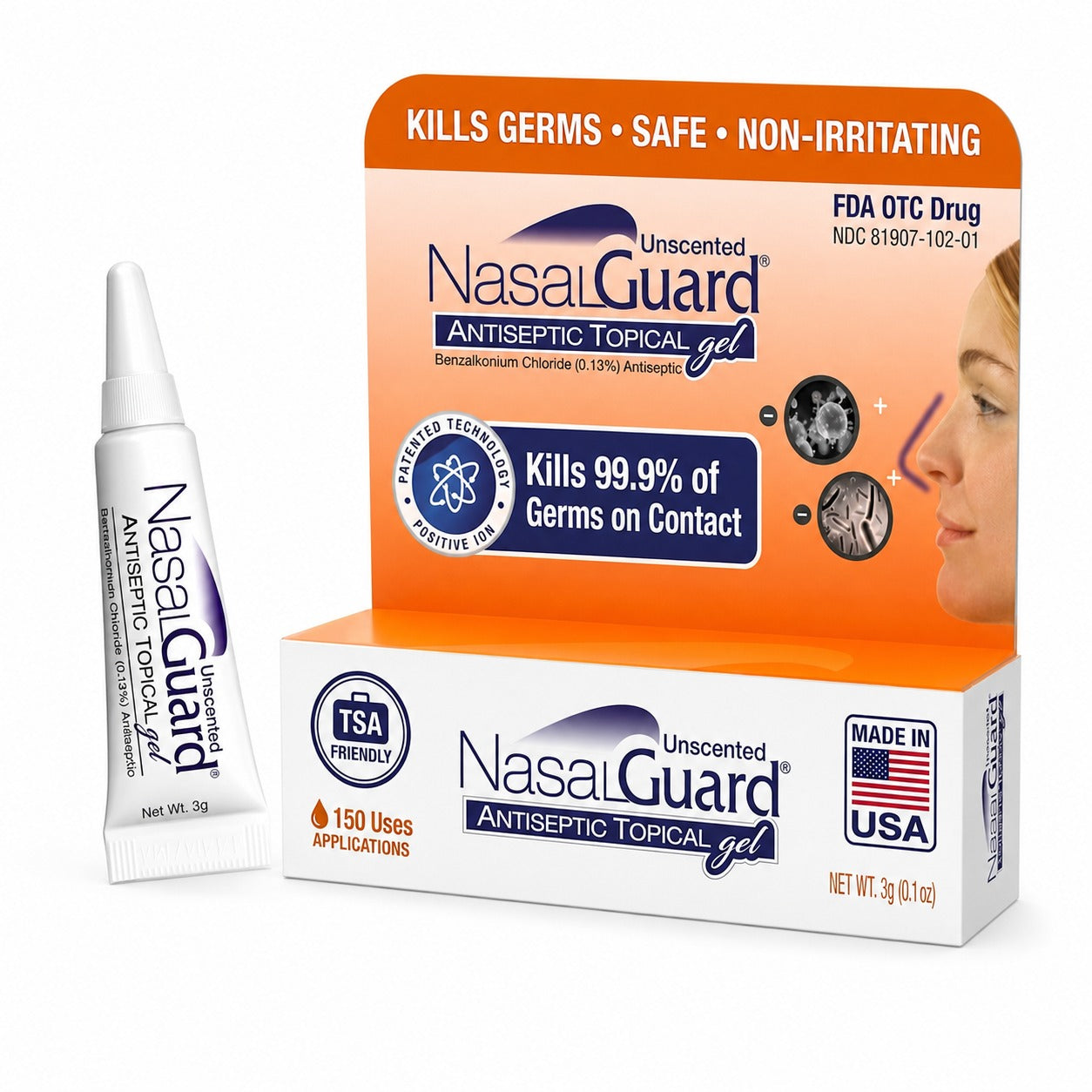
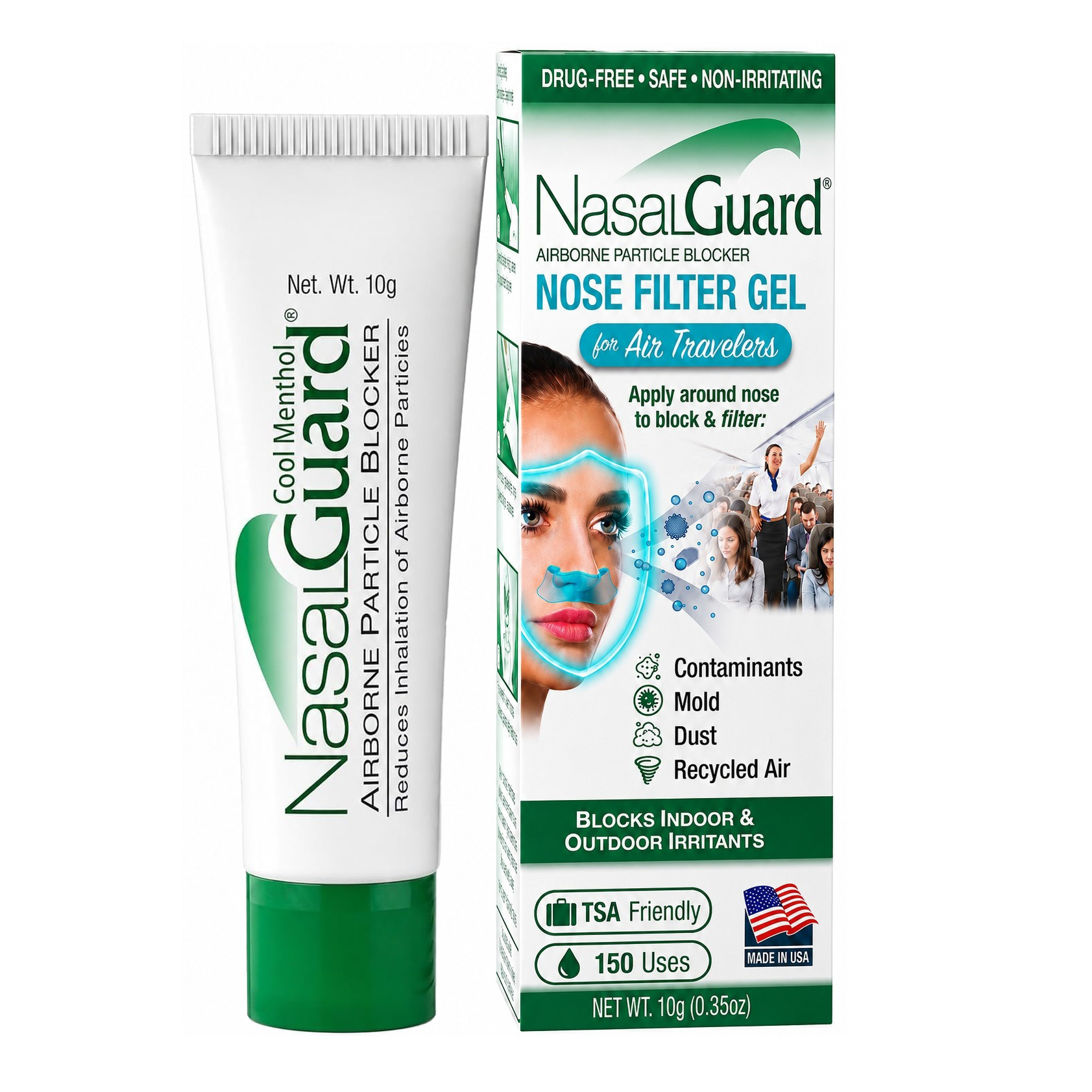
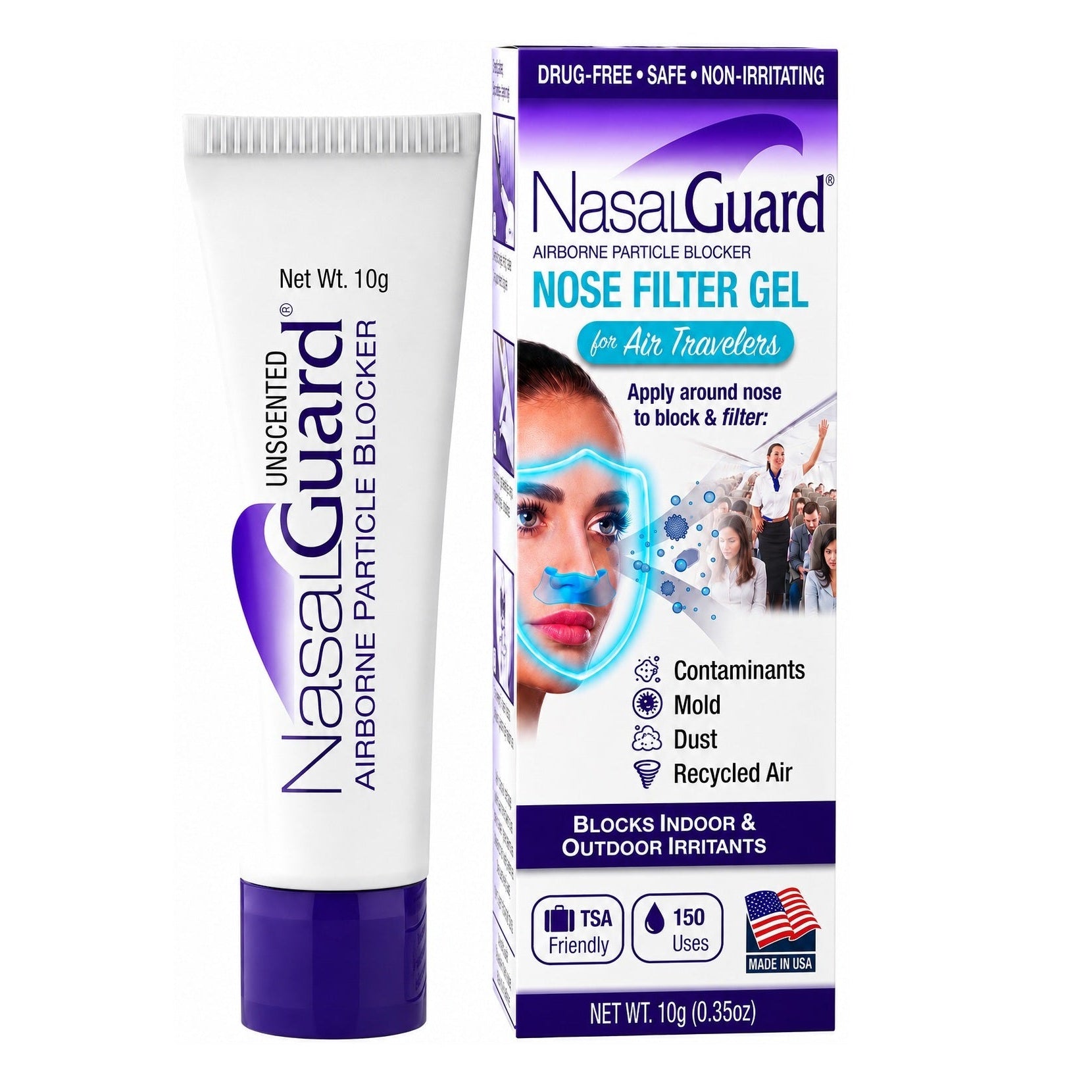
Both versions look the same in the tube: opaque and milky white. The difference is scent. Unscented has no added scent. Cool Menthol has a menthol scent, because menthol and fragrance are part of the Cool Menthol versions.
Choosing between them is a matter of preference. Some people keep Unscented for shared spaces like an office or a car with friends and Cool Menthol for days outside. The application steps are the same for both.
If you want the full ingredient list in plain language, our NasalGuard ingredients guide lists all of them and explains what each group does in everyday terms.
What it is, and what it is not
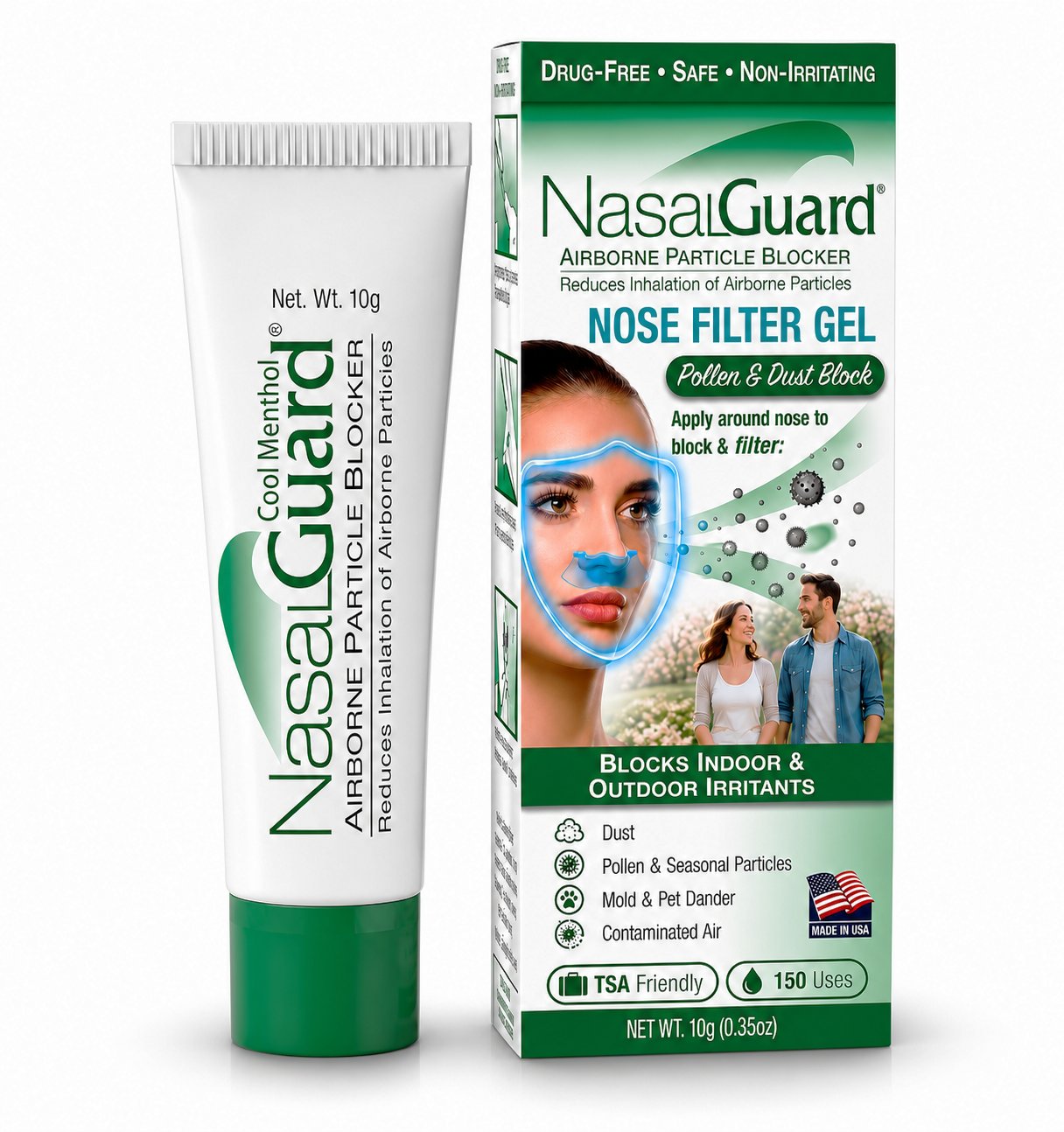
NasalGuard is designed to help reduce contact with everyday airborne particles such as pollen, dust, and pet dander. It uses positive ion technology to create an invisible gel barrier around the outside of the nostrils.
It is a drug-free topical gel.
It is not a medicine or a drug.
It is applied outside the nose and is not intended to be inserted into the nose.
It is a barrier step you add to your day. Use it as directed.
The gel is opaque and milky white in the tube and on your fingertip. That is how it is supposed to look. Once you spread it in a thin, even layer around the outside of the nostrils and above the upper lip, it goes on invisibly.
Will people see it on my face?
Spread thin, the layer is invisible. If you still see a white film after applying, you have used more than a thin layer or it is not fully spread, so smooth it out a little more. Follow the amount in the current directions.
Does NasalGuard go inside the nose?
No. NasalGuard is applied around the outside of the nostrils and above the upper lip. It is not intended to be inserted into the nose.
Is NasalGuard a medicine?
NasalGuard Airborne Particle Blocker is not a medicine or a drug. It is a drug-free topical gel designed to help reduce contact with everyday airborne particles such as pollen, dust, and pet dander. If you have questions about your own situation, ask your doctor or pharmacist before you use it.
NasalGuard® Airborne Particle Blocker is an invisible, drug-free gel applied around the outside of the nostrils and above the upper lip to help reduce inhalation of everyday airborne particles such as pollen, dust, and pet dander. To try it, start with the Pollen & Dust Block Unscented 3g tube, or choose Cool Menthol if you like a menthol scent.
Christine Walek writes for the NasalGuard editorial team about air quality, travel, and the everyday airborne particles we share space with. Articles are reviewed against current product labeling before publishing.