We've sent you an email with a link to update your password.
Reset your password
We will send you an email to reset your password.
NasalGuard for Delivery Drivers: Where It Fits a Long Route
Christine Walek
0 comments
The weeks between Thanksgiving and New Year's are when a delivery route gets longest: more stops, more porches, more time with the window cracked between houses. A driving shift moves you between a cargo area full of cardboard, a car cabin, and other people's front steps, often with a dog waiting behind the door.
This guide to NasalGuard® for delivery drivers is for anyone on a delivery or rideshare route who wants to know where NasalGuard Airborne Particle Blocker fits in a day on the road: what it is, what it is not, and how to work the application step around a route.
What a driving day stirs up
None of these settings is unusual. They simply stack up over a long shift, and each one puts its own everyday airborne particles in the air around you.
The cargo area. Boxes, mailers, and bags shed fine cardboard and paper dust every time you sort or slide them.
Open windows between stops. Dry roads, construction zones, and gravel driveways send dust into the cabin.
Front porches and lobbies. Doormats, entryways, and mail rooms collect tracked-in dust, and plenty of doors open with a dog or cat right behind them.
Passengers and their pets. Rideshare drivers often carry pet owners, and pet dander travels on coats and bags.
Traffic. Stop-and-go streets mean time around everyday pollution.
You cannot rearrange a route around any of that. What you can choose is a simple routine that travels with you.
What NasalGuard is
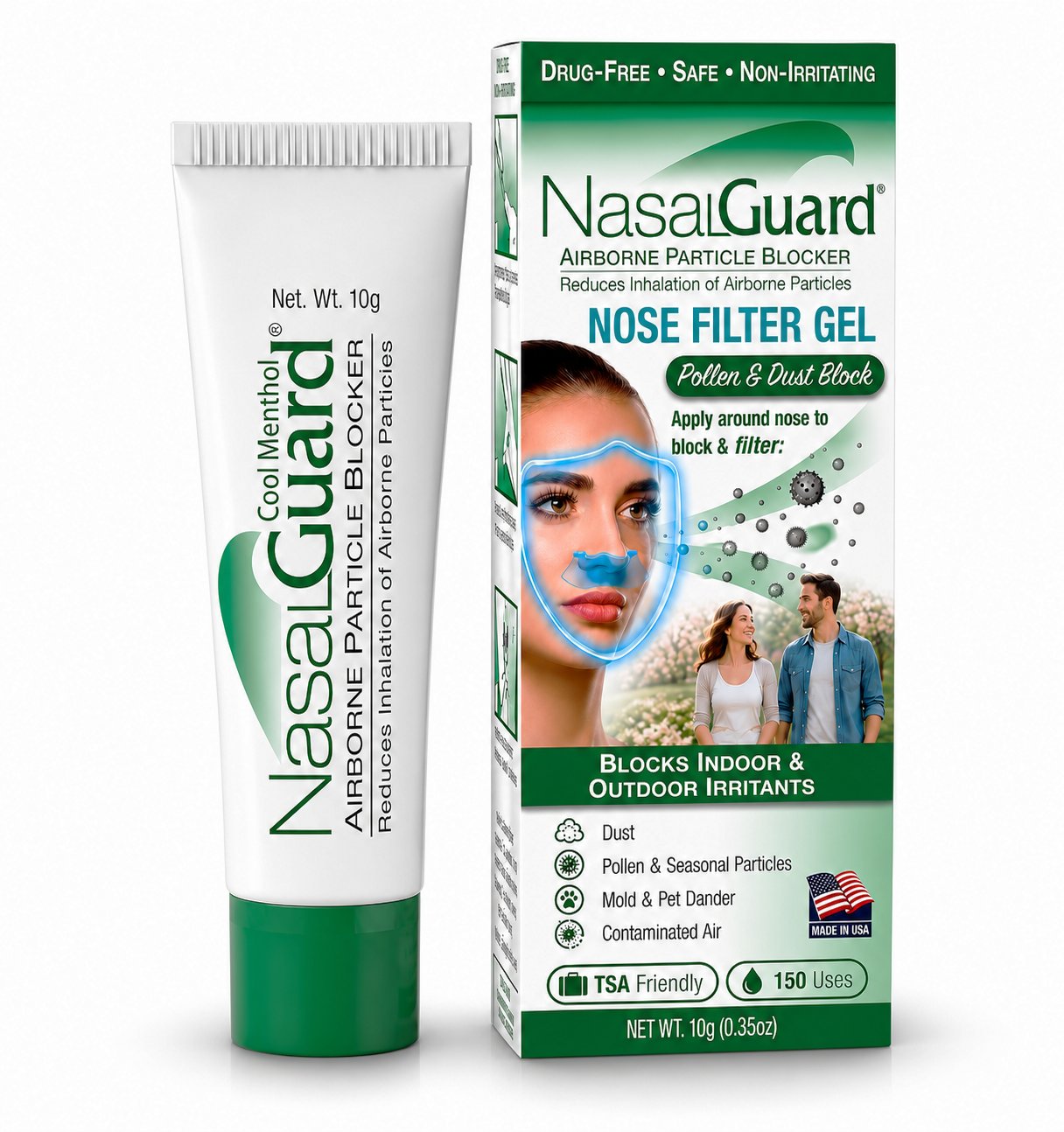
NasalGuard® Airborne Particle Blocker is an invisible, drug-free gel applied around the outside of the nostrils and above the upper lip to help reduce inhalation of everyday airborne particles such as pollen, dust, and pet dander.
It uses positive ion technology to create an invisible gel barrier around the outside of the nostrils, designed to help reduce contact with everyday airborne particles. In the tube the gel is opaque and milky white. Spread thin, it goes on invisibly.
For drivers who spend part of the day around animals, think of it as a barrier step for time around airborne pet dander.
What NasalGuard is not
A few plain answers, because these questions come up often:
NasalGuard is not a medicine or a drug. It is a topical gel.
It is not intended to be inserted into the nose. It goes around the outside of the nostrils and above the upper lip only.
It does not change anything your employer, delivery platform, or vehicle rules ask of you. Follow those first.
If you have questions about whether NasalGuard is right for you, ask your doctor or pharmacist before you use it.
Where NasalGuard for delivery drivers fits in a shift
The rule that matters most on a route: apply only while parked, with clean, dry hands. Never apply while the vehicle is moving.
A route-day routine. Apply only while parked.
Before the shift
Apply at home after you wash up, before you leave for the depot or log on. That way the first step of the day happens at a sink, not in a driver's seat.
Loading and sorting
Sorting is usually the dustiest stretch of the day. If you handle a lot of boxes, try to sort in one spot rather than shuffling packages around the whole cargo area, and keep the tube in an inside pocket rather than a cup holder.
On the route
Rain, snow, and wiping your face with a napkin all wet the area. Reapply according to the current directions and after the area becomes wet, and do it at a planned stop, such as a lunch break or the end of a block of deliveries.
End of shift
Wash your hands and face when you get home, and leave the work jacket by the door. A small habit like that keeps the day's dust from riding along into the living room.
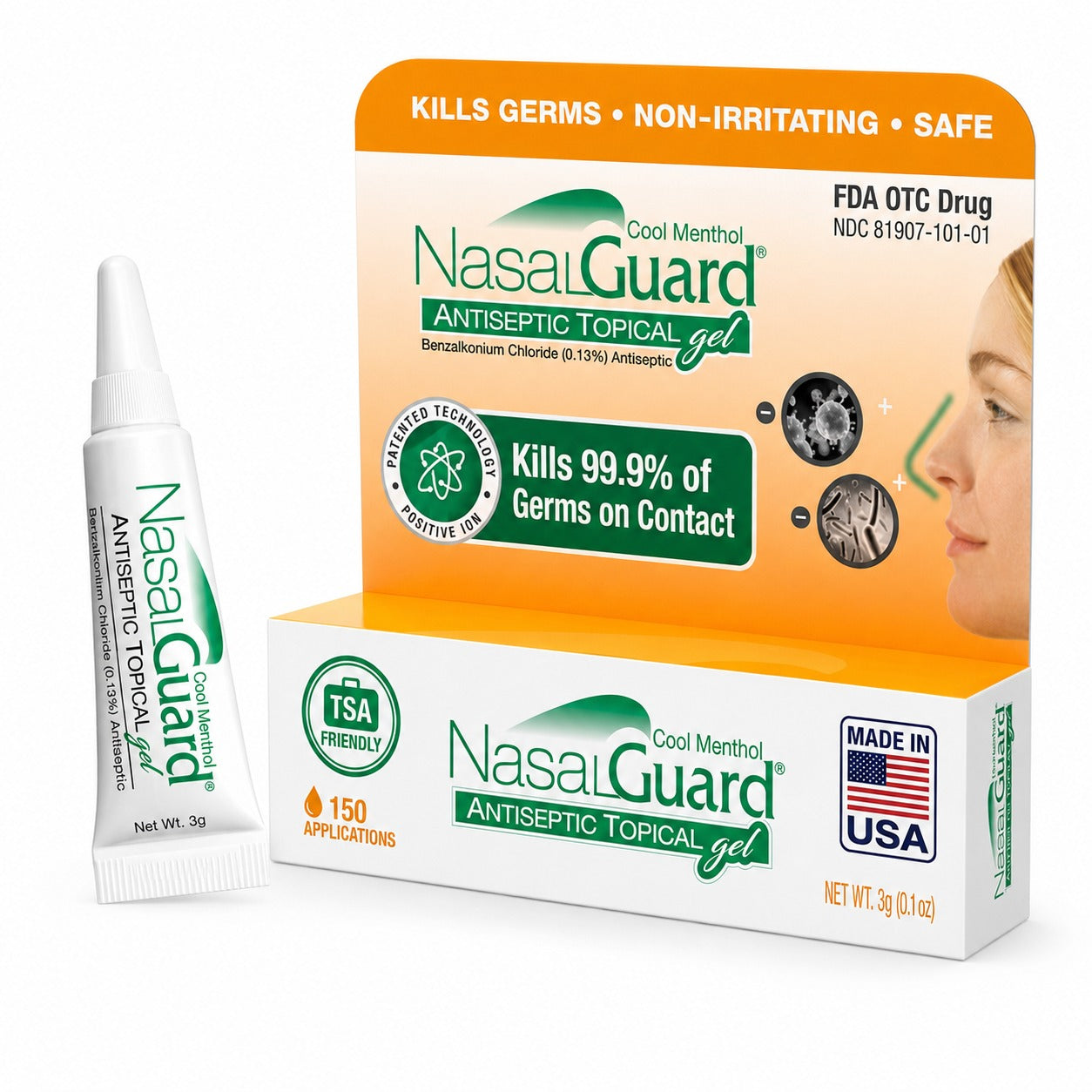
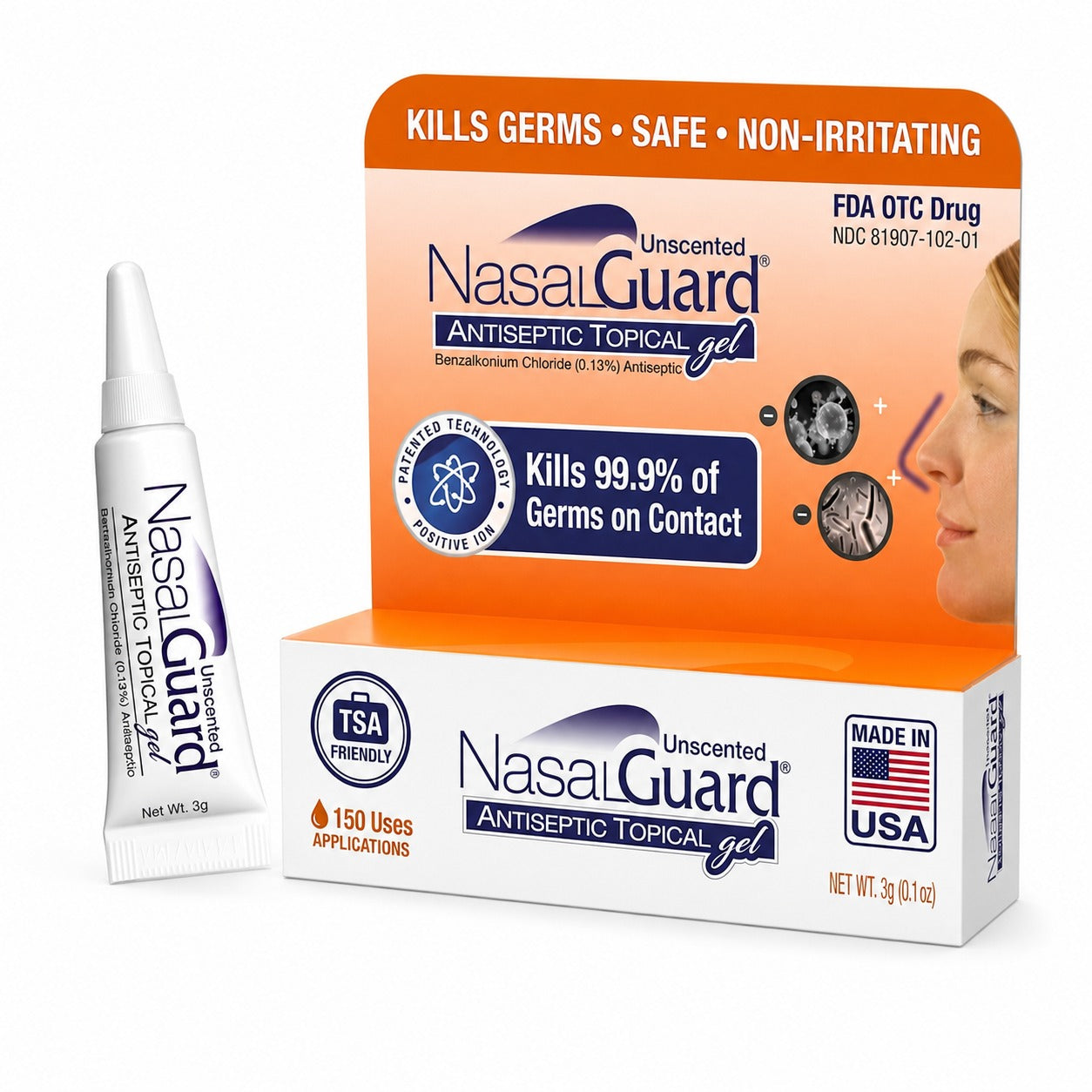
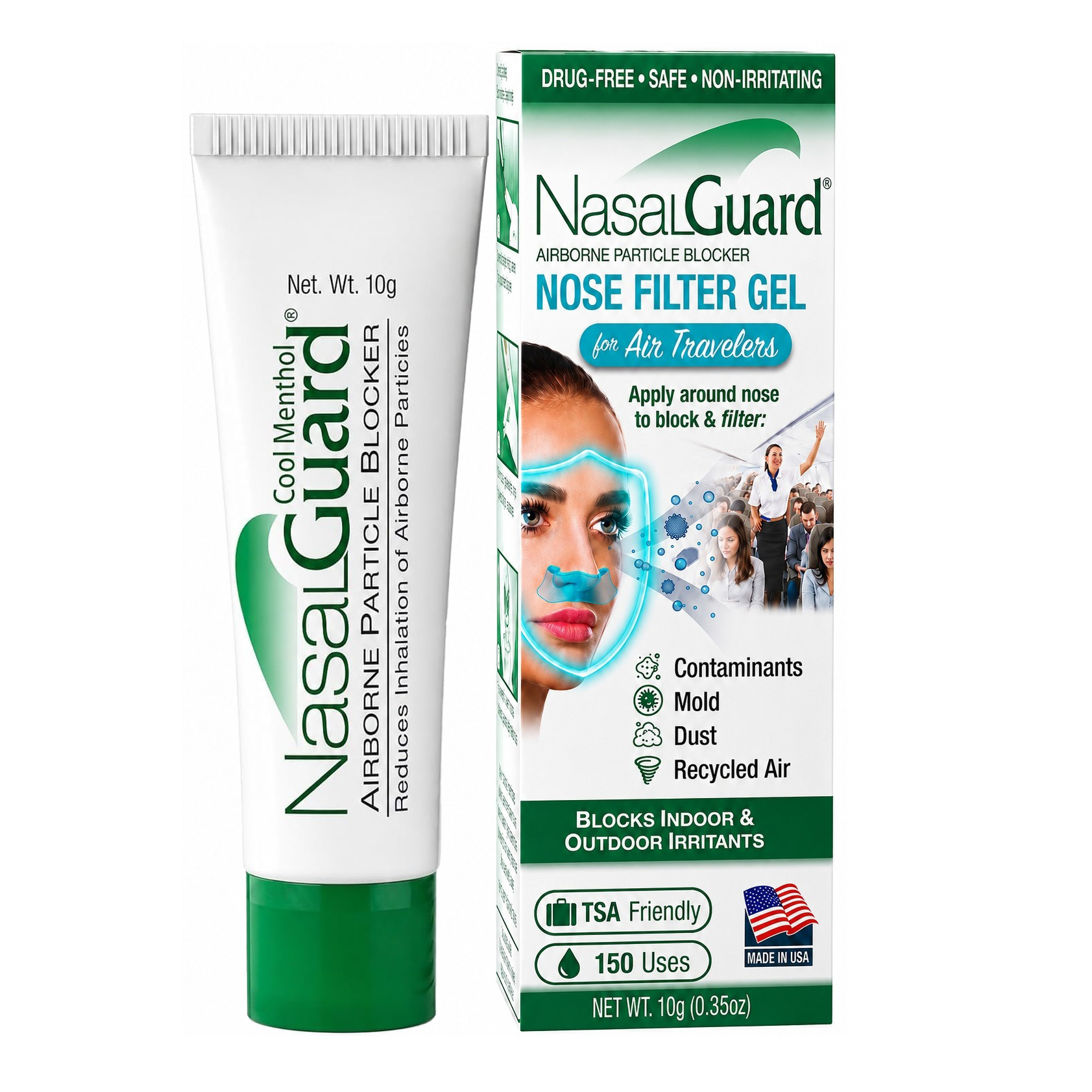
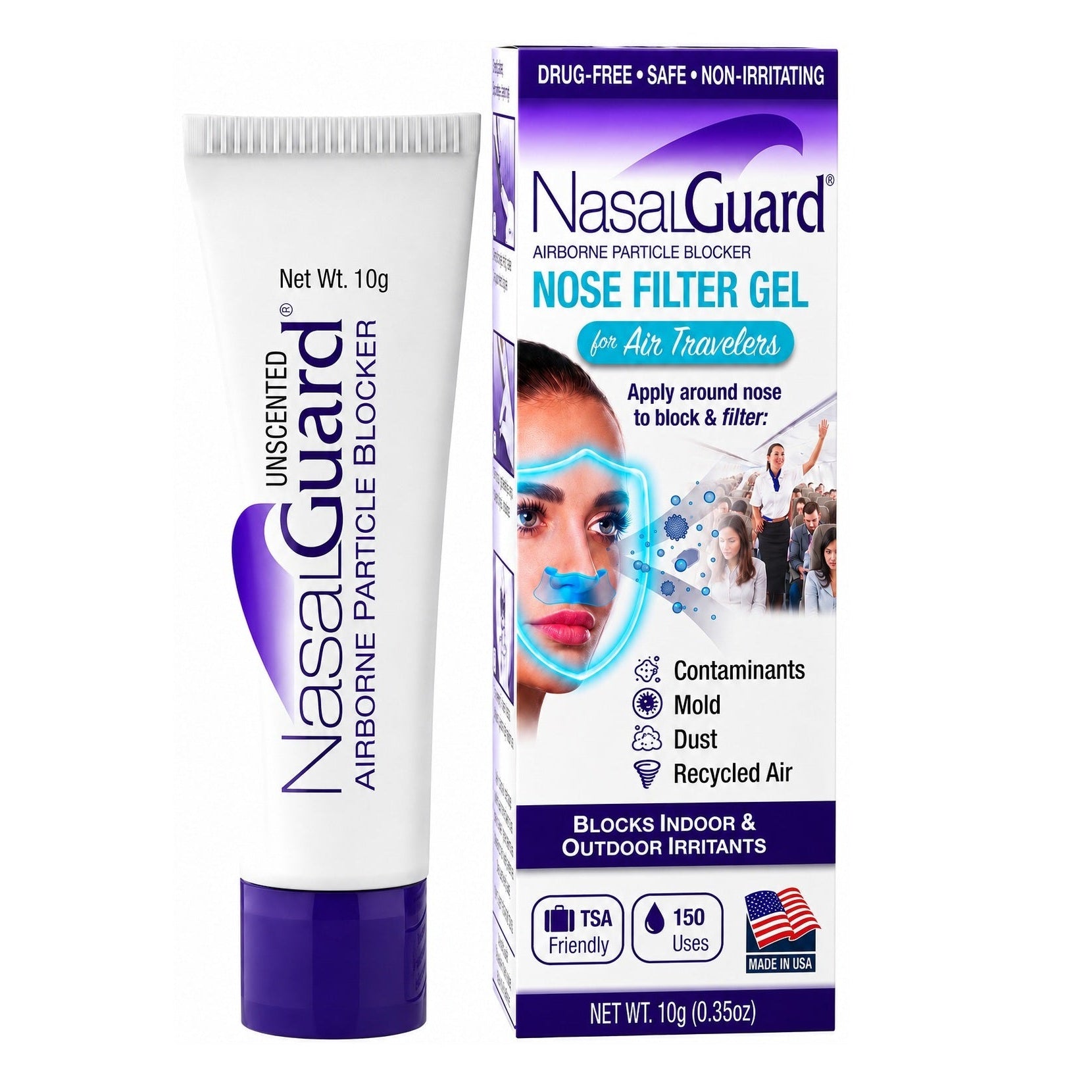
Unscented or Cool Menthol. The Cool Menthol version has a menthol scent. Pick by preference; Cool Menthol is on its own product page.
3g or 10g. Keep a 3g tube on you during the shift and a 10g tube at home for the before-shift step.
Flying home for the holidays after peak season? The For Air Travelers 3g tube is packaged for airports and airplanes.
The gel is milky white on your fingertip and goes on invisibly once spread.
Application is the same for every version. Place a small amount on a fingertip, spread it between the thumb and finger, and apply around the outside of the nostrils and above the upper lip. Reapply according to the current directions and after the area becomes wet.
If you want more detail on how the gel barrier works, Does NasalGuard Work? walks through it, and the commuting routine covers trains, buses, and walks.
Frequently asked questions
Is NasalGuard a medicine?
No. NasalGuard is not a medicine or a drug. NasalGuard Airborne Particle Blocker is an invisible, externally applied gel that goes around the outside of the nostrils and above the upper lip. It uses positive ion technology and is designed to help reduce contact with everyday airborne particles such as pollen, dust, and pet dander.
Does NasalGuard go inside the nose?
No. NasalGuard is not intended to be inserted into the nose. Place a small amount on a fingertip, spread it between the thumb and finger, and apply it around the outside of the nostrils and above the upper lip. The gel is milky white in the tube and goes on invisibly once it is spread thin.
Can I apply NasalGuard while I am driving?
No. Apply it only when the vehicle is parked and your hands are clean and dry. The simplest plan is to apply at home before the shift and keep any reapplication for planned stops, such as a lunch break, a fuel stop, or a pause between blocks of deliveries, following the current directions.
When should I reapply NasalGuard on a long route?
Reapply according to the current directions on the label and after the area becomes wet, for example after rain or snow, washing your face, or wiping it with a napkin. On a delivery day, tie reapplication to a stop you already make, so the step never competes with driving.
Which NasalGuard should a driver keep on hand?
A simple setup is a Pollen & Dust Block 3g tube in a jacket pocket during the shift plus a 10g tube at home. Choose Unscented or Cool Menthol by scent preference. Keeping the tube on you, rather than on the dashboard, keeps it out of direct sun.
Before your next shift, put a 3g tube in the pocket of the jacket you drive in and make applying at home part of the routine. Find Pollen & Dust Block Unscented 3g here: a simple, externally applied barrier step for everyday airborne particles, used as directed.
Christine Walek writes for the NasalGuard editorial team about air quality, travel, and the everyday airborne particles we share space with. Articles are reviewed against current product labeling before publishing.