We've sent you an email with a link to update your password.
Reset your password
We will send you an email to reset your password.
A Daytime Routine for Nose Breathers, With NasalGuard
Christine Walek
0 comments
Most of your day's breathing happens in the background, somewhere between the front door, the train platform, the desk, and the gate. This daytime routine for nose breathers pairs a quick breathing check-in with each of those settings, and shows where the NasalGuard® Airborne Particle Blocker barrier step fits, so the whole thing takes less thought than packing your keys.
The routine at a glance
The routine has two parts that run side by side. One is noticing how you breathe at moments you already have. The other is a barrier step for everyday airborne particles such as pollen, dust, and pet dander. NasalGuard is not a breathing product; it is the second part only.
One barrier step across four daytime settings.
Before you leave: three steps at the door
Apply at home, before you head out, so you are not doing it on a crowded platform.
A small milky-white dab, spread thin, then applied outside the nose.
Place a small amount on a fingertip, spread it between the thumb and finger, and apply around the outside of the nostrils and above the upper lip. Reapply according to the current directions and after the area becomes wet.
The gel is milky white on your fingertip and goes on invisibly once spread. Check the label for how much to use and when to reapply.
Morning walk: one check-in, one tube
On your first few steps outside, notice whether you are breathing through your nose or your mouth, and how the outdoor air feels compared with the air inside. That is the whole check-in.
Fall walks bring leaf litter and dust from dry paths. If rain or wiping your face with a sleeve leaves the area wet, reapply when you get home, following the current directions.
Commute: same pocket, every day
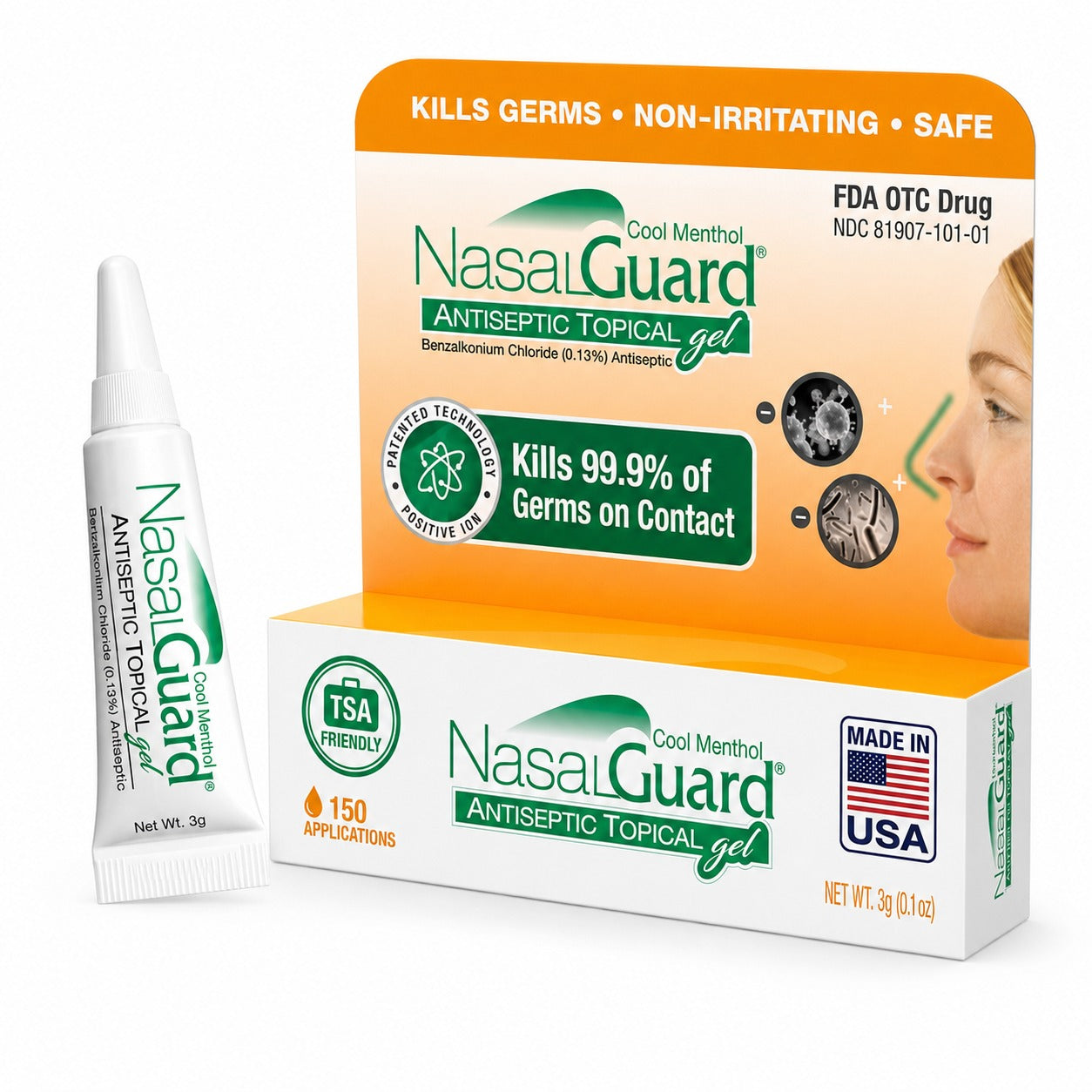
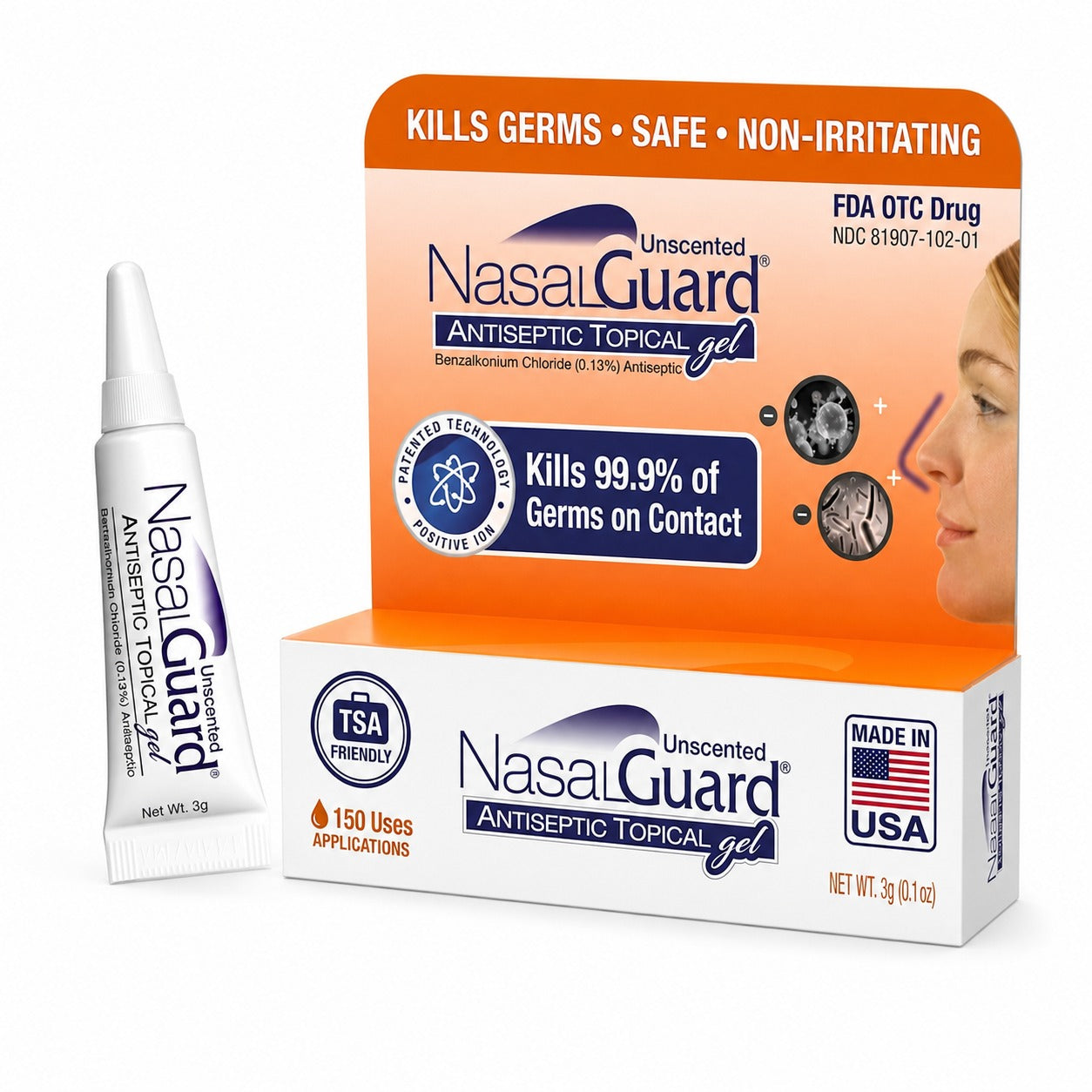
Pick one pocket for the 3g tube and never change it. A routine that depends on remembering where the tube is will not last a week.
Use the wait on the platform or at the stop for a quick breathing check-in. Our commuting routine covers trains, buses, and walks in more detail.
Desk day: a midday checkpoint
Pair your check-in with something you already do, such as looking up from the screen or getting up for water. Late fall offices often run the heat with the windows shut, so dust settles on desks and shelves through the day.
If the current directions call for reapplying during the day, midday is a natural checkpoint. A 10g tube can live in a desk drawer so the 3g stays in your bag. The office guide has a full desk-day timeline.
Travel day: the carry-on version
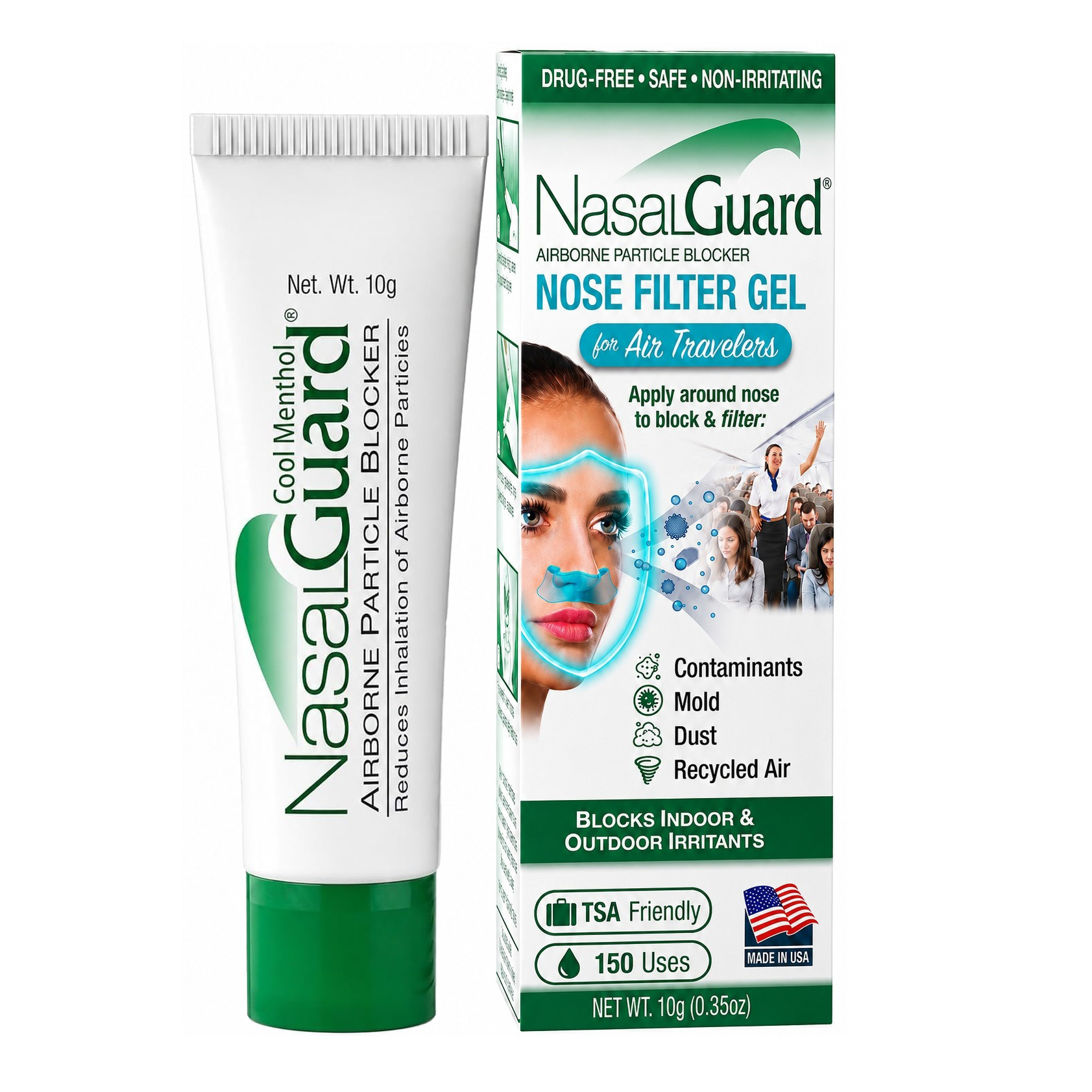
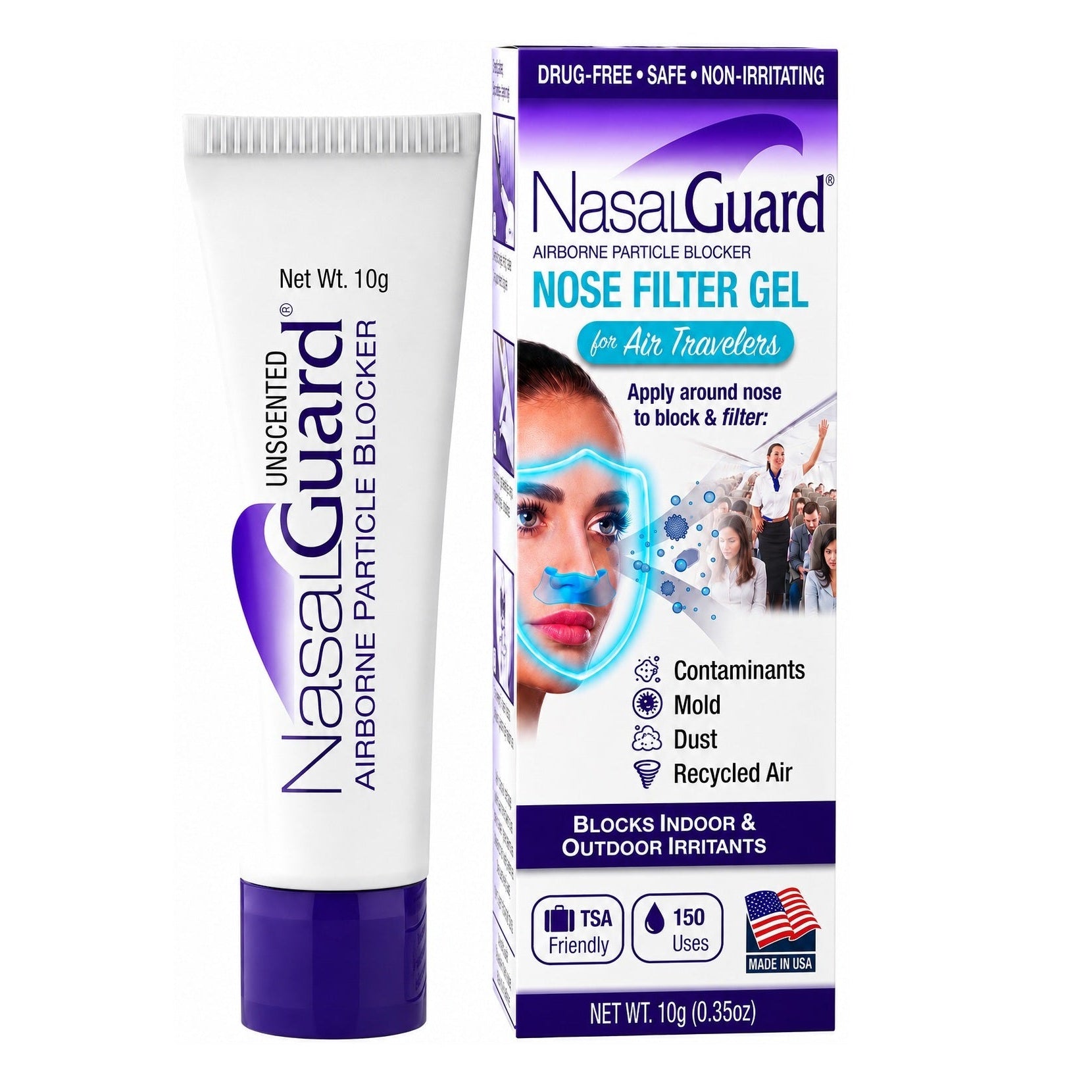
For flights, swap in NasalGuard For Air Travelers, a simple, externally applied barrier step for everyday airborne particles at airports, on airplanes, and in other travel settings. Pack the 3g tube in your carry-on so it is with you at the gate, and apply before boarding.
Breathing check-ins work well in security lines and at the gate, when there is nothing to do but wait. For the full airport walkthrough, see NasalGuard for air travel.
Which tube goes where
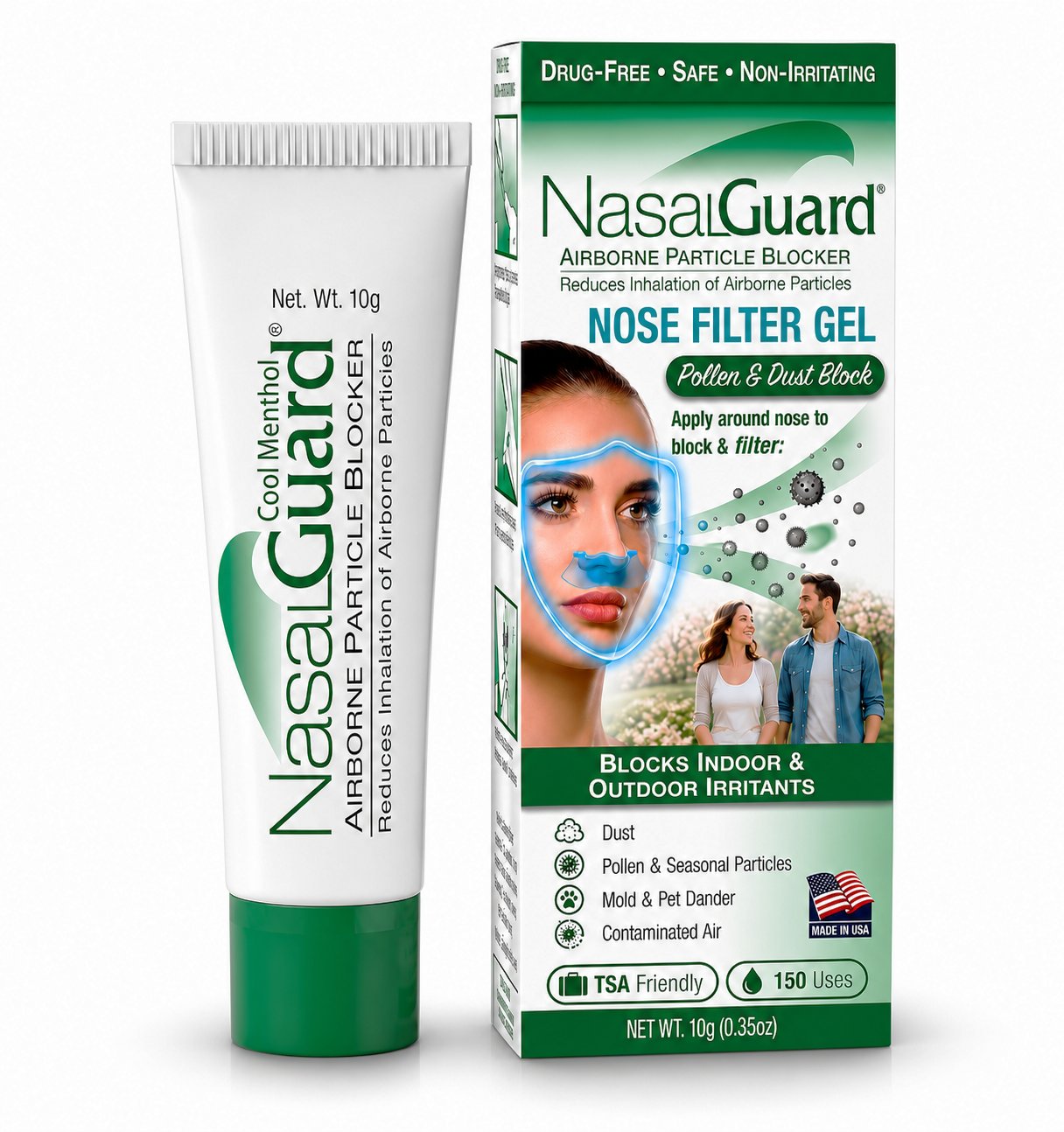
Bag or pocket: Pollen & Dust Block, 3g, in Unscented or Cool Menthol (menthol scent).
Apply at home before you head into the setting you are planning for, such as a walk, a commute, or a desk day. Reapply according to the current directions on the label and after the area becomes wet, for example after washing your face or getting caught in the rain.
Does NasalGuard go inside the nose?
No. NasalGuard is not intended to be inserted into the nose. Place a small amount on a fingertip, spread it between the thumb and finger, and apply around the outside of the nostrils and above the upper lip, where it goes on as a thin, invisible layer.
Which size should I carry, 3g or 10g?
The 3g tube is sized for a pocket, bag, or carry-on, so it is the one to keep with you. The 10g tube suits home or a desk drawer. Keeping one of each means the 3g never has to leave the bag. Both are applied the same way.
Is NasalGuard part of a breathing technique?
No. NasalGuard makes no claims about how you breathe. In this routine, the breathing check-ins and the NasalGuard barrier step are separate parts. NasalGuard is for everyday airborne particles such as pollen, dust, and pet dander, applied around the outside of the nostrils and above the upper lip.
Christine Walek writes for the NasalGuard editorial team about air quality, travel, and the everyday airborne particles we share space with. Articles are reviewed against current product labeling before publishing.