We've sent you an email with a link to update your password.
Reset your password
We will send you an email to reset your password.
NasalGuard for Garage Cleanouts: Where It Fits a Dusty Job
Christine Walek
0 comments
The decoration bins come down from the attic. The lawn chairs go up. Somewhere in between, a box that has not moved since last December gets opened, and a little cloud of dust comes with it.
If you are planning a garage or attic cleanout before the holidays, this article covers NasalGuard for garage cleanouts: what the product is, where it fits a dusty job, which version makes sense, and the habits that keep settled dust where it is.
Why a cleanout stirs up dust
Garages and attics collect dust quietly. According to the U.S. EPA's page on sources of indoor particulate matter, indoor dust can include outdoor soil and dust that has been blown or tracked indoors, and settled dust "can be easily kicked up into the air by cleaning, vacuuming, and other activities like walking and crawling."
A cleanout does all of those at once. You walk back and forth, slide boxes, sweep, and open lids that have been closed for months. The dust was already there. The job just moves it.
What NasalGuard is, in plain terms
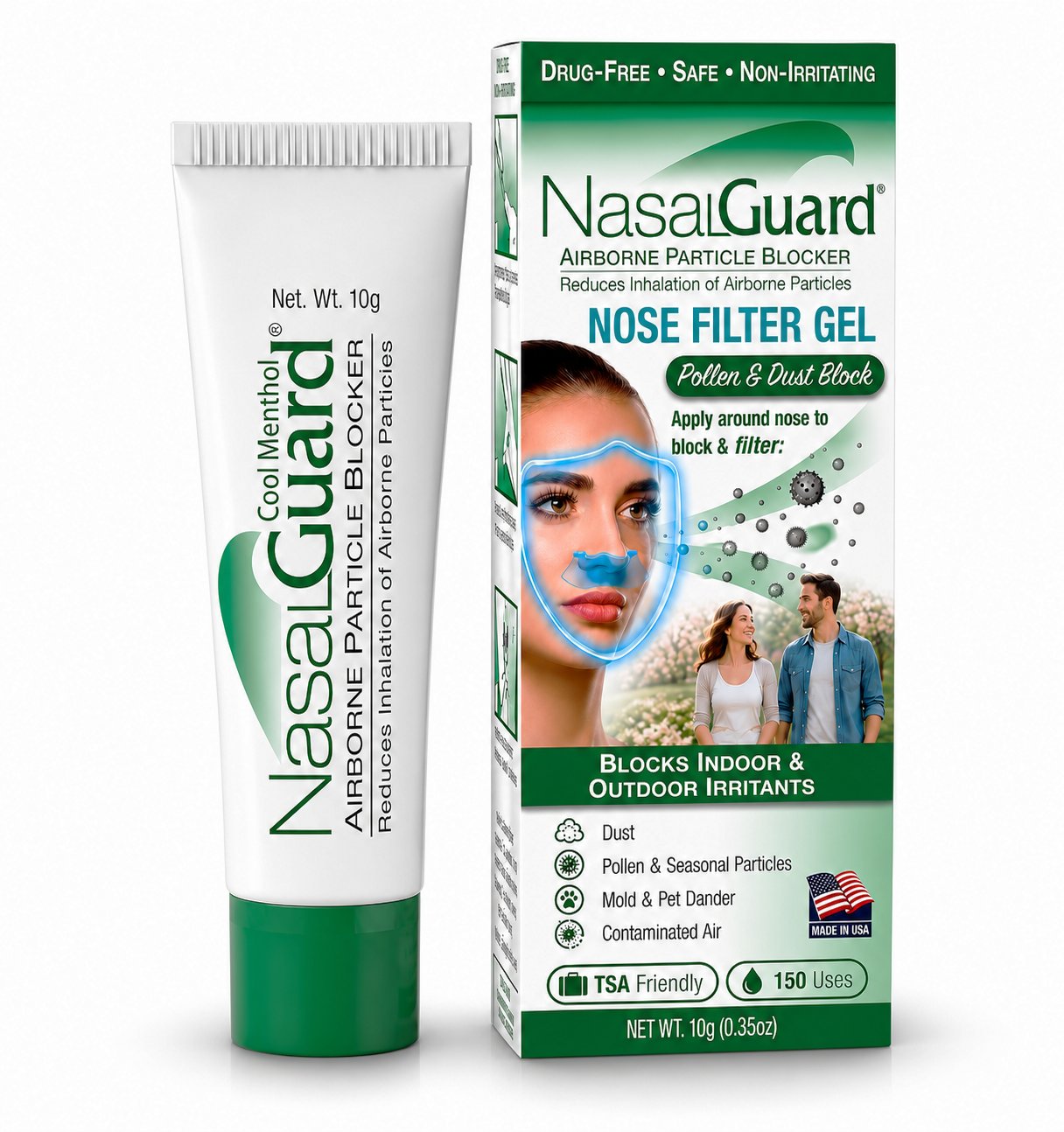
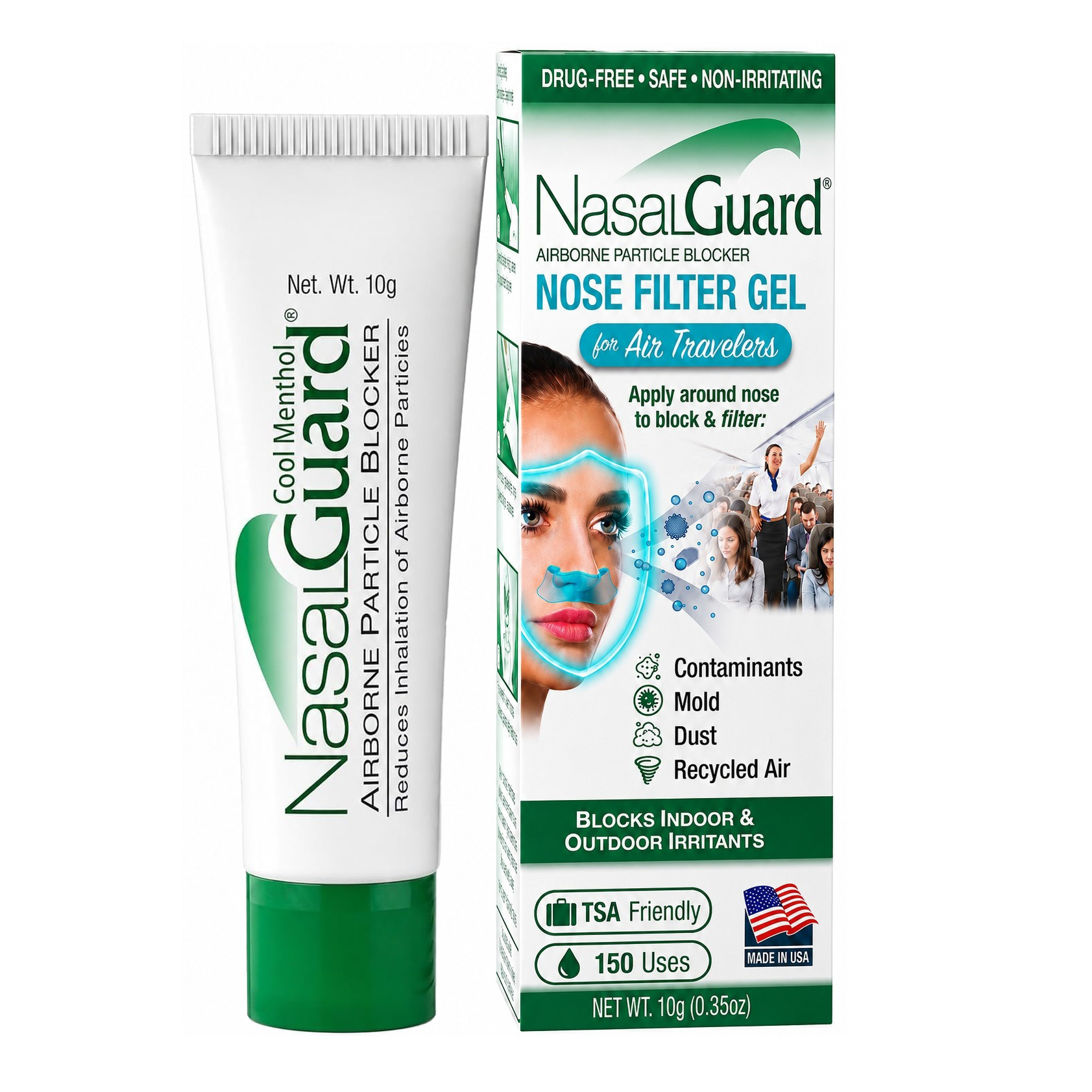
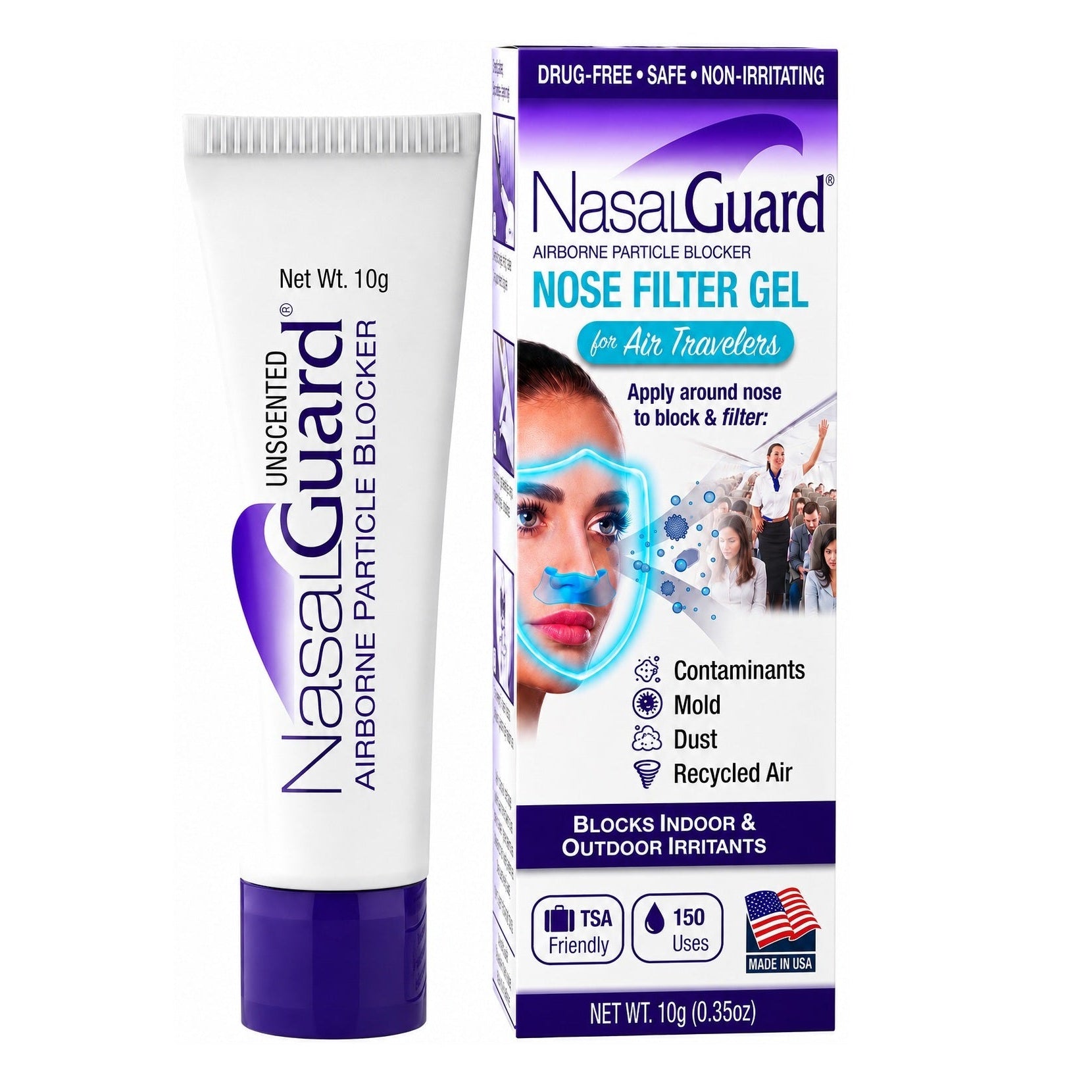
NasalGuard® Airborne Particle Blocker is an invisible, drug-free gel applied around the outside of the nostrils and above the upper lip to help reduce inhalation of everyday airborne particles such as pollen, dust, and pet dander.
It uses positive ion technology to create an invisible gel barrier around the outside of the nostrils, designed to help reduce contact with everyday airborne particles. In the tube it is a milky-white gel; once spread, it goes on invisibly.
A few things it is not:
It is not a medicine or a drug.
It is not intended to be inserted into the nose. It goes on the outside only.
It does not change any safety steps your tools, ladders, or cleaning products call for. Follow those as written.
If you have questions about whether it is right for you, ask your doctor or pharmacist before you use it.
Using NasalGuard for garage cleanouts
Think of NasalGuard as one step in your setup, done before the first box opens, the same way you might open the garage door and lay out trash bags.
Before you start: place a small amount on a fingertip, spread it between the thumb and finger, and apply around the outside of the nostrils and above the upper lip.
During the job: keep the tube in a pocket rather than on a dusty shelf.
After a wipe or a rinse: reapply according to the current directions and after the area becomes wet, such as after washing your face or wiping it with a damp towel.
Three steps before you open the boxes. Follow the current label directions for your version.
The cleanout itself matters as much as anything you apply. EPA's indoor particulate matter page offers a few practical habits:
Use a damp cloth. EPA notes that dampening the cloth helps keep settled dust from going back into the air.
Vacuum with a quality filter. EPA says a quality filter can help keep some vacuumed dust from escaping the vacuum cleaner back into the air.
Move air through the space. EPA lists frequent cleaning and ventilation as effective ways to reduce dust, and suggests opening windows or doors, when safe, or using an exhaust fan.
Two habits of our own: lift boxes instead of dragging them across a dusty floor, and wipe the lids before the bins come into the house. That way the attic dust stays in the attic.
The 3g tube fits a pocket, which matters when your hands are full of boxes. The 10g tube can stay put by the door, so it is there for the next job too.
Frequently asked questions
Does NasalGuard go inside the nose?
No. NasalGuard is not intended to be inserted into the nose. Place a small amount on a fingertip, spread it between the thumb and finger, and apply it around the outside of the nostrils and above the upper lip. Follow the current directions on the label of your version.
Is NasalGuard a medicine?
No. NasalGuard Airborne Particle Blocker is not a medicine or a drug. It is a topical gel applied around the outside of the nostrils and above the upper lip, designed to help reduce inhalation of everyday airborne particles such as dust. If you have questions about using it, ask your doctor or pharmacist.
When should I apply NasalGuard before a cleanout?
Apply it before you open the first box or start sweeping, so it is already in place when settled dust gets moved around. Keep the tube in a pocket, and reapply according to the current directions and after the area becomes wet, such as after washing or wiping your face.
Which NasalGuard is for dusty jobs at home?
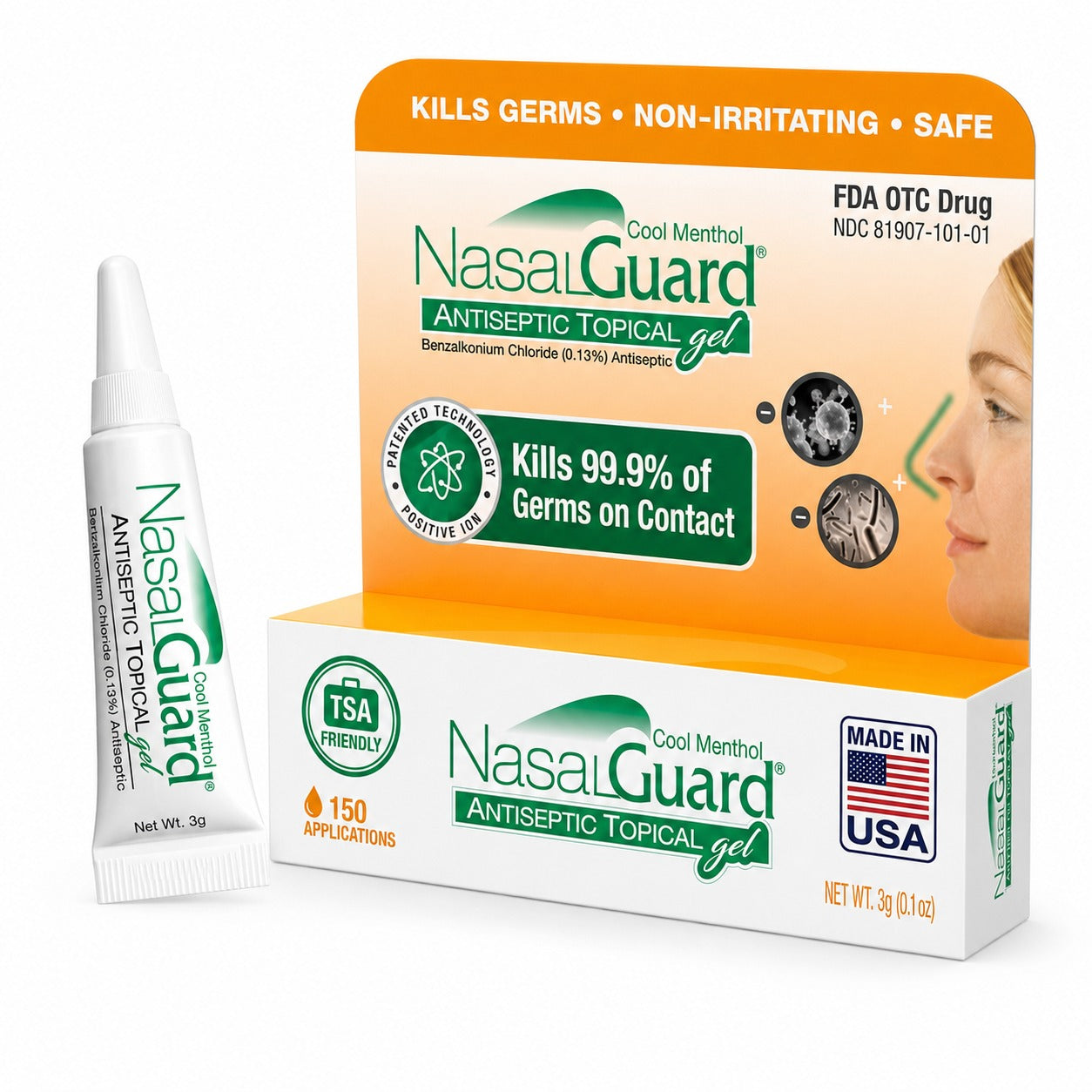
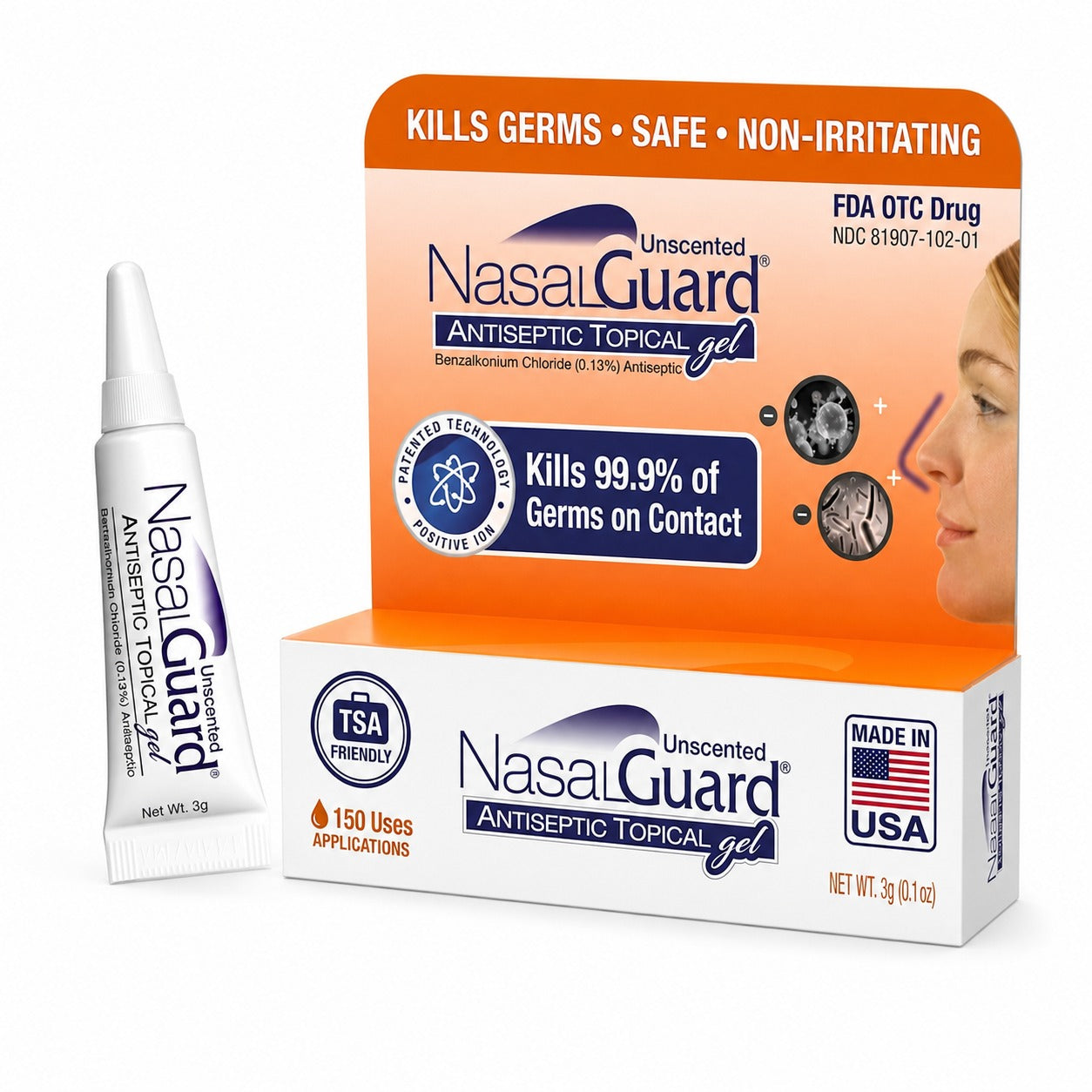
NasalGuard Pollen and Dust Block is the line packaged for everyday settings such as home, yard, and garage work. Choose Unscented for no added scent or Cool Menthol for a menthol scent, and a 3g tube for a pocket or a 10g tube for a shelf at home.
Before your next cleanout, set a 3g tube next to the trash bags and the damp cloth so it is part of the setup. NasalGuard Pollen & Dust Block is a barrier step designed to help reduce contact with everyday airborne particles such as dust. Use it as directed. See Pollen & Dust Block Unscented.
Christine Walek writes for the NasalGuard editorial team about air quality, travel, and the everyday airborne particles we share space with. Articles are reviewed against current product labeling before publishing.