If you have ever stepped off a long flight feeling run-down or congested, you are not alone. Many travelers connect the experience of flying and illness and assume the plane itself is to blame. The truth is more nuanced than that.
Airplane cabin air quality is widely misunderstood. Understanding what actually happens during a flight can help you make smarter choices before, during, and after you travel.
Do Airplanes Really Make You Sick?
Common reasons travelers feel unwell after flying
Airplanes alone are rarely the main cause of post-flight illness. What raises your risk is a combination of factors that come together whenever you fly: crowded airports, proximity to other passengers, disrupted sleep, dehydration, and dry cabin air. Your immune system is working harder than usual, and your nasal passages become less effective at filtering airplane germs when low humidity dries them out.
Myths vs. facts about airplane cabin air
Myth: Airplane air is completely recirculated and full of germs from every passenger on board.
Fact: Most modern commercial aircraft use a combination of fresh outside air and filtered recirculated air. The recirculated portion passes through high-efficiency filtration before returning to the cabin, and total air is exchanged far more frequently than in most offices or indoor spaces.
The greater germ exposure risk comes not from the air itself but from shared surfaces and close contact with other passengers.
How Airplane Cabin Air Works
Is cabin air really recirculated?
Yes, a portion of cabin air is recirculated, but this is only part of the picture. On most commercial aircraft, roughly half the air at any time is fresh air drawn from outside. The other half passes through the aircraft filtration system before being returned. Cabin air is typically refreshed every two to three minutes, which is faster than air exchange in most office buildings.
Understanding HEPA filtration systems
Cabin air filtration on modern commercial aircraft uses High Efficiency Particulate Air (HEPA) filters, the same type used in hospital operating rooms. HEPA filters capture particles as small as 0.3 microns, including bacteria, mold spores, and respiratory droplets carrying viruses. Modern recirculated air germs concerns are largely addressed by this technology.
Why low cabin humidity affects your nose and throat
At cruising altitude, cabin humidity typically sits between 10 and 20 percent, far below the 40 to 60 percent range that feels comfortable indoors. When the air is this dry, the mucus membranes lining your nose and throat dry out and become less effective at trapping and clearing germs, leaving your nasal passages more vulnerable during and after a flight.
Why You May Feel Sick After a Flight
Dry nasal passages and throat irritation
Dry cabin air is one of the most underappreciated contributors to post-flight discomfort. A dried-out nasal lining is less effective at filtering airplane germs, which can leave you feeling congested or scratchy for a day or two after landing even without a full infection.
Close contact with other passengers
Shared surfaces like tray tables, armrests, overhead bin handles, seatbelts, and lavatory door latches are among the most frequently touched and least frequently cleaned contact points during a flight. Sitting near an unwell passenger also increases direct droplet exposure in a way that cabin air filtration alone cannot address.
Fatigue, dehydration, and travel stress
Flying and illness often go together because travel is physically demanding. Sleep disruption, dehydration, and the stress of busy airports and tight connections all reduce your body's resilience to whatever germs it encounters.
How to Reduce Germ Exposure While Flying
Wash or sanitize your hands regularly
Hand hygiene remains one of the most effective travel health tips available. Wash your hands after using the lavatory and before eating. When soap is not available, use a hand sanitizer with at least 60 percent alcohol content.
Stay hydrated during the flight
Drinking water consistently throughout the flight counteracts cabin dehydration. Limiting alcohol and caffeine intake, both of which increase fluid loss, also supports your body during the journey.
Avoid touching your face
Your hands collect germs from shared surfaces throughout the trip. Keeping hands away from your nose, mouth, and eyes is one of the simplest and most effective ways to reduce flying and illness risk.
Choose your seat and airflow wisely
Window seats involve slightly less foot traffic contact than aisle seats. Keeping the overhead vent at a gentle, directed setting rather than off entirely or aimed directly at your face can help manage ambient particles in your immediate space.
How Nasal Hygiene Can Support Healthy Travel
Why nasal care matters during air travel
Dry cabin conditions and elevated germ exposure both affect nasal passages during a flight. Supporting nasal protection while flying is a step frequent travelers overlook. When nasal membranes dry out, the body's natural filtering function at the nasal vestibule is reduced at the exact point where germs most commonly enter.
Using an antiseptic nasal gel as part of your travel routine
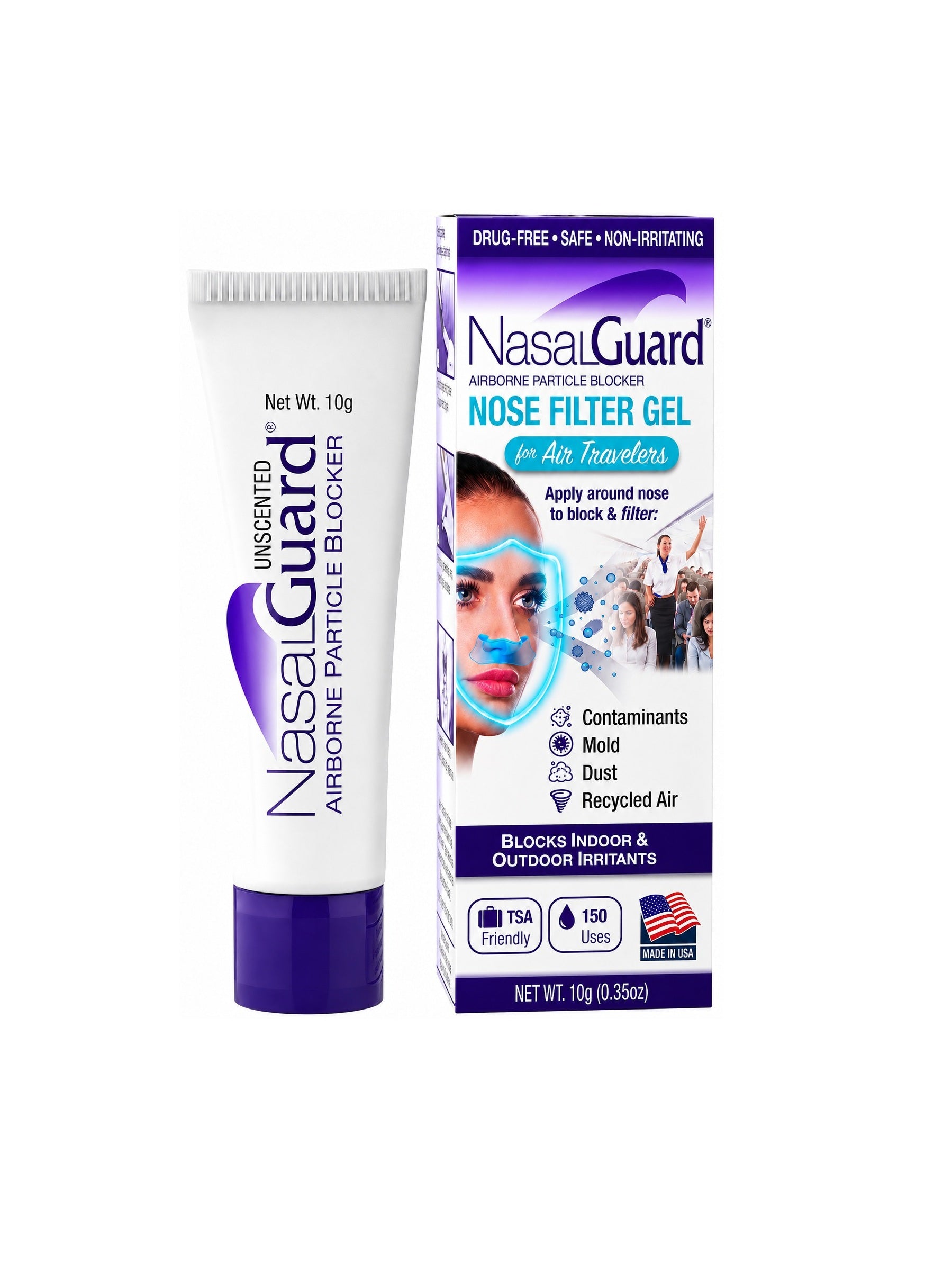
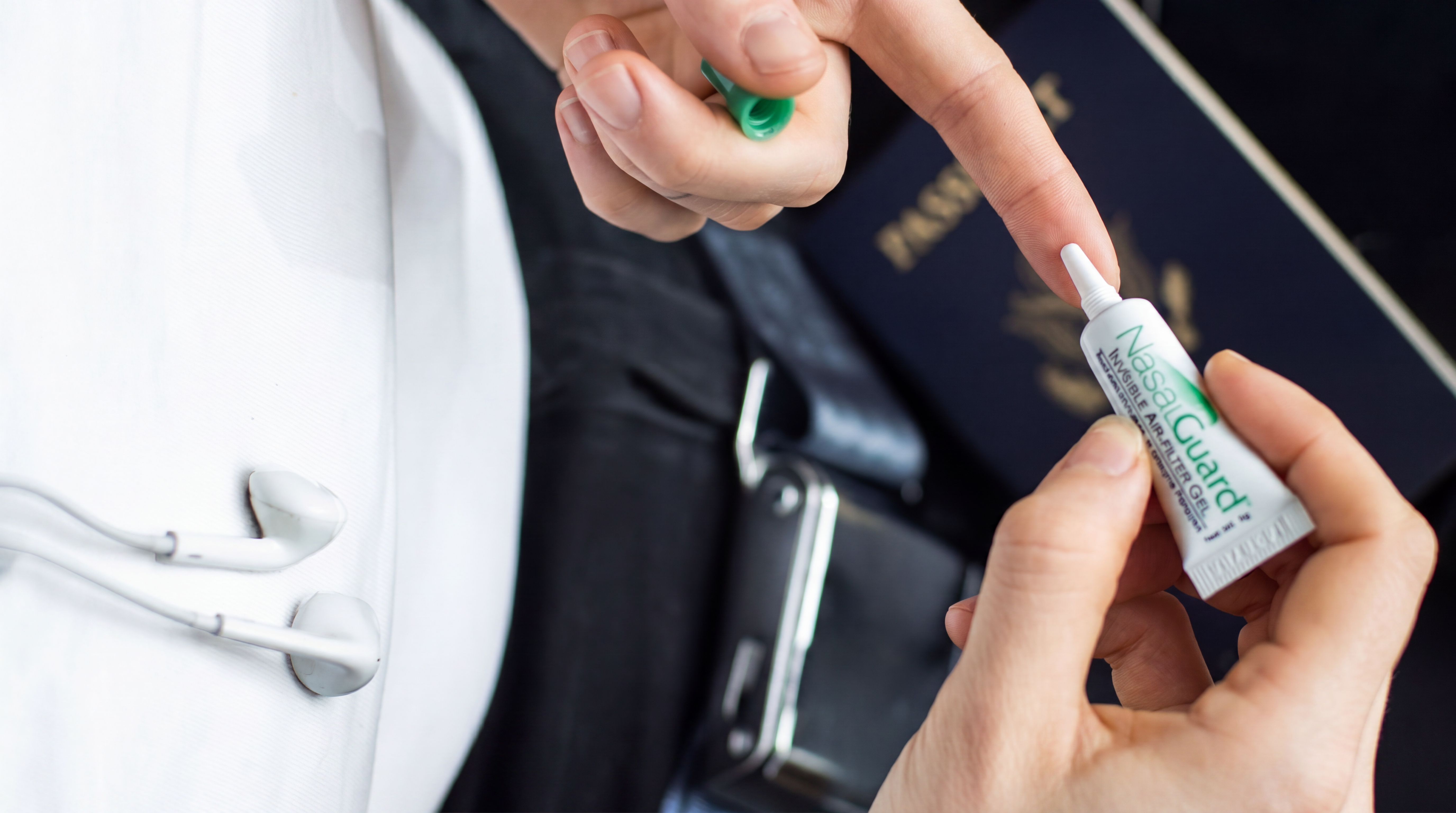
An antiseptic nasal gel applied before boarding and again on longer flights supports nasal hygiene by helping maintain moisture around the nasal vestibule and reducing germs at the nasal entrance. NasalGuard's antiseptic nasal gel products are designed to be discreet, easy to apply, and carry-on friendly, making them a practical part of any travel health routine.
What to Pack in Your Travel Health Kit
Hand sanitizer and disinfectant wipes
A small bottle of hand sanitizer and disinfectant wipes take up minimal space and give you practical germ-reduction support at every stage of the journey. Wipe down your tray table, armrest, and seat belt buckle after boarding.
Water bottle and healthy snacks
A refillable water bottle filled after security makes it easy to stay hydrated without depending on in-flight service. Healthy snacks support steady energy and reduce reliance on high-sugar airport options that can affect how your body copes with travel demands.
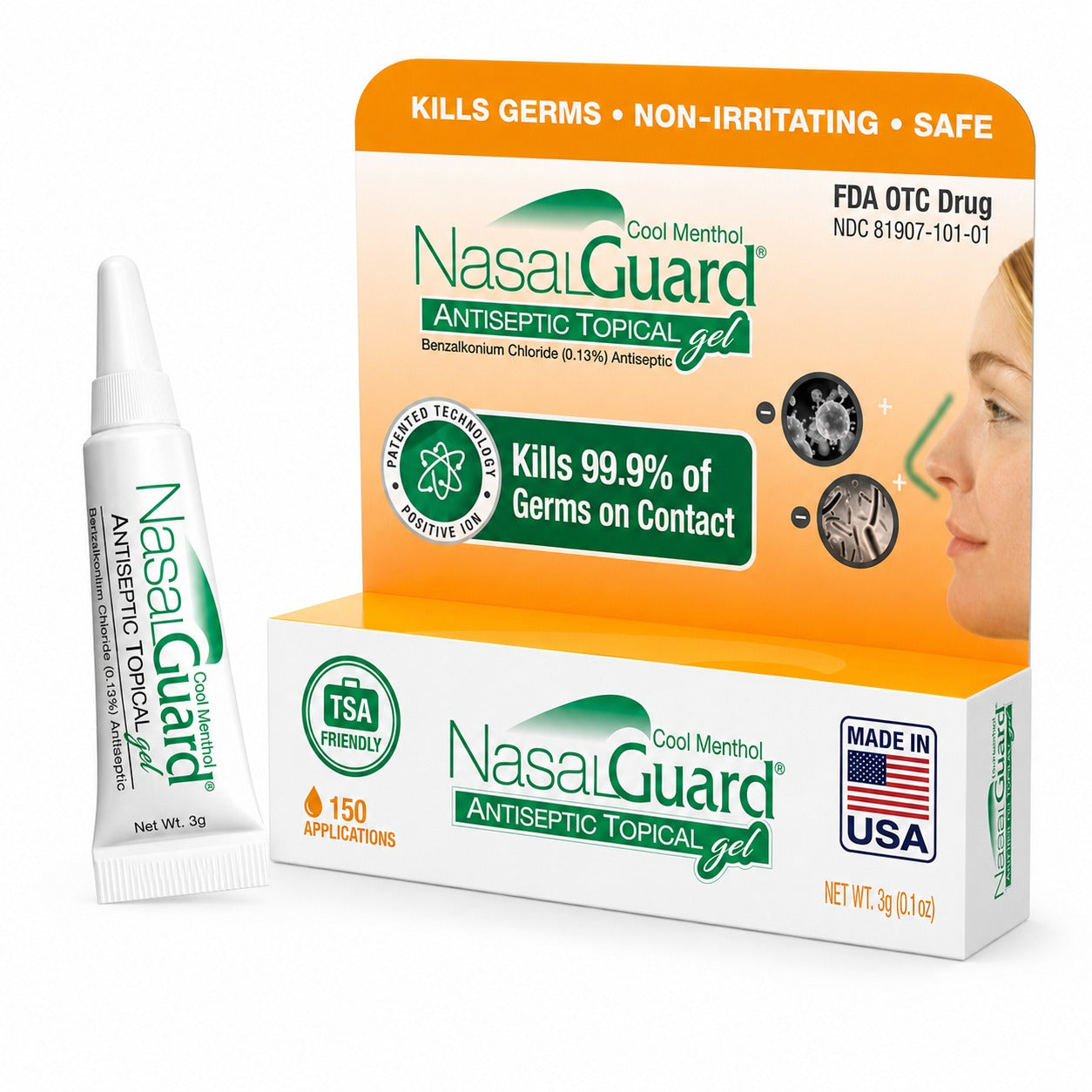
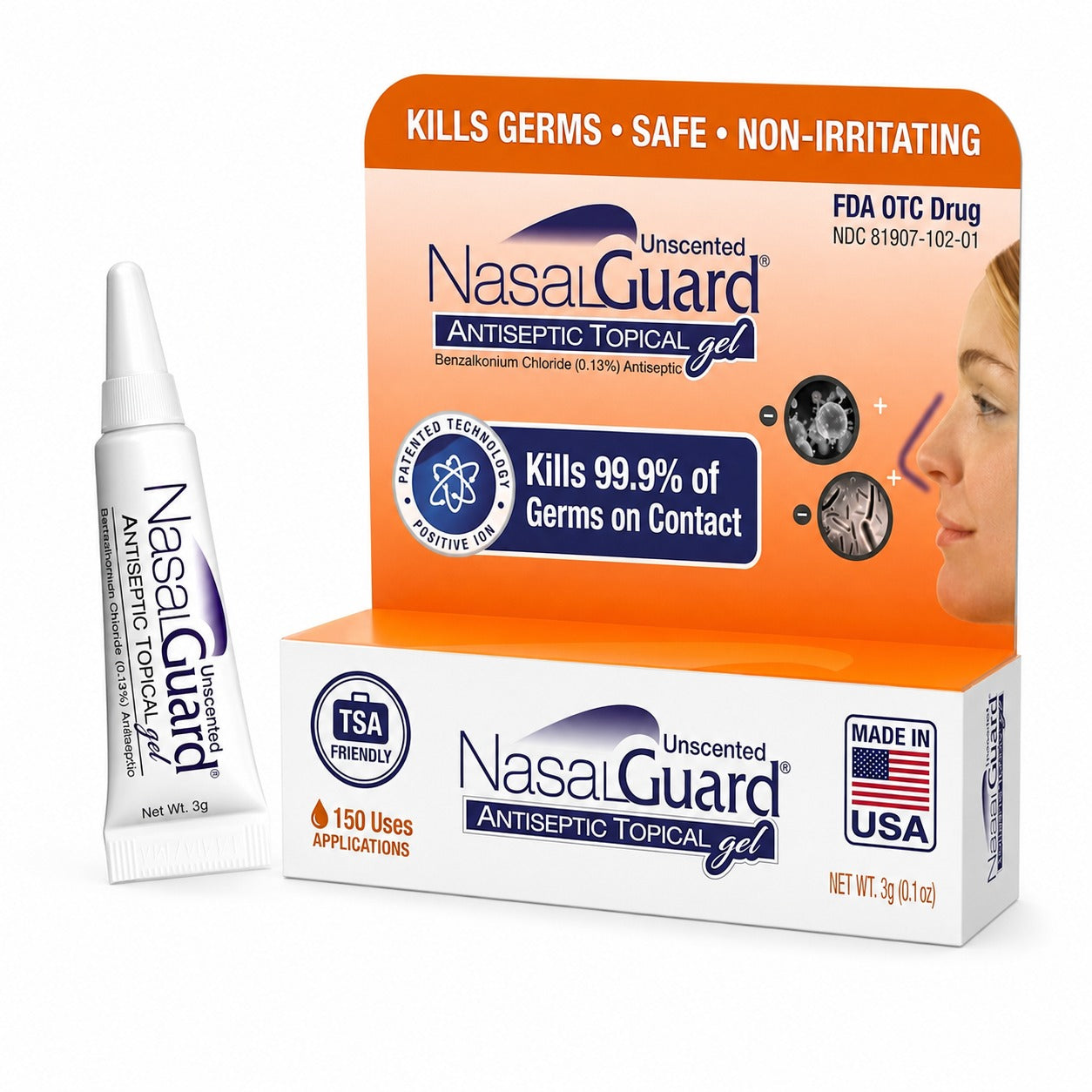
NasalGuard Antiseptic Topical Gel
NasalGuard Antiseptic Topical Gel is an alcohol-free, drug-free formula designed for daily use in high-exposure environments like airports, airplanes, and other crowded spaces. Using patented positive ion technology, it's designed to help block and kill germs around the nose, with protection intended to last up to six hours per application. Its compact, carry-on-friendly tube makes it easy to bring along and reapply during longer flights as part of your overall travel health routine.
Pre-Flight and In-Flight Health Checklist
Before your flight
Get enough sleep in the days leading up to travel. Pack hand sanitizer, disinfectant wipes, a water bottle, and your NasalGuard antiseptic topical gel. Apply antiseptic nasal gel before leaving for the airport. Eat a balanced meal before departure.
During your flight
Wipe down your tray table, armrest, and seat belt buckle after boarding. Wash or sanitize hands before eating and after using the lavatory. Drink water steadily throughout the flight. Reapply nasal gel on longer flights as needed. Keep the overhead vent at a low, directed setting. Avoid touching your face throughout the journey.
After your flight
Continue drinking water to rehydrate after landing. Wash hands thoroughly after collecting baggage and leaving the terminal. Prioritize rest in the day or two following a long or overnight flight.
Conclusion
Travel smarter with healthy habits and a proactive routine
Understanding why you get sick after flying usually reveals not one cause but several overlapping factors. Dry cabin air, close passenger contact, disrupted sleep, and reduced nasal defenses each play a role, and each is at least partially within your control.
Hydration, hand hygiene, smart seat choices, and consistent nasal protection while flying all help reduce your exposure to airborne particles and surface germs throughout a trip.
Ready to build a smarter travel routine? Explore the NasalGuard Antiseptic topical gel before your next flight and make nasal hygiene a natural part of how you travel.
Frequently Asked Questions
Why do I get sick after flying?
Post-flight illness is usually caused by several factors together: low cabin humidity, close proximity to other passengers, and the physical demands of travel. Addressing each before and during your flight makes a meaningful difference.
Is airplane cabin air dirty?
Not as much as most people assume. Modern aircraft use HEPA filtration systems that capture bacteria, mold spores, and respiratory droplet-carried particles effectively. Shared surfaces rather than the air itself represent the greater source of germ exposure during a typical flight.
Does recirculated air spread germs on airplanes?
Recirculated air germs are a genuine concern, but HEPA filtration significantly reduces microbial content in cabin air. Close contact with unwell passengers and shared high-touch surfaces pose a greater practical risk than the air circulation system itself.
How can I stay healthy while flying?
The most effective travel health tips are consistent hand hygiene, regular hydration, avoiding face-touching, supporting nasal protection while flying with an antiseptic gel, and prioritizing rest before and after travel. Combining these habits addresses the main germ exposure points across a typical journey. Hydration, hand hygiene, smart seat choices, and consistent nasal protection.
What should I pack to reduce germ exposure when traveling?
A well-stocked travel kit includes hand sanitizer, disinfectant wipes, a refillable water bottle, healthy snacks, and the NasalGuard antiseptic topical gel for nasal hygiene support. Together, these items address the main germ exposure points across a typical travel day.