We've sent you an email with a link to update your password.
Reset your password
We will send you an email to reset your password.
Nasal Gel for Flying: What NasalGuard Is and What It Isn’t
Christine Walek
0 comments
Search for a nasal gel for flying and you will find sprays, swabs, mists, and gels that all sound alike. They are not alike. If you are trying to work out where NasalGuard fits on a travel day, it helps to start with what the product actually is, where it goes, and what it is not designed to do.
This guide explains NasalGuard® Airborne Particle Blocker For Air Travelers in plain terms, so you can decide whether it belongs in your carry-on.
What a nasal gel for flying means here
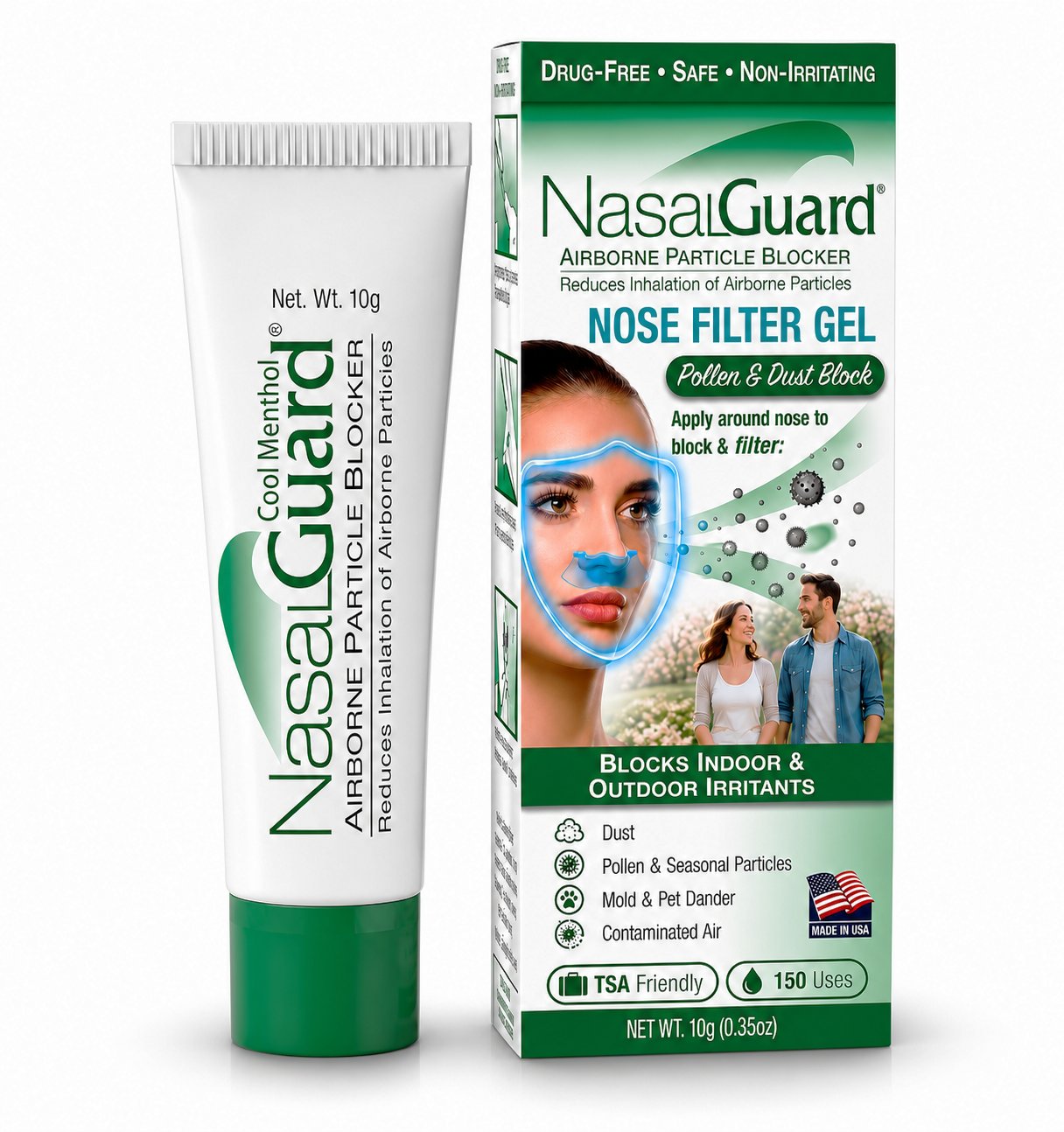
NasalGuard® Airborne Particle Blocker is an invisible, drug-free gel applied around the outside of the nostrils and above the upper lip to help reduce inhalation of everyday airborne particles such as dust and pet dander.
The For Air Travelers version is the same kind of externally applied gel, packaged for trips. It is a simple, externally applied barrier step for everyday airborne particles at airports, on airplanes, and in other travel settings.
Three details set it apart from most products that show up when you search for a nasal gel for flying:
Where it goes: around the outside of the nostrils and above the upper lip, never into the nose.
What it looks like: the gel is milky white in the tube and on your fingertip, then goes on invisibly once spread.
What it is for: everyday airborne particles you share space with in terminals, cabins, rideshares, and hotel lobbies.
How NasalGuard works
NasalGuard uses positive ion technology. Once applied, it creates an invisible gel barrier around the outside of the nostrils, designed to help reduce contact with everyday airborne particles.
That is the whole idea, and it is intentionally simple. There is no device to wear and nothing to insert. You apply a small amount, spread it, and go about your day. Our explainer on positive ion technology goes into more detail in everyday language.
A quick way to sort NasalGuard from the other products that turn up in a search for nose gels.
What NasalGuard is not
Knowing the limits of a product is as useful as knowing what it does. NasalGuard is:
Not a medicine or a drug. It is a topical gel applied to the skin around the outside of the nostrils.
Not a spray or a mist. It comes as a gel in a small tube and is applied with a fingertip.
Not intended to be inserted into the nose. It stays around the outside of the nostrils and above the upper lip.
It also does not change anything about how you follow airline, crew, or airport instructions. Keep doing whatever your airline asks and whatever your doctor has advised for you. NasalGuard is one optional barrier step you can add to your own routine.
Where it fits on a flight day
A flight day has natural pauses where a small step slots in without adding time:
At home, before you leave. Apply a small amount around the outside of the nostrils and above the upper lip as part of getting ready.
At security. TSA allows containers of 3.4 ounces (100 milliliters) or less in carry-on bags, in one quart-size bag. A 3g tube is a small fraction of that limit, so it rides along with your other travel-size items.
At the gate and on board. Reapply according to the current directions.
After washing up. If you wash your face on a layover or the area gets wet, reapply.
Four natural pauses in a flight day. Source for liquids limits: TSA Liquids, Aerosols, and Gels Rule.
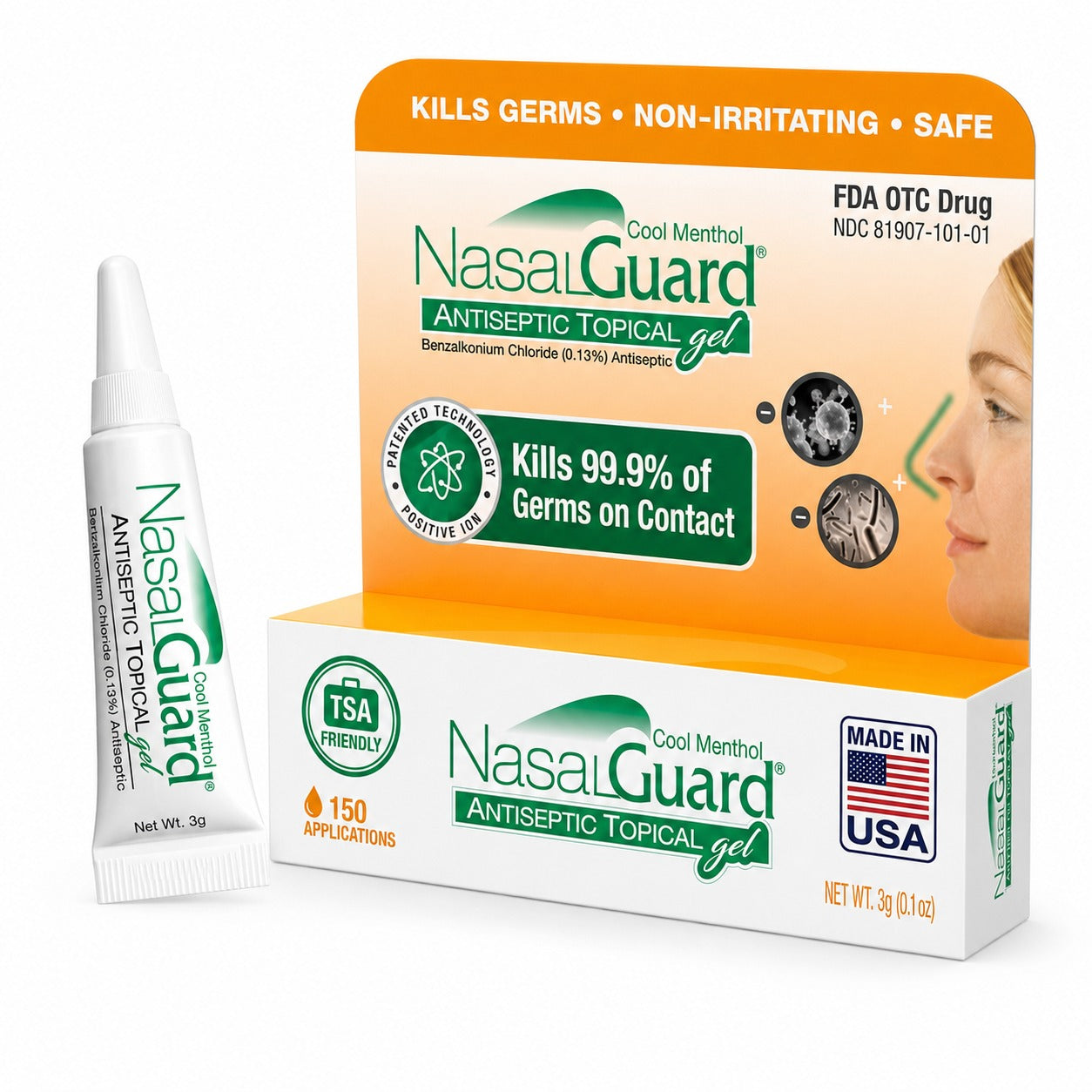
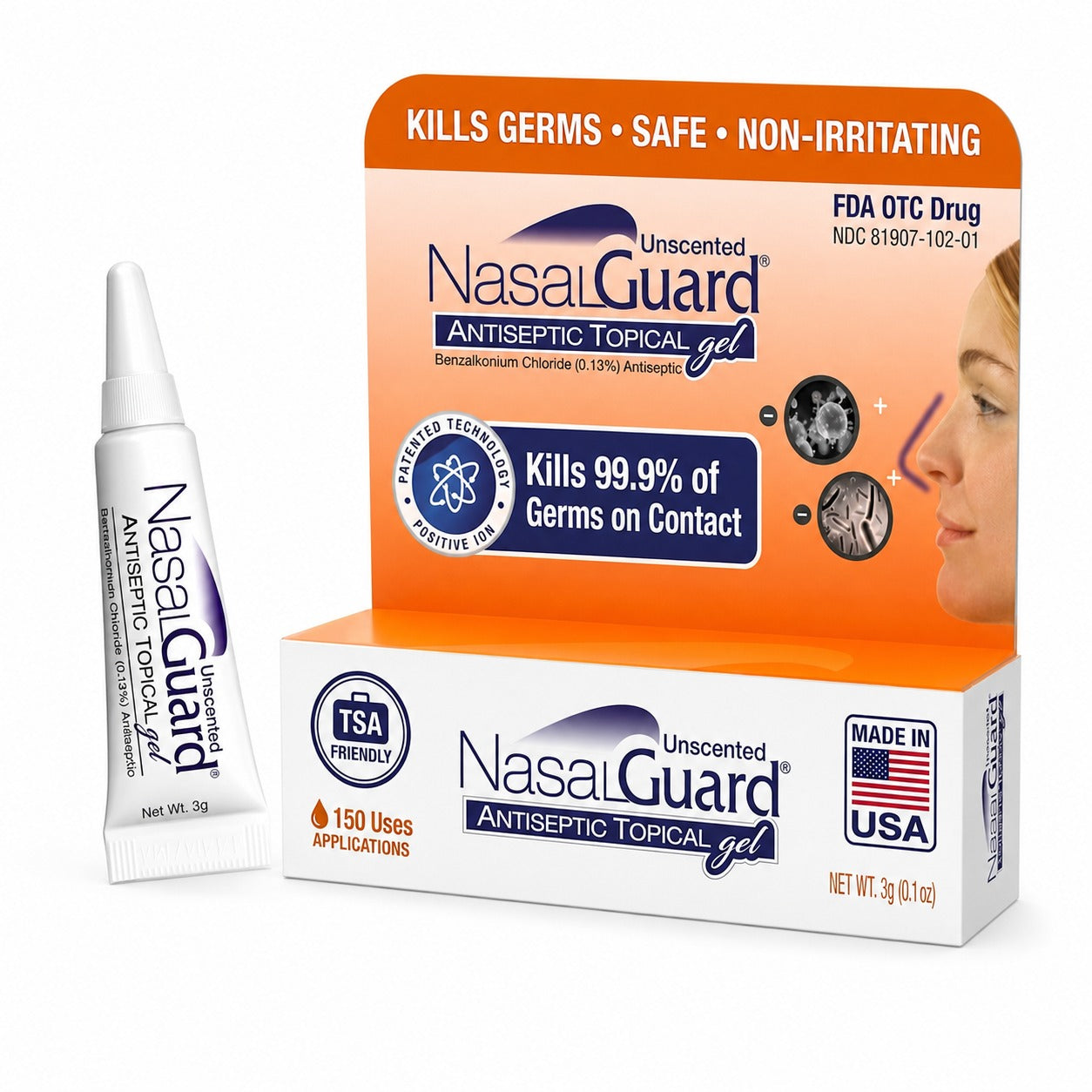
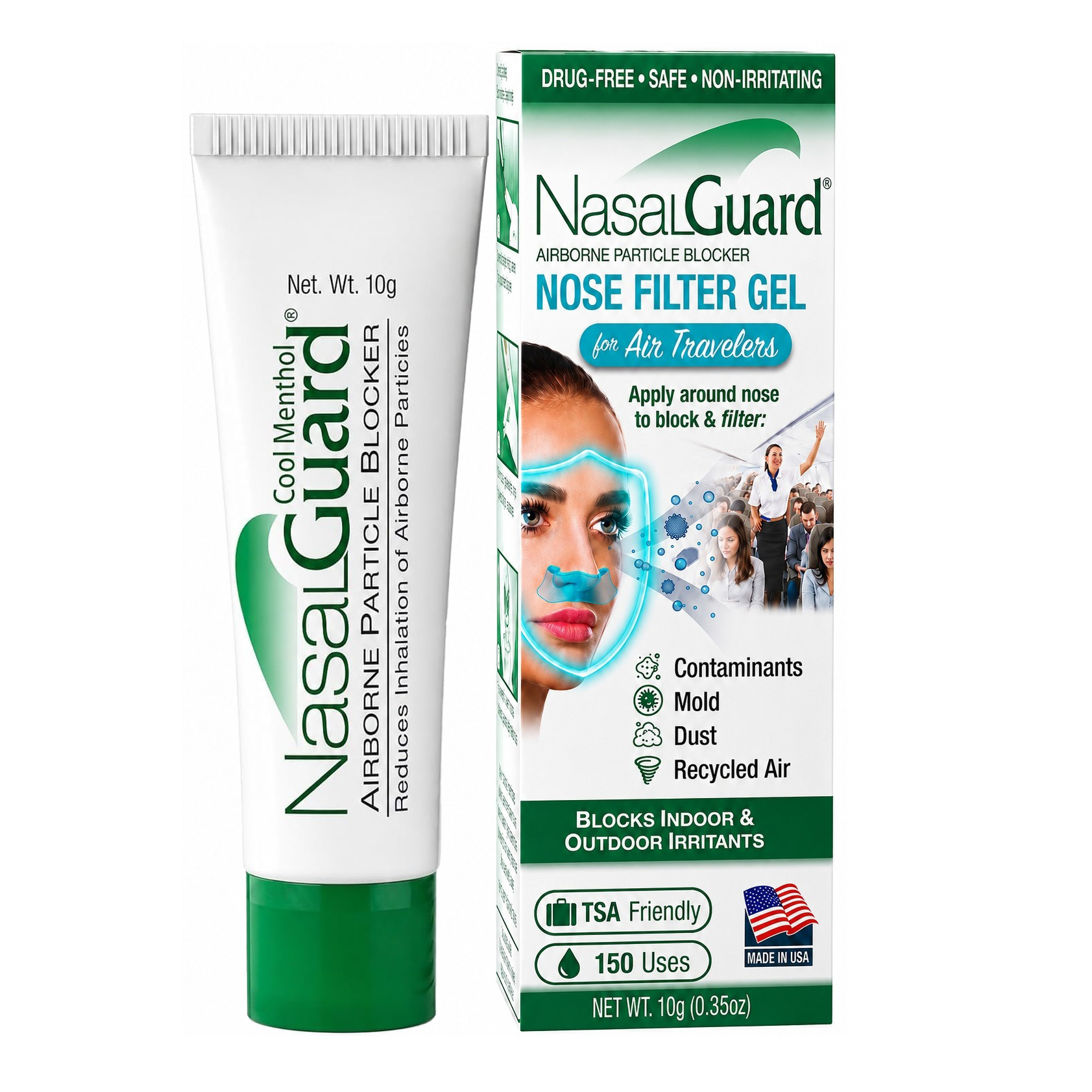
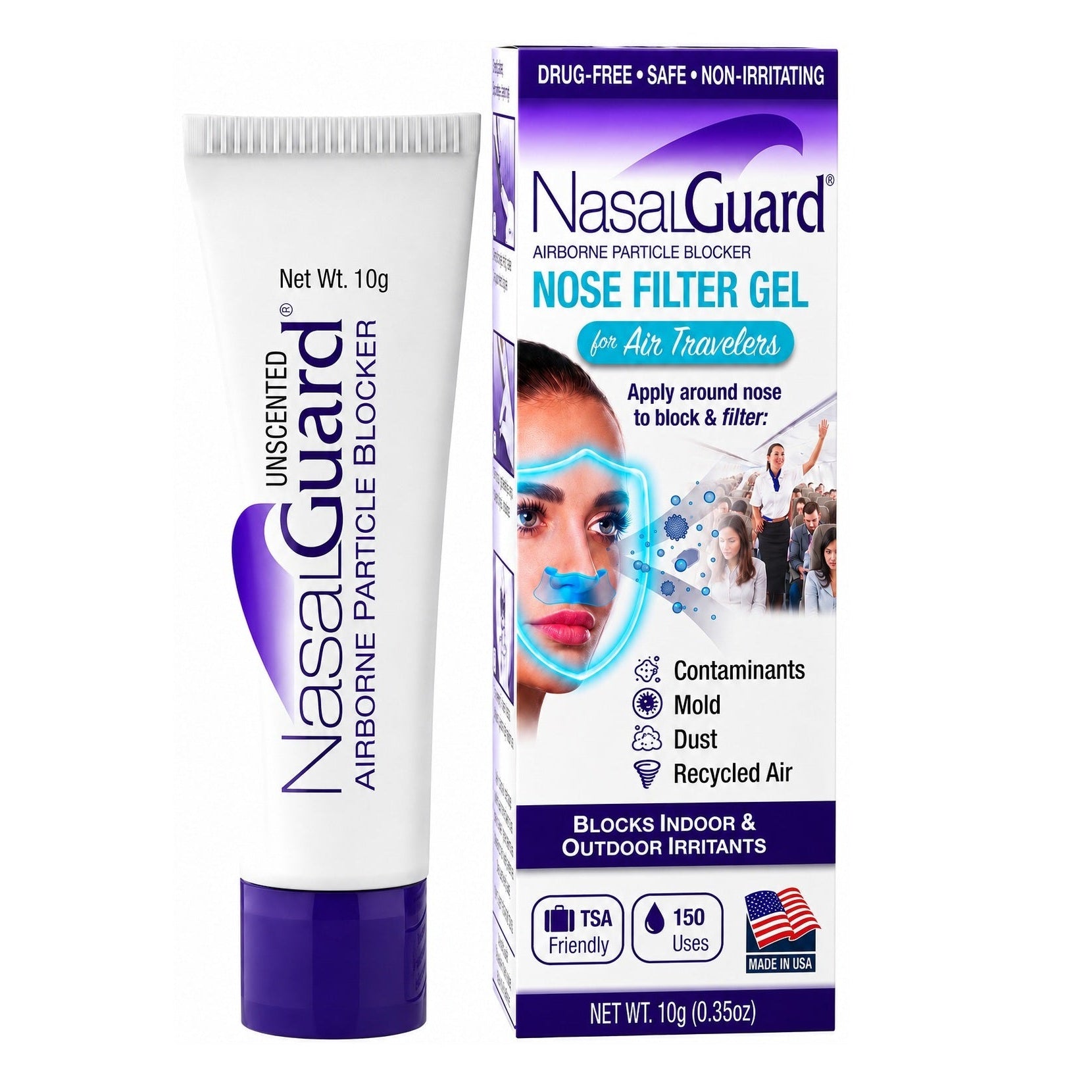
NasalGuard For Air Travelers comes in two scents and two tube sizes:
Unscented if you prefer nothing noticeable around your nose on a long flight.
Cool Menthol if you like a light, cool scent when you apply it.
3g tubes for a carry-on, a jacket pocket, or a small personal item.
10g tubes if you would rather keep one tube at home or in a checked bag for a longer trip.
Both scents use the same application steps. If you are choosing between them for the first time, think about how you feel about scents in a closed space like a plane cabin. Our full product lineup shows every size side by side.
Frequently asked questions
Is NasalGuard a medicine?
No. NasalGuard is not a medicine or a drug. It is a topical, externally applied gel that uses positive ion technology to create an invisible gel barrier around the outside of the nostrils, designed to help reduce contact with everyday airborne particles such as dust and pet dander. Use as directed.
Does NasalGuard go inside the nose?
No. NasalGuard is applied around the outside of the nostrils and above the upper lip. It is not intended to be inserted into the nose. Place a small amount on a fingertip, spread it between the thumb and finger, and apply it around the outside of the nostrils and above the upper lip.
Can I bring NasalGuard on a plane?
The 3g tube is far below TSA's 3.4-ounce (100 milliliter) limit for liquids, aerosols, and gels in carry-on bags. Pack it in your quart-size liquids bag with your other travel-size items. The final decision at any checkpoint rests with the TSA officer, so keep the tube easy to reach.
When should I apply it on a travel day?
A simple time is at home before you leave, as part of getting ready. Reapply according to the current directions and after the area becomes wet, such as after washing your face during a layover. The directions on the product tell you how much to use and when to reapply.
What is the difference between the For Air Travelers version and the everyday version?
Both are NasalGuard Airborne Particle Blocker gels applied the same way, around the outside of the nostrils and above the upper lip. The For Air Travelers version is packaged and named for trips, with 3g tubes sized for a carry-on. Each comes in Unscented and Cool Menthol.
Christine Walek writes for the NasalGuard editorial team about air quality, travel, and the everyday airborne particles we share space with. Articles are reviewed against current product labeling before publishing.