Pollen and dust get mentioned in the same breath so often that it's easy to assume they're basically the same thing. They're not, one comes from plants, the other from a mix of skin cells, fibers, and debris, but they behave similarly enough in the air that it makes sense to look at them side by side. Here's how these two everyday airborne particles actually compare, and where they tend to show up together.
Pollen vs. Dust: A Quick Comparison
Where Each One Comes From
Pollen particles are released by trees, grasses, and weeds as part of their natural reproductive cycle. Dust particles, on the other hand, come from a much broader mix of sources: skin cells, fabric fibers, soil, and general household debris. One has a biological origin tied to plant life; the other is more of a byproduct of everyday indoor and outdoor activity.
How Long Each One Sticks Around
Dust is a near-constant presence. It's always being generated in small amounts and rarely disappears from a space entirely, even after cleaning. Pollen, by contrast, follows a much more defined calendar, appearing heavily during specific stretches of the year and tapering off once a plant's release period ends.
Same Category, Different Behavior
Why Wind Affects Them Differently
Both particles are light enough to travel on air currents, but wind plays a bigger role in pollen's movement. Pollen is often released in large quantities specifically to be carried by wind over distance. Dust, meanwhile, tends to move more locally, stirred up by foot traffic, cleaning, or drafts rather than carried across a wide area.
Indoor Buildup vs. Outdoor Drift
Dust tends to accumulate indoors over time, settling on surfaces and becoming airborne again when disturbed. Pollen mostly originates outdoors and drifts inward through open windows, doors, or on clothing, making its indoor presence more dependent on outdoor conditions.

A Week in the Life of Airborne Particles
A typical week can involve both particles without much notice. A weekday cleaning session, vacuuming, dusting shelves, shaking out a rug, stirs dust into the air temporarily. A windy afternoon a few days later might carry a wave of pollen through an open window. Weekend yard work often kicks up a mix of both, dust from dry soil and pollen from nearby grass or trees. None of this is unusual; it's simply what everyday exposure tends to look like.
When They Show Up Together
Spring Cleaning Season
Spring is a common overlap point: tree pollen is often at its peak just as many households take on deeper cleaning projects, which can stir up dust that's settled over the winter months.
Open Windows, Open Doors
Warmer weather often means more open windows and doors, which lets in fresh air but also gives both pollen and outdoor dust an easier path indoors.
Reading the Signs: Pollen Count vs. Dust Buildup
How People Track Pollen
Pollen levels are commonly tracked through daily forecasts from weather services, which estimate how much pollen is circulating in a given area based on plant activity and weather conditions.
How People Notice Dust
Dust buildup is usually noticed more directly, visible layers on surfaces, or a room that feels like it needs cleaning again soon after the last pass, rather than through any kind of daily count.

One Routine, Two Particles
Habits That Cover Both
Because pollen and dust both circulate through similar indoor spaces, many of the same habits help with both: regular vacuuming, keeping windows closed on high-pollen days, and washing bedding or curtains that tend to collect particles over time.
Where NasalGuard Fits In
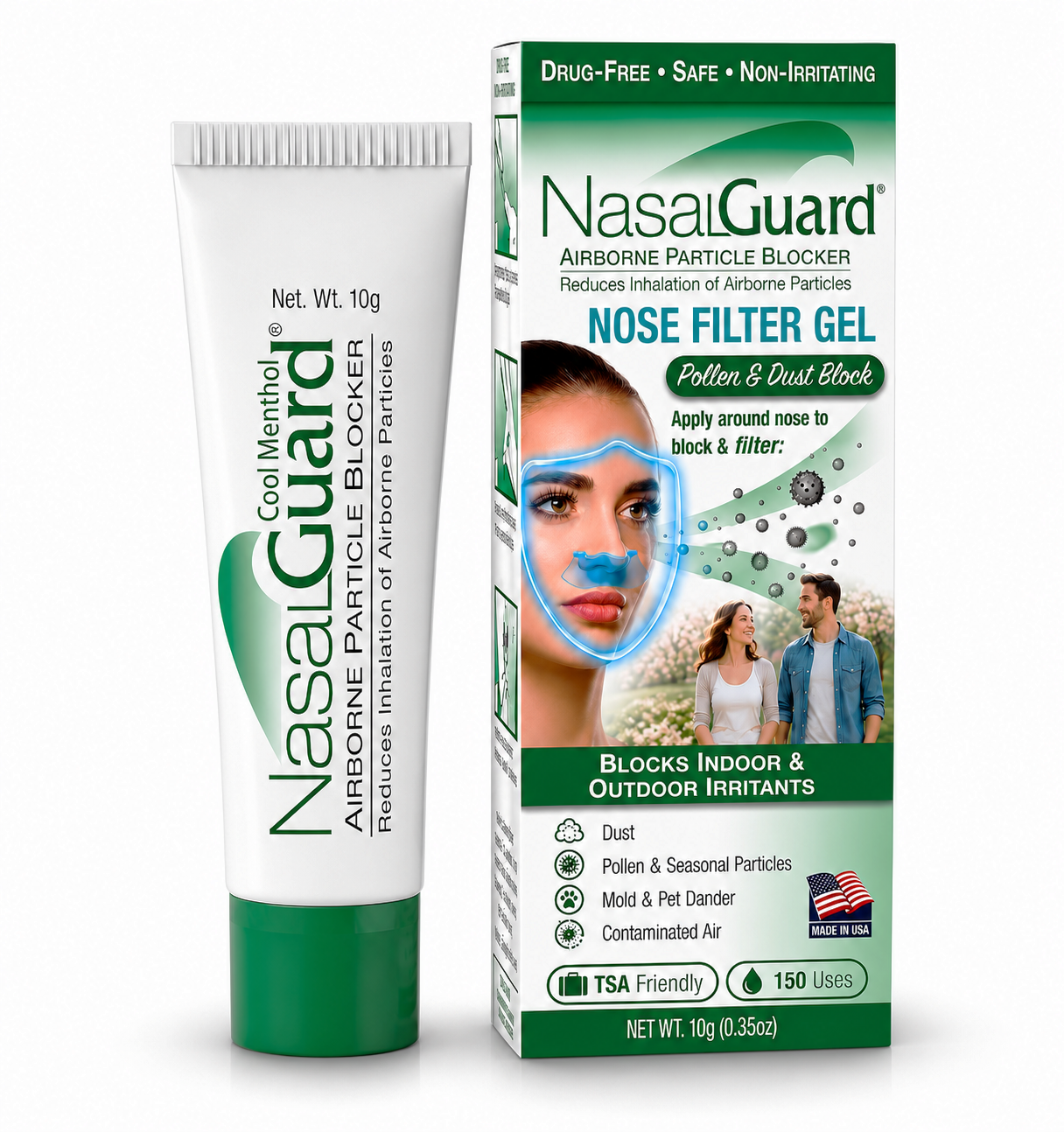
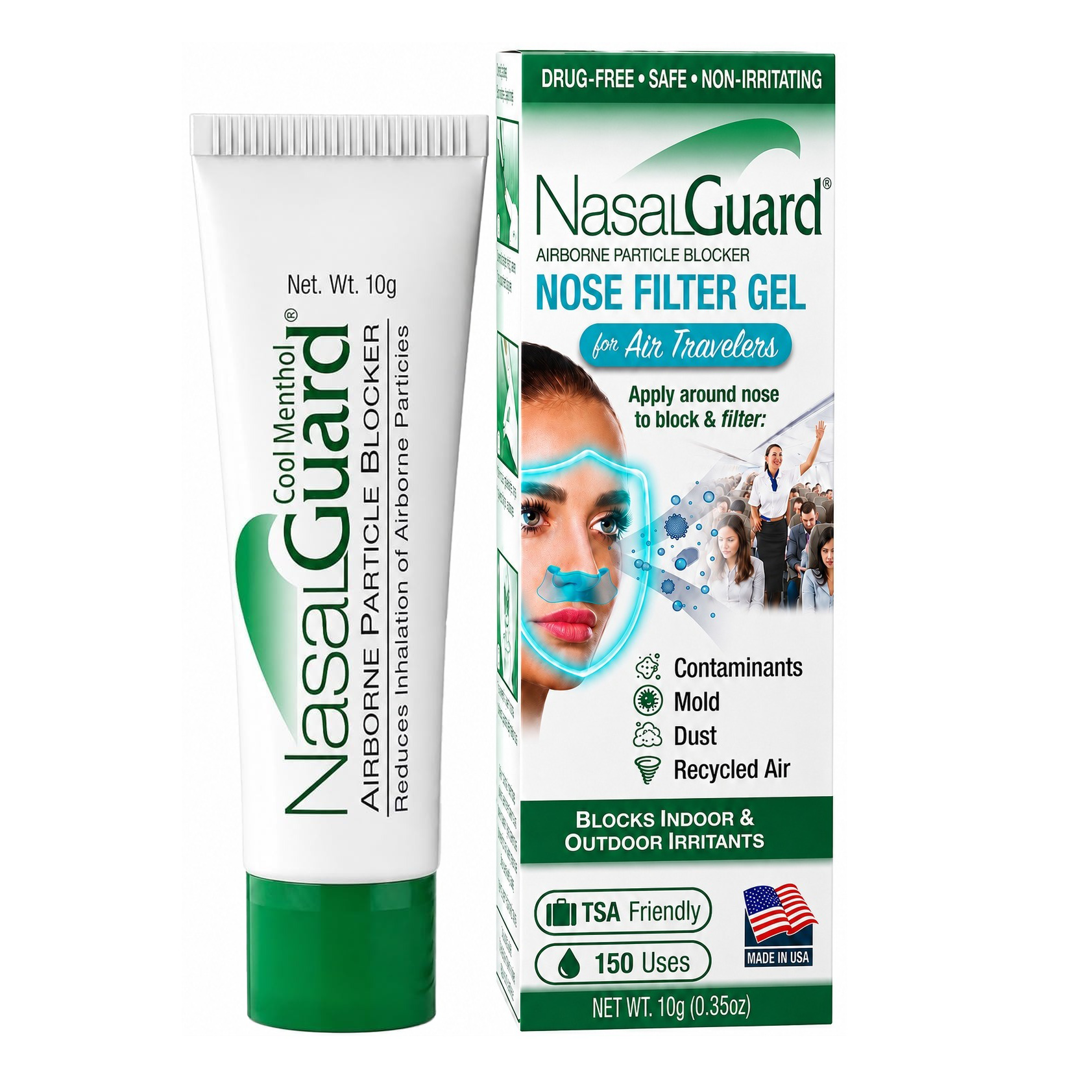
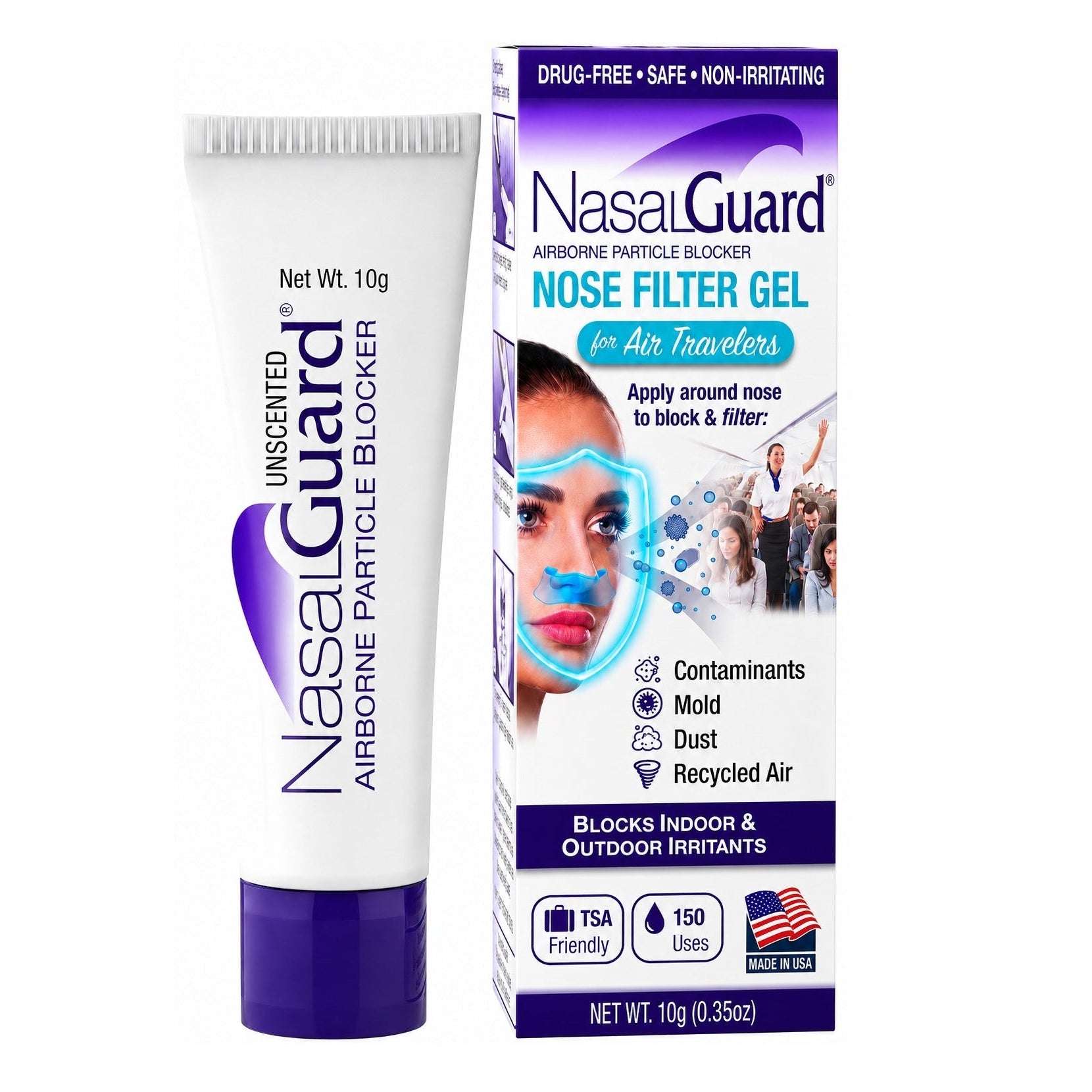
For those looking to add one more layer to a routine that already covers both particles, NasalGuard Airborne Particle Blocker is an externally applied gel formulated with pollen and dust specifically in mind, fitting alongside cleaning and ventilation habits rather than replacing them.
How the Pollen & Dust Block Works
The Shared Trait It's Built Around
Despite coming from different sources, pollen and dust share a physical trait that makes positive ion barrier technology relevant to both: they're lightweight and carry a negative electrical charge. NasalGuard's gel contains positively charged ions designed to reduce the inhalation of airborne particles.
One Gel, Two Particle Types
Because the technology responds to that shared charge rather than to one particle specifically, the same gel is designed to help interact with both pollen and dust as they approach the nose, forming an invisible barrier around the nostrils.
Applying It Day to Day
Apply a small amount of gel around the outside of the nostrils and above the upper lip. Reapply approximately every 4+ hours, or sooner if the area becomes wet.
If You're Curious About Other Options
Unscented and Cool Menthol
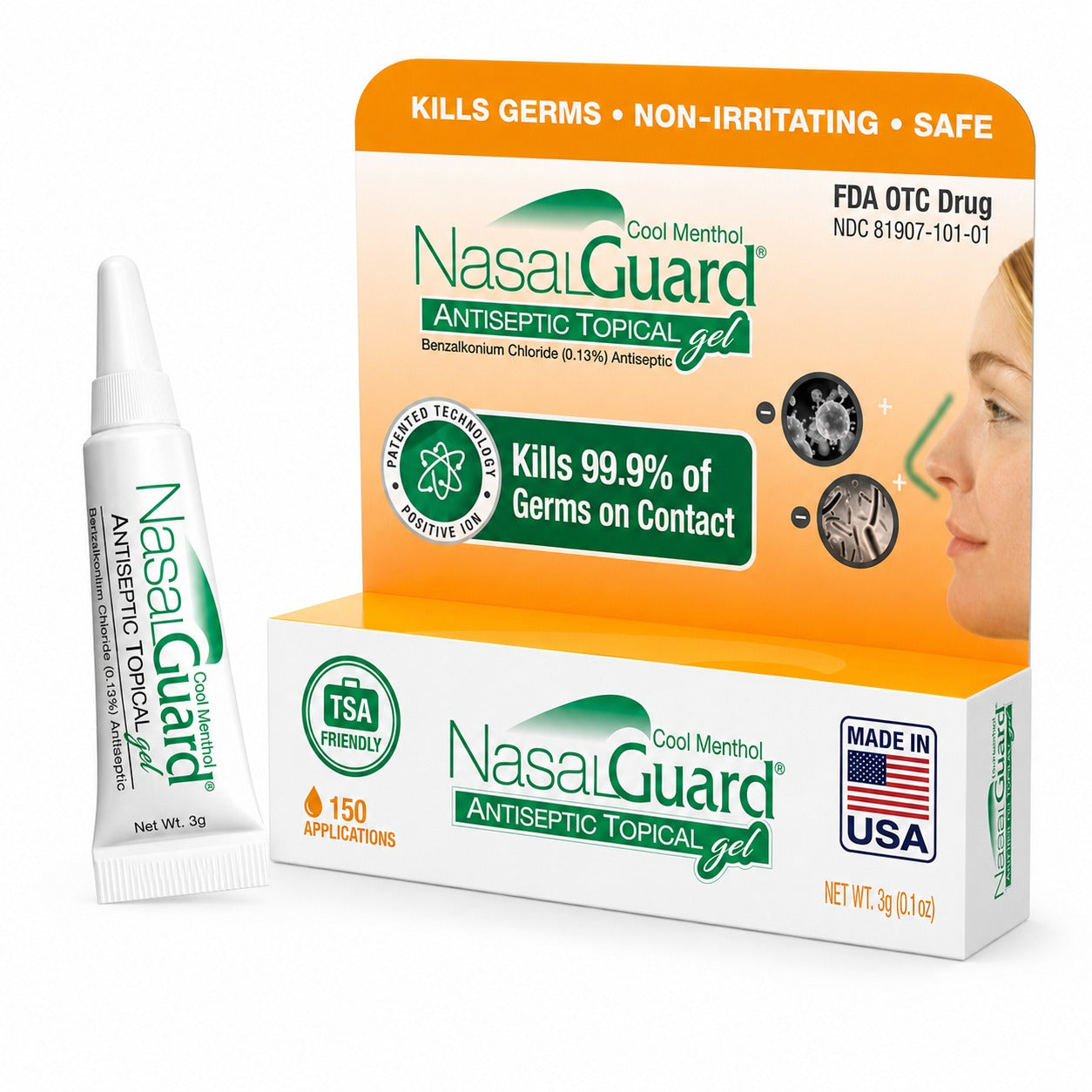
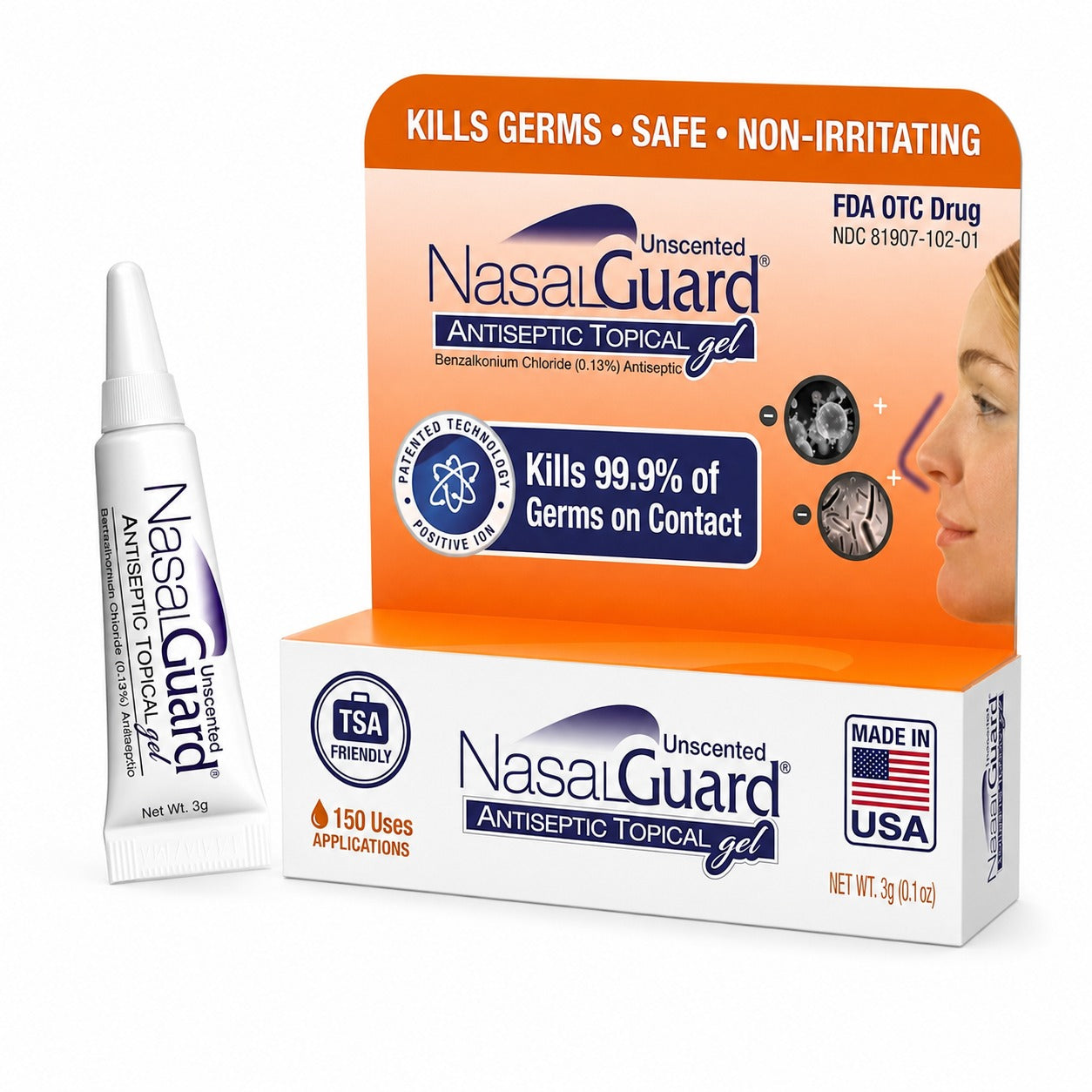
NasalGuard comes in unscented version for those who prefer no fragrance, and a cool menthol version for those who like a refreshing sensation upon application.
Before You Start
NasalGuard's gel is meant to stay on the outer skin, around the nostrils and above the upper lip. It's not designed for use inside the nose or nasal passage, so a thin, even layer on the outside is all that's needed. As with any product, checking the current packaging is the best way to confirm up-to-date application details.
Explore
Pollen and dust are two of the airborne particles people most often build routines around, and the NasalGuard is one option some choose to layer on top of their existing habits.
Conclusion: Two Particles, One Habit
Pollen and dust may come from entirely different sources, one seasonal and plant-based, the other a near-constant mix of household debris, but they behave similarly enough in the air to be worth thinking about together. Many of the same everyday habits, cleaning, ventilation, and general awareness, apply to both. For those wanting an additional step, NasalGuard is designed to help reduce inhalation of these two particles as part of a broader daily routine.

FAQs
Is pollen worse than dust, or the other way around?
Neither is inherently "worse." They're just different: pollen follows a seasonal pattern tied to plant activity, while dust is a more constant, year-round presence indoors and outdoors.
Do pollen and dust need different solutions?
Not necessarily. Because both are lightweight, negatively charged particles, many of the same habits, and products like NasalGuard are designed to address both together.
Why do pollen and dust seem to peak at the same time in spring?
Spring often brings a natural overlap: tree pollen is active outdoors right as many households take on deeper cleaning, which can stir up dust that's settled indoors over the winter.
Can I track dust levels the way I track pollen counts?
Not in the same formal way. Pollen counts come from regional forecasts, while dust buildup is usually something people notice directly around the home rather than through a published measurement.
What does the Pollen & Dust Block actually target?
It's built around positive ion barrier technology, which is designed to interact with small, negatively charged particles, a trait both pollen and dust share, rather than targeting either one individually.
Where should the gel be applied?
Only on the outside of the nose, around the base of the nostrils and above the upper lip. It's not intended for use inside the nasal passage.