Almost every indoor space has some amount of dust drifting through it, settling on surfaces, and occasionally becoming airborne again. Dust and airborne particles are part of everyday life, whether you're at home, at work, or outdoors, and understanding how dust moves through the air can help put everyday air quality into perspective.
What Is Airborne Dust?
Understanding Dust Particles
Dust particles are typically a mix of skin cells, fabric fibers, soil, and other fine debris that accumulates on surfaces over time. It's one of the most common substances found in nearly any indoor environment, regardless of how frequently a space is cleaned.
How Dust Can Become Airborne
Dust becomes airborne when it's disturbed, whether by foot traffic, a gust of wind through an open window, or the simple act of moving furniture or fabric. Because dust particles are so lightweight, even small movements can lift them into the air, where they may stay suspended for a period before settling again.
Dust as an Everyday Airborne Particle
Because dust is constantly being generated (from fabric wear, skin cells, and materials breaking down over time) it never fully disappears from a space, even after cleaning. New dust simply begins accumulating again, which is why it's considered one of the most frequently encountered examples of an everyday airborne particle, alongside things like pollen and pet dander. Unlike pollen, which tends to follow a seasonal pattern, dust is present in some amount year-round, making it one of the more consistent particles people encounter indoors.

Where Can Airborne Dust Be Found?
Indoor Environments
Homes, offices, and other indoor spaces naturally accumulate dust over time. Ventilation, humidity, and the types of materials in a room (carpets, upholstery, fabric) can all influence how much dust circulates in the air.
Outdoor Environments
Outdoors, dust can come from soil, construction activity, or simply dry conditions combined with wind. It's a common part of many outdoor environments, particularly in drier climates or during certain seasons.
Everyday Activities and Routines
Activities like cleaning, rearranging furniture, or even walking across a rug can stir dust into the air. These moments are a routine part of daily life rather than anything out of the ordinary.
Dust and Other Everyday Airborne Particles
Dust and Pollen
Pollen and dust are often discussed together, since both are lightweight particles capable of becoming airborne and traveling through indoor and outdoor spaces alike. Pollen tends to be more seasonal, while dust is present year-round.
Dust and Pet Dander
In homes with pets, dust often mixes with pet dander, another common airborne particle made up of tiny flecks of skin shed by animals. Together, dust and dander make up a large share of what settles on household surfaces.
Understanding Different Airborne Particles
Dust, pollen, and pet dander each come from different sources, but they share the traits that make them airborne particles: small size, light weight, and the ability to remain suspended in the air under the right conditions.
Indoor and Outdoor Airborne Dust
Airborne Dust Indoors
Indoor airborne particles, including dust, tend to build up in spaces with less airflow or more soft furnishings, such as carpets, curtains, and cushions, which can trap and later release dust back into the air.
Airborne Dust Outdoors
Outdoor airborne particles like dust are influenced heavily by weather. Dry, windy conditions can lift dust from the ground, while rain tends to settle it.
Seasonal and Everyday Environments
Certain seasons or environments, such as dry summers or construction-heavy areas, can involve more contact with airborne dust than others. This is simply a feature of the environment rather than anything concerning on its own.

Ways to Be Mindful of Everyday Airborne Particles
Understanding Your Environment
A room's layout can say a lot about how much dust tends to circulate in it. Spaces with carpeting, upholstered furniture, or heavy curtains tend to hold onto more dust than rooms with hard flooring and minimal fabric, since soft surfaces both trap dust and release it back into the air when disturbed. Noticing these patterns in your own home can offer a useful starting point for thinking about how dust moves through your space
Everyday Cleaning and Routine Habits
Rotating through a few consistent habits such as wiping down surfaces, running an air purifier or fan, and washing linens on a regular schedule tends to make more of a difference than any single deep clean. None of these habits need to be elaborate; they're simply small, repeatable actions that fit into a normal week.
Adding a Barrier Step
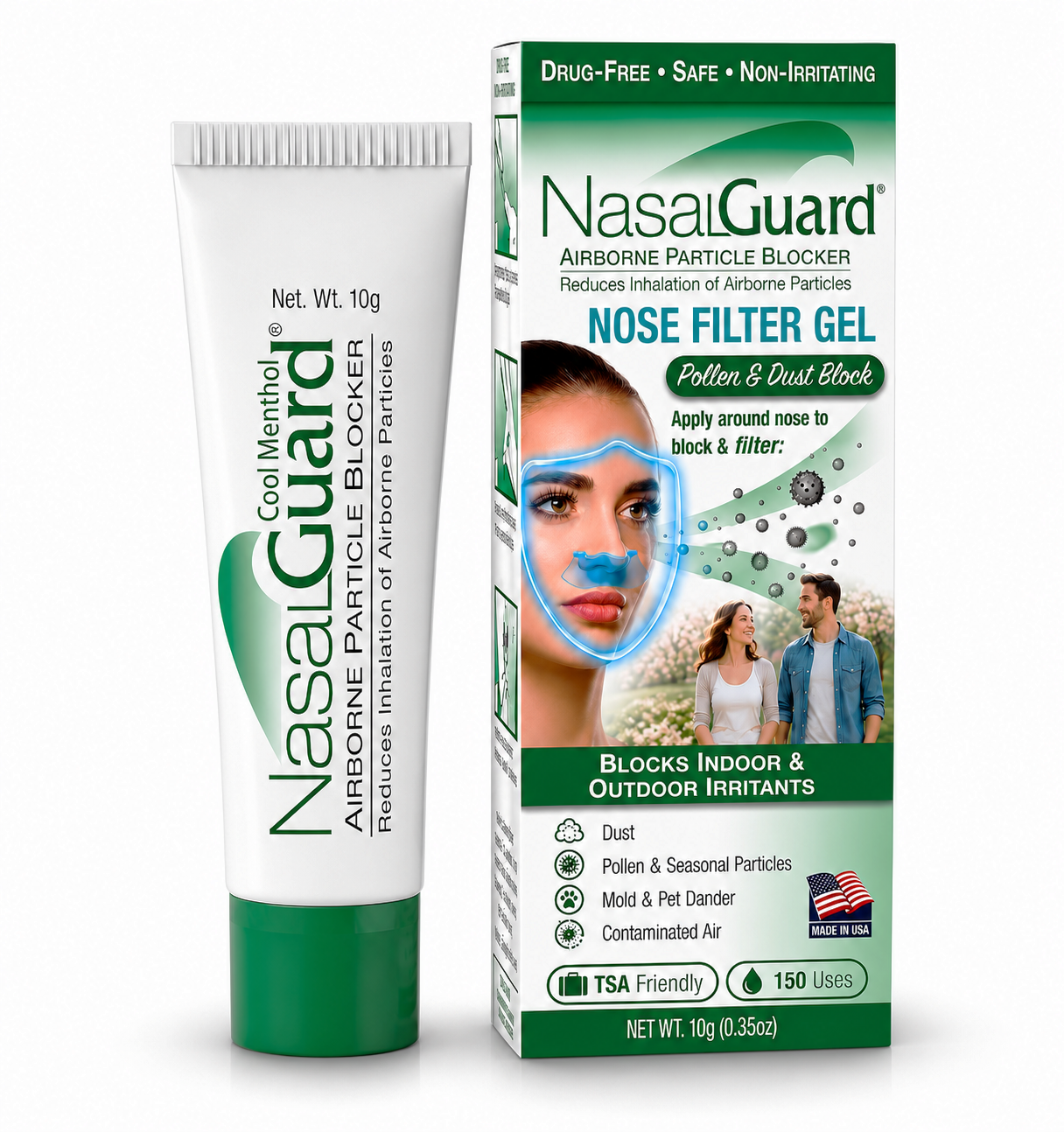
For some, an additional layer of awareness comes from pairing these habits with a barrier product such as NasalGuard Particle Blocker, built for airborne particles like dust, pollen, and pet dander. It's not a replacement for cleaning or ventilation, just another small habit some people layer on top of the ones they already have.
How NasalGuard Airborne Particle Blocker Fits Into an Everyday Routine
An Externally Applied Gel Barrier
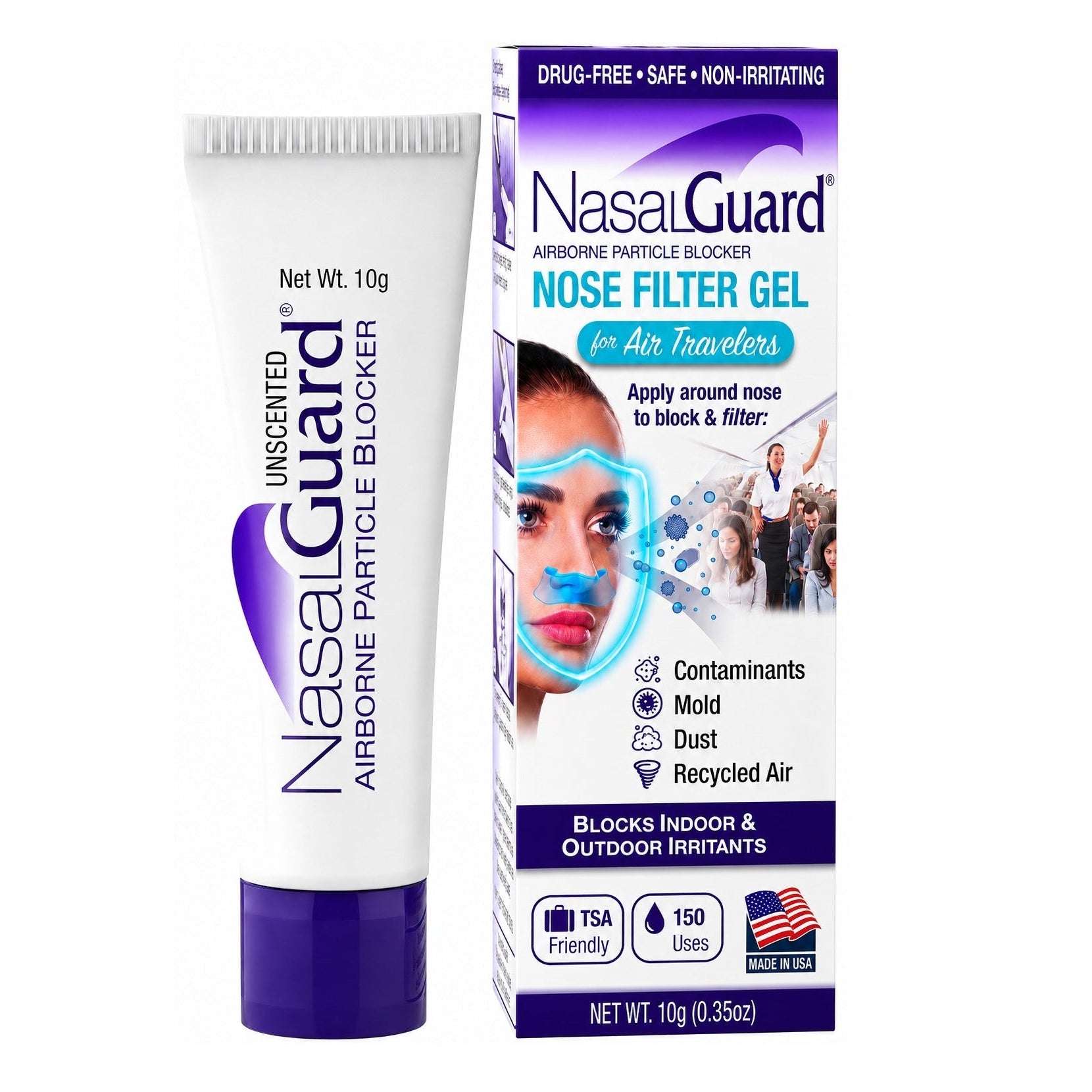
NasalGuard Airborne Particle Blocker is an externally applied gel, designed for use on the outside of the nose rather than inside the nasal passage. It's a small addition some people build into their daily routine.
A Barrier Step for Dust and Airborne Particles
The gel is formulated to work with everyday airborne particles such as dust, pollen, and pet dander, the kinds of particles many people encounter regularly indoors and outdoors.
Designed to Help Reduce Inhalation
Airborne Particle Blocker by NasalGuard is designed to help reduce inhalation of these everyday airborne particles as part of a broader daily routine.
How NasalGuard Airborne Particle Blocker Works
Positive Ion Barrier Technology
NasalGuard uses positive ion barrier technology, which creates an invisible barrier around the nostrils designed to help reduce the inhalation of airborne particles.
The Invisible Gel Barrier
Once applied, the gel forms an invisible layer around the outside of the nose. It's not noticeable to others and doesn't change how your nose looks or feels throughout the day.
How to Apply NasalGuard Airborne Particle Blocker
Applying the Gel Around the Outside of the Nostrils
Apply a small amount around the outside of the nostrils, reapply after 4+ hours or after washing face.
Applying It Above the Upper Lip
The area above the upper lip is included in application to help extend the barrier's coverage around the nose.
When a Dust and Airborne Particle Barrier Step May Fit Your Routine
Indoor Activities
Cleaning days, particularly ones involving vacuuming or dusting, are a common moment when people may choose to include a barrier step like NasalGuard Particle Blocker in their routine.
Outdoor Activities
Yard work, dry and windy days, or spending time in construction-heavy areas are other everyday moments where a barrier step such as NasalGuard Airborne Particle Blocker might fit naturally.
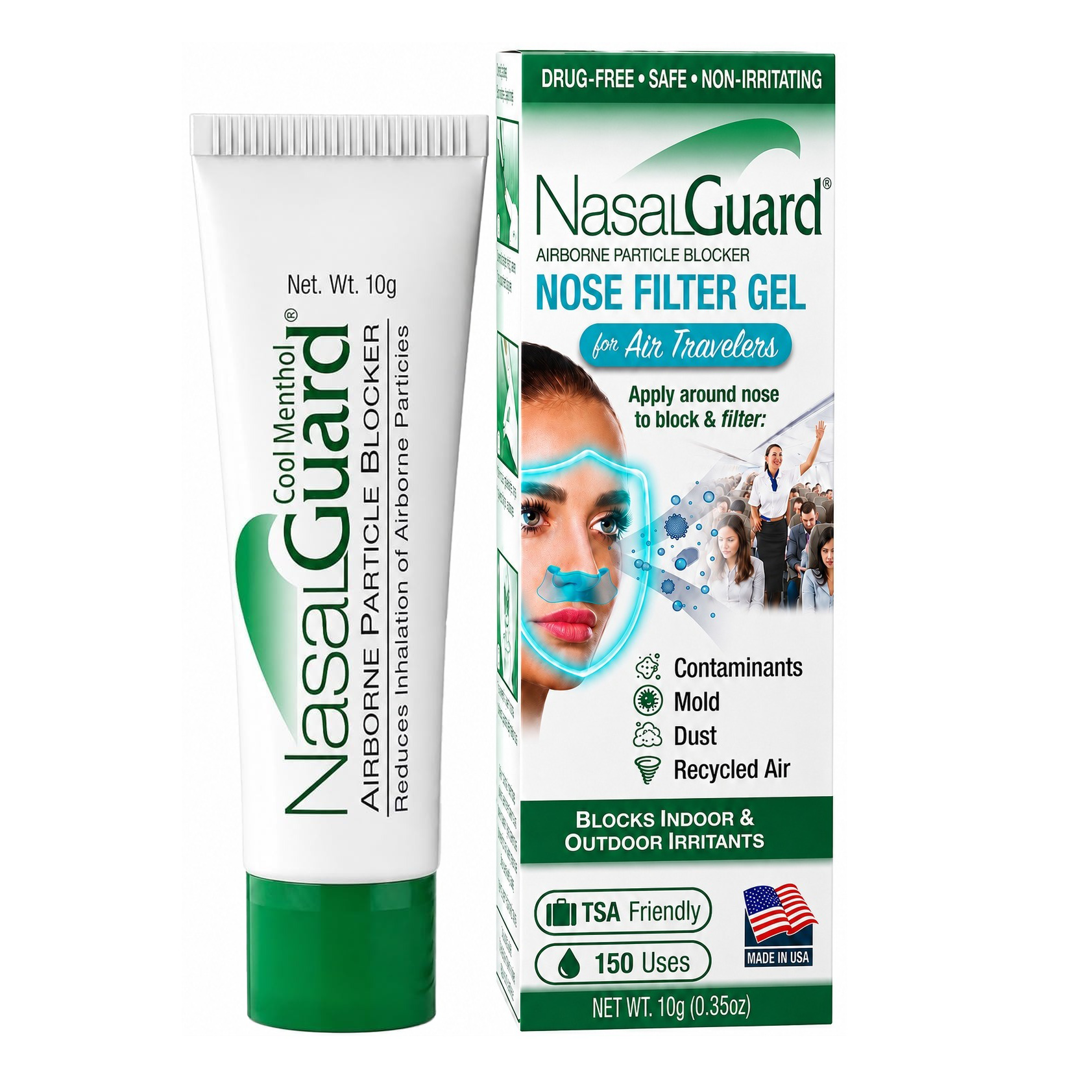
Travel and Commuting
Commuting through dusty environments or traveling to drier climates are additional everyday scenarios some people build this step into.
NasalGuard Airborne Particle Blocker Options
Pollen & Dust Block
This option is formulated with the everyday particles of pollen and dust in mind, fitting into routines built around common seasonal and indoor airborne particles.
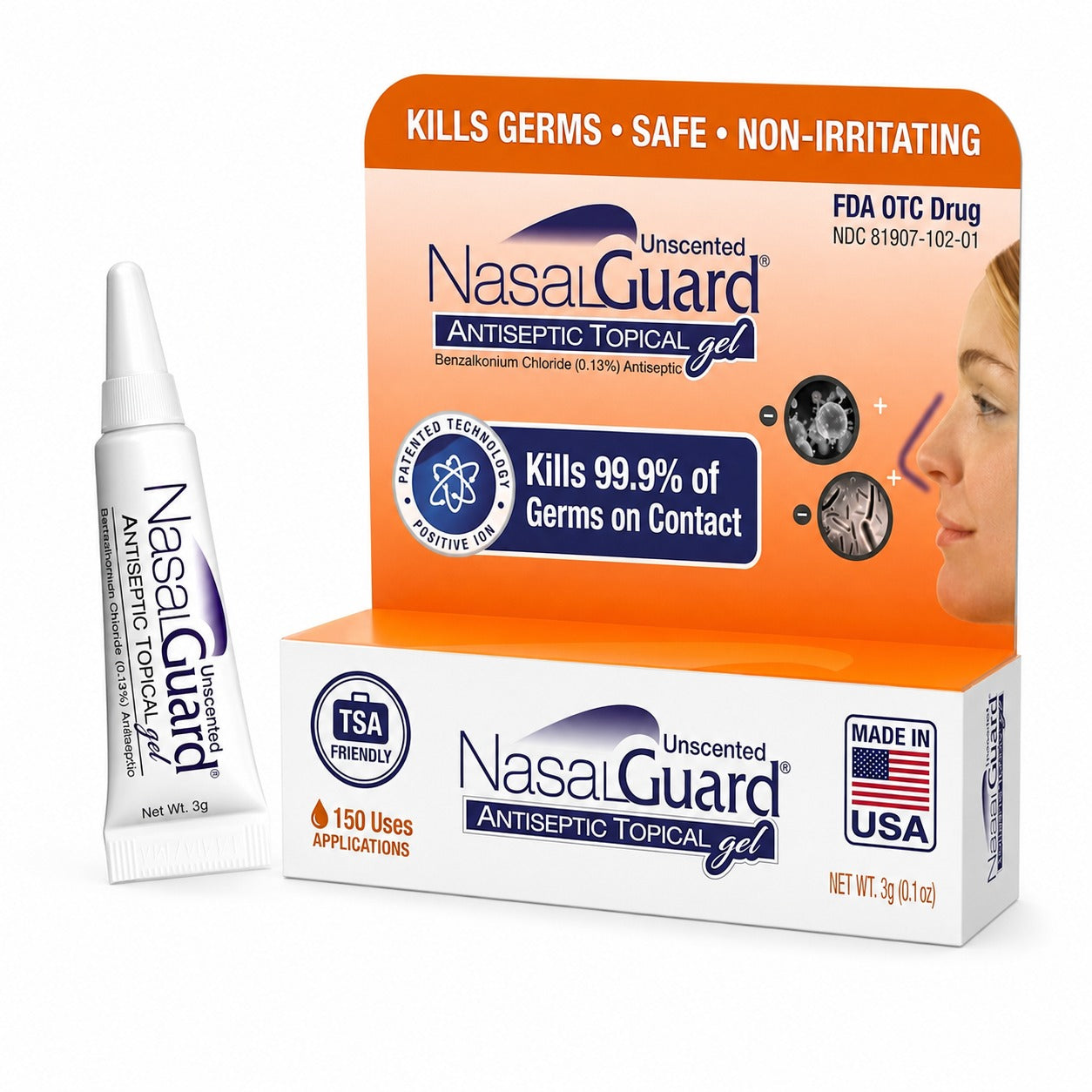
Unscented Option
For those who prefer a fragrance-free experience, NasalGuard offers an unscented version of the gel.
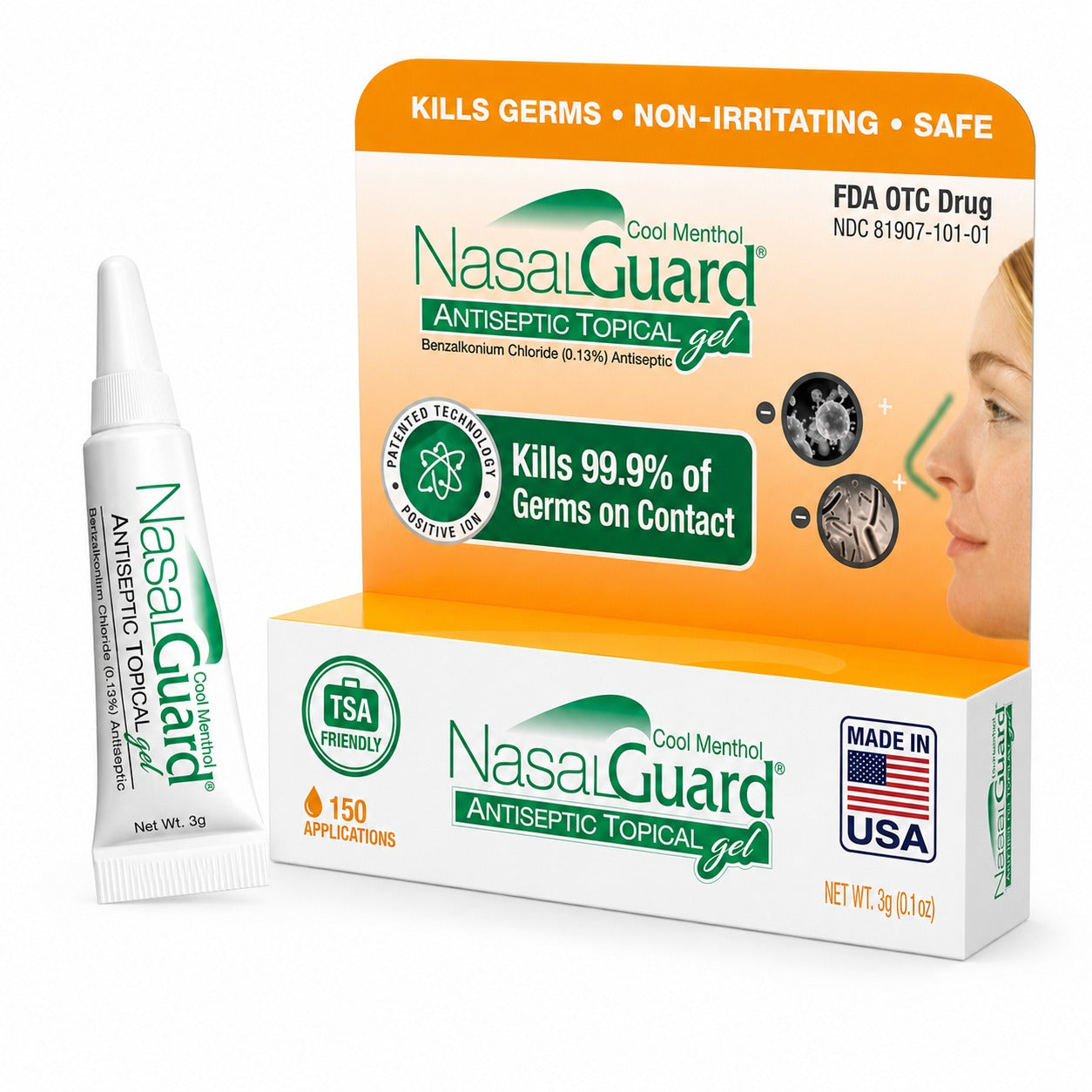
Cool Menthol Option
A cool menthol version is also available for those who prefer a refreshing sensation upon application.
What to Know Before Using an Externally Applied Gel Barrier
External Application
NasalGuard's gel is meant to stay on the surface of the skin, around the nostrils and above the upper lip. It's not designed to be inhaled, swallowed, or applied to the inside of the nose, so a light, even layer on the outside is all that's needed.
Understanding the Product
The connection between dust, pollen, pet dander, and NasalGuard's technology comes down to how the particles behave physically, not a specific formula for each one. NasalGuard's gel contains positively charged ions that attract and capture negatively charged airborne particles like pollen, dust, pet dander, pollution, and other irritants. The particles are trapped in the gel and helping breathing easier and feel more comfortable.

Explore NasalGuard Airborne Particle Blocker
Learn More About the Pollen & Dust Block
Dust is just one of the everyday airborne particles people build small routines around, and a gel barrier is one option some choose to include alongside regular cleaning habits. More on the option can be found on the NasalGuard website.
Conclusion
Understanding Dust as an Airborne Particle
Airborne dust is a normal, ongoing part of both indoor and outdoor environments, made up of fine debris that becomes suspended in the air through everyday movement and activity. Alongside pollen and pet dander, it's one of the most common everyday airborne particles people encounter. NasalGuard Airborne Particle Blocker is designed to help reduce inhalation of these particles as part of a broader routine, offering an externally applied, invisible gel barrier for those looking to add a simple step to their day.
FAQs
How does the NasalGuard gel barrier work?
The gel is built around positive ion barrier technology, forming an invisible layer around the nostrils designed to help reduce inhalation of airborne particles.
What does Positive Ion Barrier Technology mean?
It refers to the technology behind NasalGuard's formula, which creates an invisible barrier around the nostrils designed to help interact with and reduce inhalation of approved airborne particles.
How do you apply NasalGuard Airborne Particle Blocker?
Apply a small amount around the outside of the nostrils and above the upper lip, and reapply after 4+ hours.
Does NasalGuard go inside the nose?
No. The gel is applied to the outside of the nose only, around the nostrils and above the upper lip.
Is NasalGuard an allergy medicine?
No, NasalGuard is not an allergy medicine. It's an externally applied gel barrier meant to fit into an everyday routine.