We've sent you an email with a link to update your password.
Reset your password
We will send you an email to reset your password.
NasalGuard for City Walks: Traffic, Sidewalks, and Errand Days
Christine Walek
0 comments
Picture a crosswalk on a busy avenue at 5:30 p.m. A bus pulls away from the curb, a truck rolls past a construction fence, and a little grit lifts off the gutter. Some of what is in that air you can see. Most of it you cannot.
If you walk your errands in the city, this guide covers where particle pollution on a busy street comes from, how to plan a walk around it, and how NasalGuard® fits city walks as a simple barrier step.
What's in the air on a busy street
Particle pollution is a mix of solid particles and liquid droplets suspended in the air. Some of it comes straight from a source, such as construction sites and unpaved roads. Most fine particle pollution in the United States forms in the air itself, from gases released by power plants, industries, and automobiles.
Particle levels can run especially high:
Near busy roads and in urban areas, especially during rush hour.
In industrial areas.
On calm days, when still air lets pollution build up. Air after rain or snow has been partly cleared.
Particle pollution is not limited to haze or visible dust. It is present in air that looks clean, and fine particles from outside can make their way into homes and other buildings.
Construction sites, unpaved roads and lots, traffic and industry, and rush hour or calm days all shape the air on a city walk. Source: U.S. EPA. Icons are illustrations.
Plan the walk before you head out
You cannot choose the air on your block, but a few habits change which air you walk through.
Check the forecast.AirNow shows the Air Quality Index for your ZIP code, including fine particles.
Time errands outside rush hour when you can, since rush hour near busy roads is a time when particle levels run high.
Take the side street. A block off the main avenue, or a path through a park, puts fewer buses and trucks beside you.
Give work zones room. Cross the street before an active construction site instead of walking along its fence.
Leave the street at the door. Wipe your shoes and hang your coat in one spot, so grit stays near the entry.
NasalGuard for city walks: where it fits
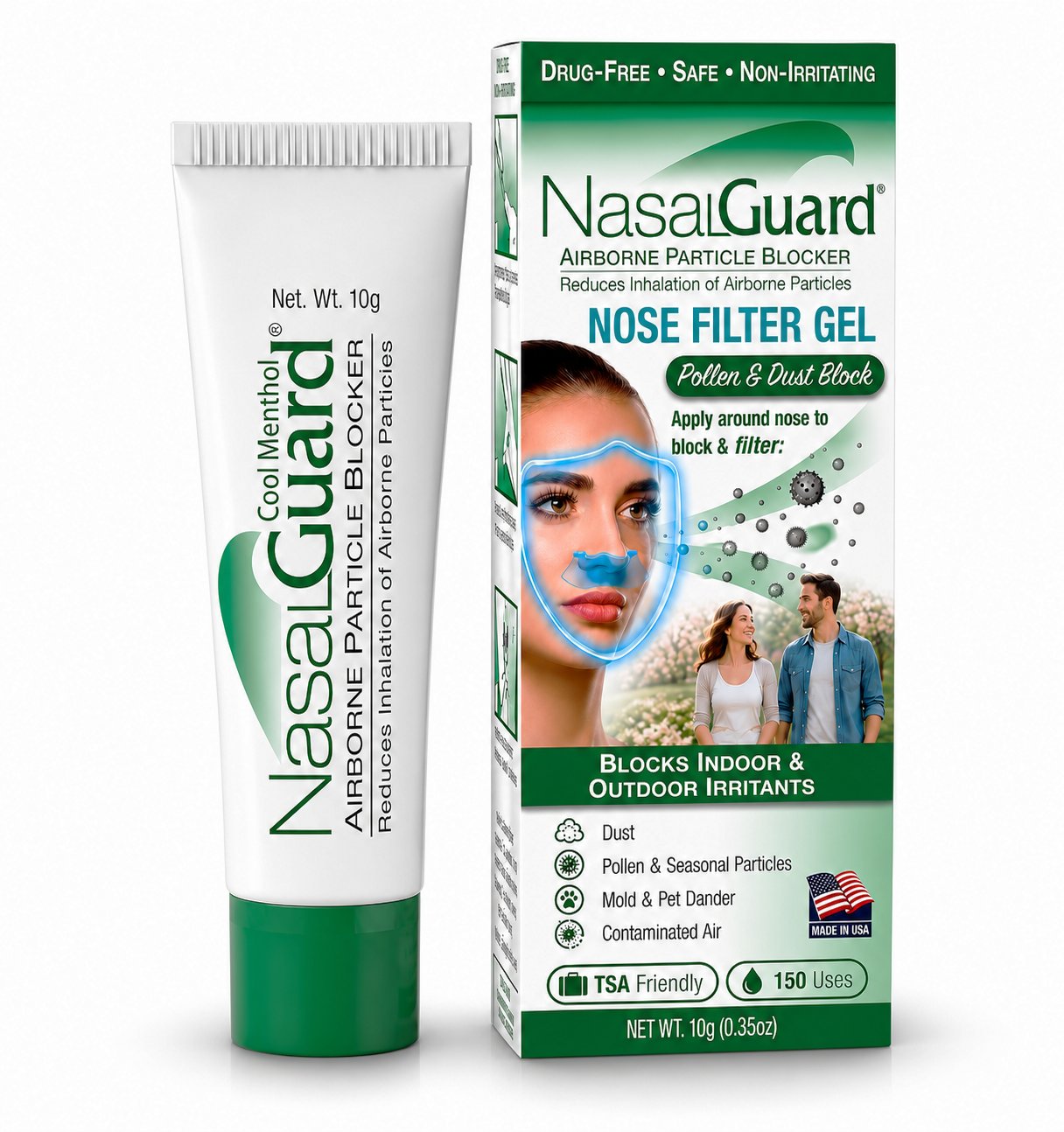
NasalGuard® Airborne Particle Blocker is an invisible, drug-free gel applied around the outside of the nostrils and above the upper lip to help reduce inhalation of everyday airborne particles such as pollen, dust, and pet dander. Pollution is part of that everyday mix on a city street.
It uses positive ion technology to create an invisible gel barrier around the outside of the nostrils, designed to help reduce contact with everyday airborne particles. The How It Works page walks through the research records behind that idea, including what each lab test measured and what it did not.
A few boundaries, so expectations are clear:
NasalGuard is not a medicine or a drug.
It is not intended to be inserted into the nose. It goes on the skin around the outside of the nostrils.
It is designed for airborne particles. It is not designed or labeled to block smells or gases.
It does not change anything else on your walk, from checking the forecast to choosing a quieter route.
If you want the basics first, Does NasalGuard Work? explains the gel barrier in plain language.
How to apply it before you head out
The gel is opaque milky white in the tube and on your fingertip. It goes on invisibly once spread.
With clean, dry hands, place a small amount on a fingertip.
Spread it between the thumb and finger.
Apply around the outside of the nostrils and above the upper lip.
Reapply according to the current directions and after the area becomes wet. On a city walk, that can mean rain, snow, washing your face, or wiping your nose with a napkin. Apply at home or in the lobby before you step outside, not at a crosswalk with gloves on.
The gel is milky white on the fingertip and invisible once spread. Apply before your gloves go on.
Which version to carry
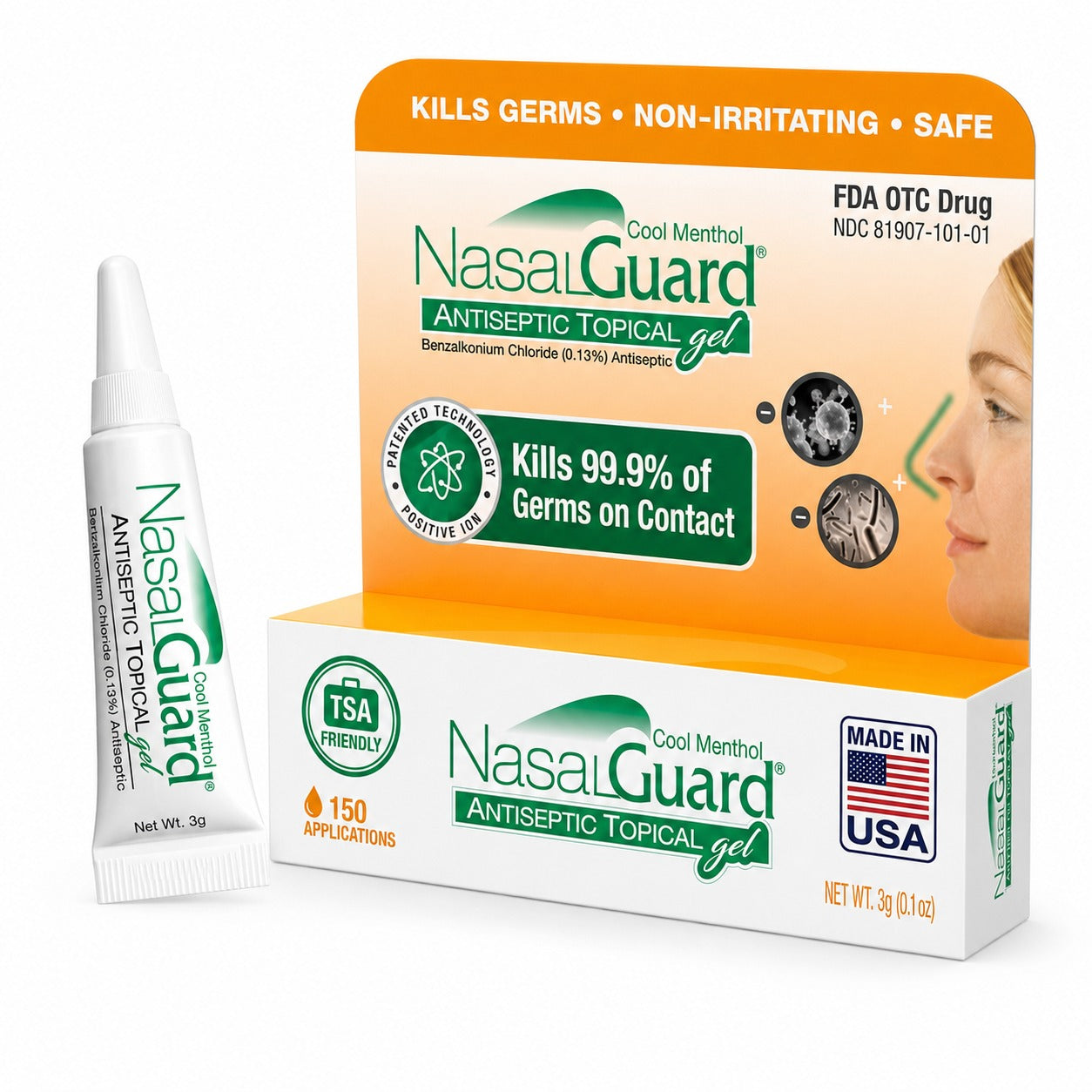
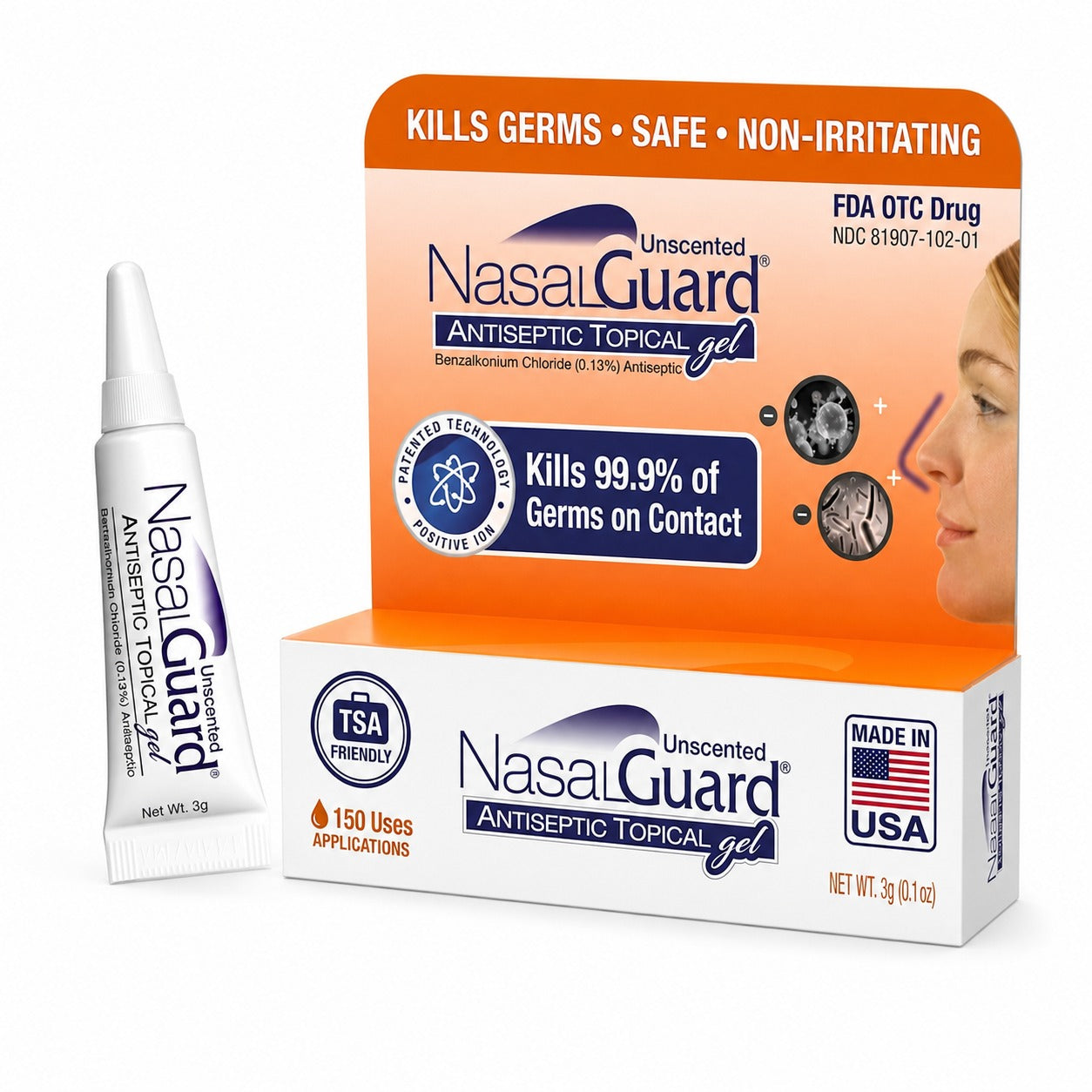
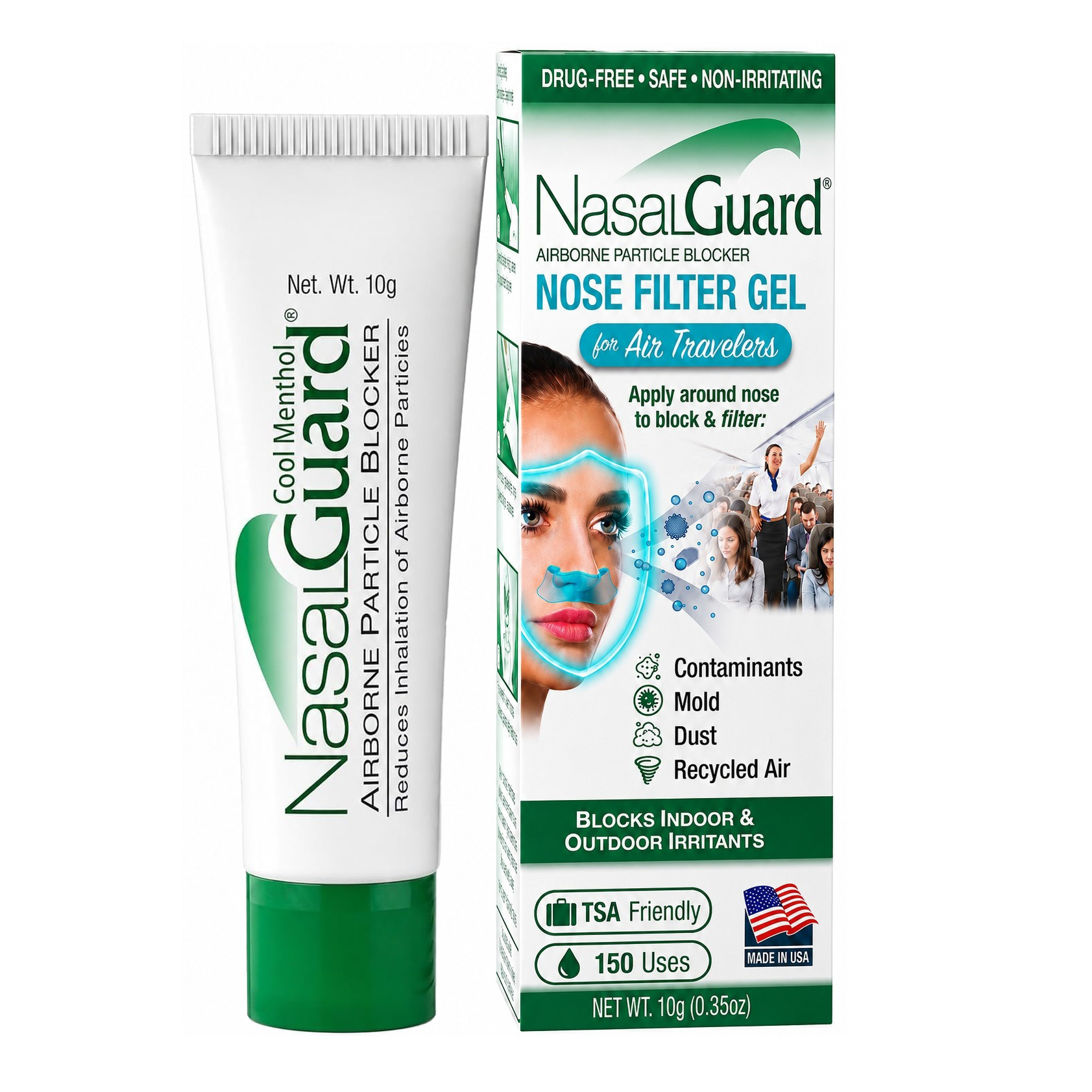
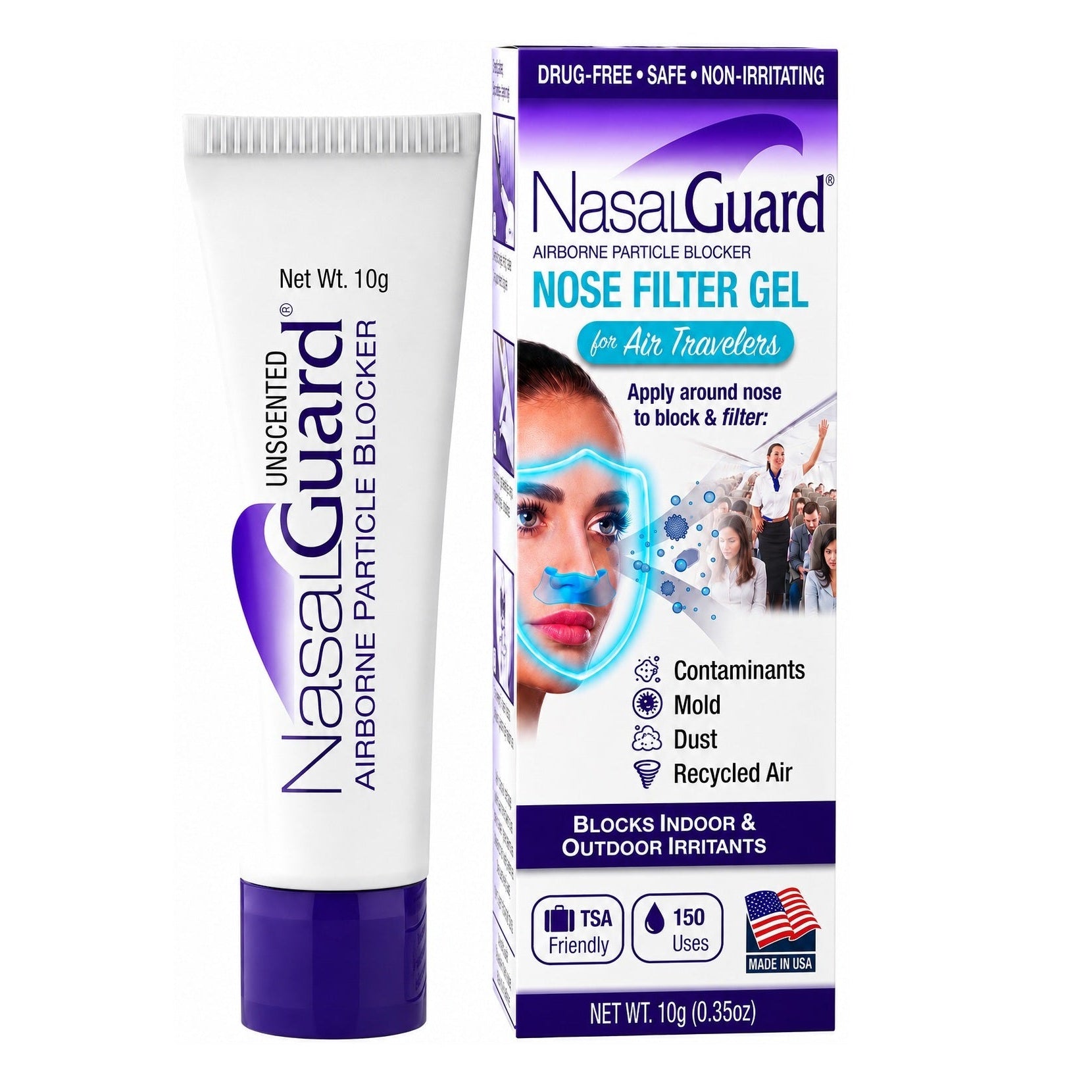
For walks, errands, and commutes, Pollen & Dust Block is the everyday line. It comes in Unscented and Cool Menthol, which has a menthol scent. The 3g tube fits a coat pocket, and the 10g tube can stay at home by the door. If a flight is part of your week, the For Air Travelers line is packaged for airports and airplanes.
If you ride a train or bus most days, our commuting routine covers the trip from your door to your desk.
Frequently asked questions
Is NasalGuard designed for city air?
NasalGuard® Airborne Particle Blocker is designed to help reduce inhalation of everyday airborne particles such as pollen, dust, pet dander, and pollution. It is a barrier step applied around the outside of the nostrils and above the upper lip. It is not an air cleaner, and it is not designed to block gases or smells. Use it as directed.
Is NasalGuard a medicine?
No. NasalGuard is not a medicine or a drug. It is a topical gel applied around the outside of the nostrils and above the upper lip, using positive ion technology to create an invisible gel barrier. If you have questions about whether it is right for you, ask your doctor or pharmacist before you use it.
Does NasalGuard go inside the nose?
No. NasalGuard is not intended to be inserted into the nose. Place a small amount on a fingertip, spread it between the thumb and finger, and apply around the outside of the nostrils and above the upper lip. Reapply according to the current directions and after the area becomes wet.
Will NasalGuard block the smell of traffic?
No. NasalGuard is designed for everyday airborne particles, and it is not designed or labeled to block smells or gases, so a bus stop will smell the same. Our article on nose smell blockers explains what NasalGuard is and is not designed to do.
Before your next walk downtown, check the AirNow forecast, pick the quieter route, and add one step at the door. Start with NasalGuard® Pollen & Dust Block, Unscented 3g, apply it before you leave, and use it as directed.
Christine Walek writes for the NasalGuard editorial team about air quality, travel, and the everyday airborne particles we share space with. Articles are reviewed against current product labeling before publishing.