Every year, adults catch an average of two to three colds. Children catch even more. Despite how common colds are, many people are not sure exactly how germs spread or what practical steps actually make a difference.
Understanding how to avoid catching a cold starts with understanding how respiratory germs travel and where they enter the body. Once you know that, building smarter daily habits becomes much easier.
How Do Common Cold Germs Spread?
Understanding common cold transmission
The common cold is caused by viruses, most often rhinoviruses. These viruses spread from person to person in a few main ways.
Contact transmission is the most common route. When an infected person touches a surface and you touch the same surface, you can pick up viral particles on your hands. If you then touch your face, those germs have a direct path into your body.
Droplet transmission is the other main route. Sneezing, coughing, or even talking releases tiny respiratory droplets that carry the virus. In enclosed spaces with poor ventilation, these droplets linger longer in the air and increase the chance that someone nearby breathes them in.
Why the nose is a primary entry point for germs
Your nose is one of the first places respiratory germs land. When you breathe in viral particles or touch your nose with contaminated hands, the nasal passages become a direct route into your respiratory system.
The area just inside the nostril, known as the nasal vestibule, is especially exposed. It is the first structure air passes through when you inhale, and it is where many airborne particles and germs first make contact with the body.
Why Your Nose Is the First Line of Defense
The role of the nasal passages
Your nose does far more than allow you to breathe. The nasal passages are lined with mucus and tiny hairs called cilia. Together, they work to trap particles and help move them away from the deeper respiratory tract.
This natural system functions well under normal conditions. But when germ exposure is high or nasal hygiene is not actively supported, some germs may get through before your immune system has a chance to respond.
How germs can settle inside the nose
When you breathe in air containing viral particles, those particles can land on the moist lining of the nasal passage. In the right conditions, they may begin to establish themselves before your body mounts a defense.
This is precisely why nasal germ protection matters. Supporting the hygiene of the nasal vestibule adds one more layer of nasal hygiene at the point where germs most commonly first make contact.
Science-Backed Tips to Help Avoid Catching a Cold
Wash your hands regularly
Hand hygiene is one of the most effective cold prevention tips supported by research. Wash your hands with soap and water for at least 20 seconds, especially after being in public spaces, before eating, and after touching shared surfaces like door handles, phone screens, or elevator buttons.
When soap and water are not available, an alcohol-based hand sanitizer with at least 60 percent alcohol is a reliable alternative.
Avoid touching your face
Most people touch their face dozens of times each day without realizing it. Since germ transmission through the nose, mouth, and eyes is a primary infection route, reducing face-touching significantly lowers your exposure risk.
This habit takes deliberate practice, but becoming more aware of when and why you reach for your face is a genuinely effective part of common cold prevention.
Improve indoor ventilation
Indoor air quality plays a larger role in reducing germ spread than many people appreciate. Poorly ventilated spaces allow respiratory droplets to build up, increasing the chance that viral particles stay airborne long enough to be inhaled.
Opening windows when possible, using air purifiers with HEPA filtration, and choosing outdoor settings over crowded indoor environments are all practical steps that support nasal germ protection at an environmental level.
Support your immune system with healthy habits
Building consistent immune protection habits supports general daily wellness and is commonly recommended as part of a healthy routine, particularly during periods when germ exposure is higher than usual. These habits include four core areas:
Sleep The immune system does much of its repair work during rest. Adults generally need seven to nine hours per night to maintain healthy immune function.
Nutrition A diet rich in fruits, vegetables, and whole grains supplies the vitamins and antioxidants that help the body respond to infection.
Physical activity Moderate regular exercise is linked to lower rates of upper respiratory infections. Even a daily 30-minute walk makes a measurable difference over time.
Stress management Chronic stress suppresses immune function. Simple practices like time outdoors, adequate rest, and social connection help keep stress at manageable levels.
What Is an Antiseptic Nasal Gel?
How nasal gels work
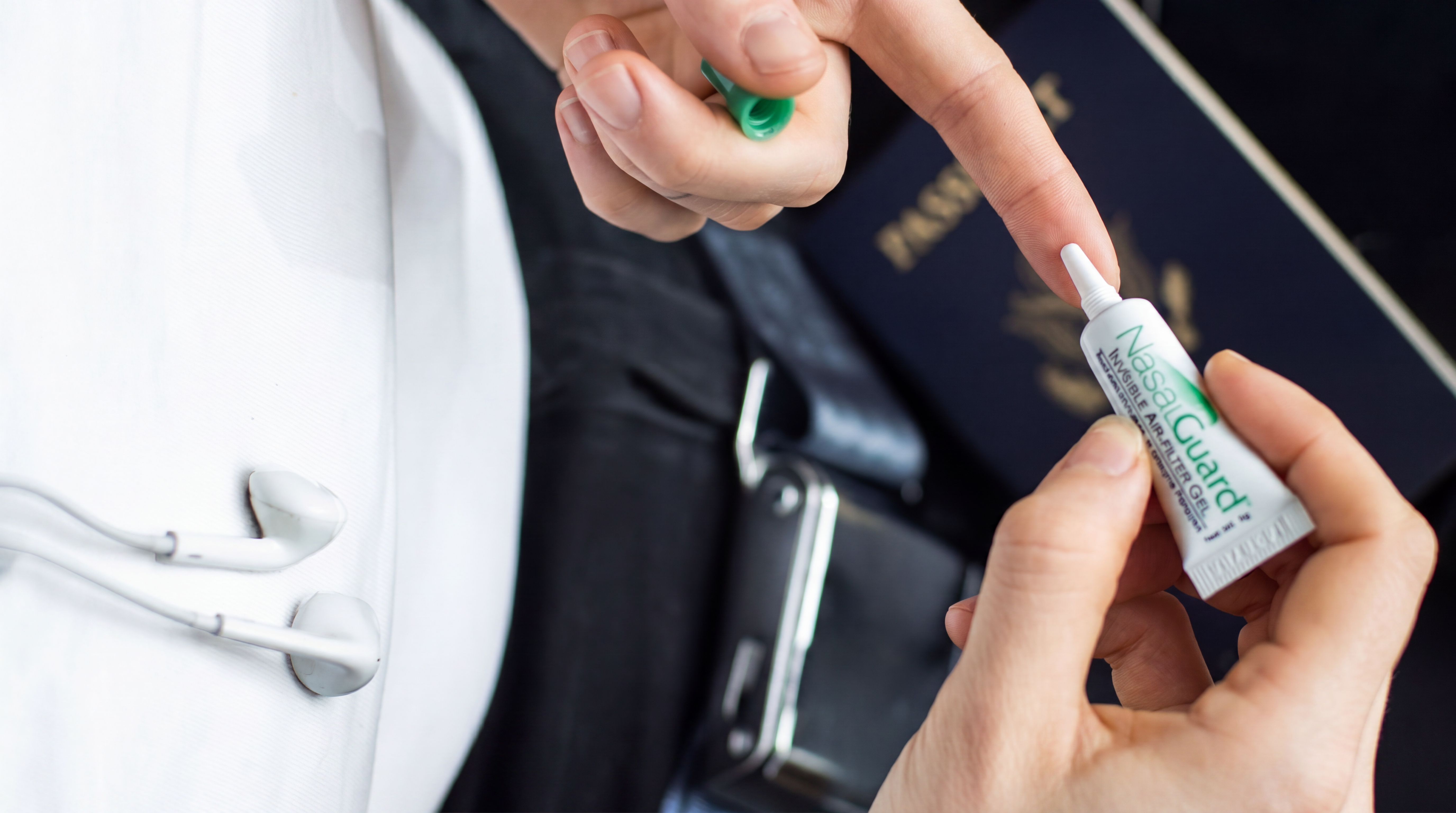
An antiseptic nasal gel is applied directly around the nostrils and above the upper lip to help reduce germs near the nasal vestibule. Unlike medication that enters the bloodstream, the gel works locally at the nasal entrance, targeting surface-level germs at the point where they first enter the body.
Antiseptic formulas are designed to help kill or inhibit the growth of bacteria and certain other pathogens at the surface level, supporting nasal hygiene in a straightforward, topical way.
Using nasal germ protection as part of your daily routine
Nasal germ protection with an antiseptic gel is not a replacement for hand hygiene, masks, or other preventive measures. It works alongside those habits as an additional layer of support, particularly useful in situations where germ exposure is higher than usual, such as during travel, busy seasons, or time spent in crowded spaces.
How NasalGuard Antiseptic Topical Gel Supports Germ Protection
Designed to help reduce germs near the nasal vestibule area
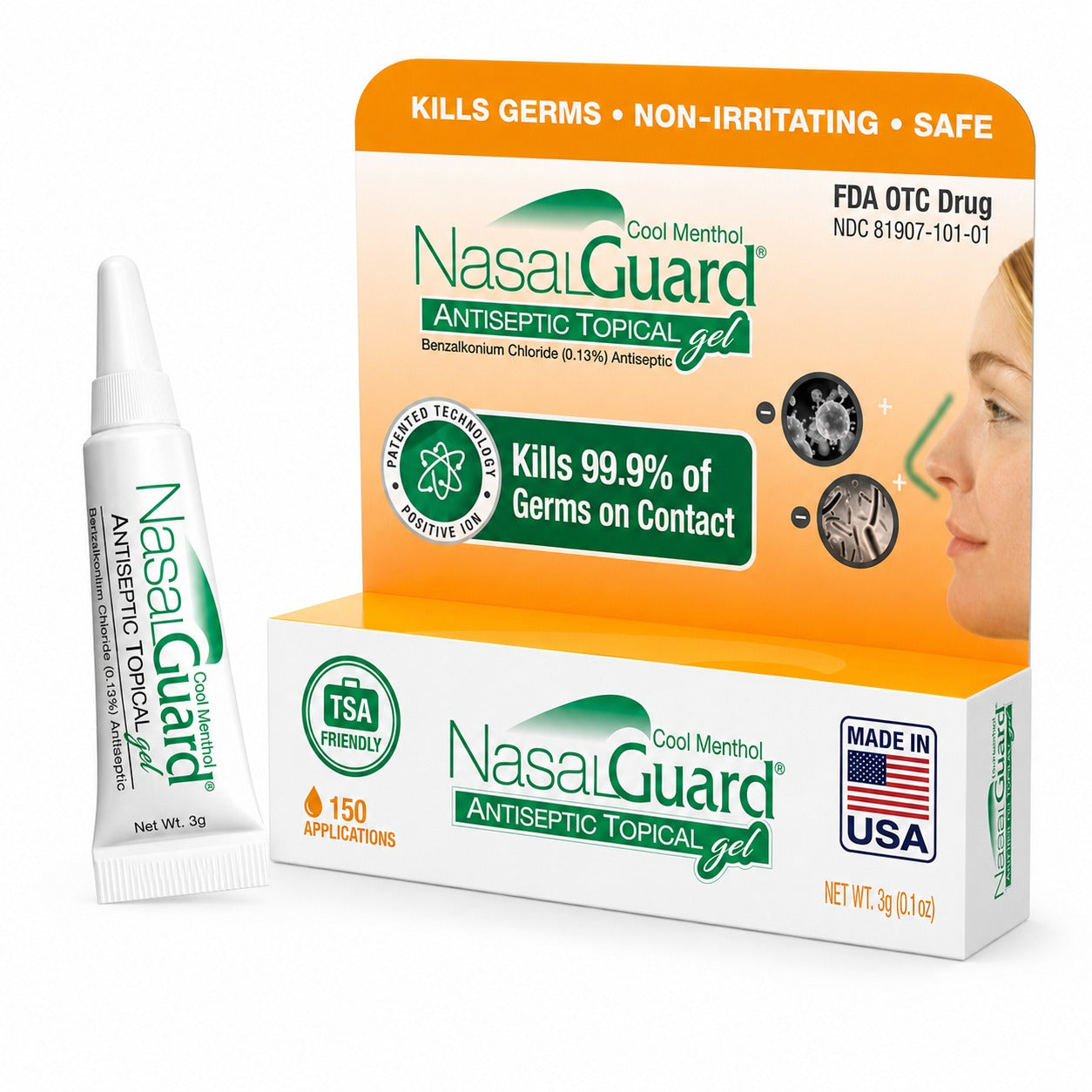
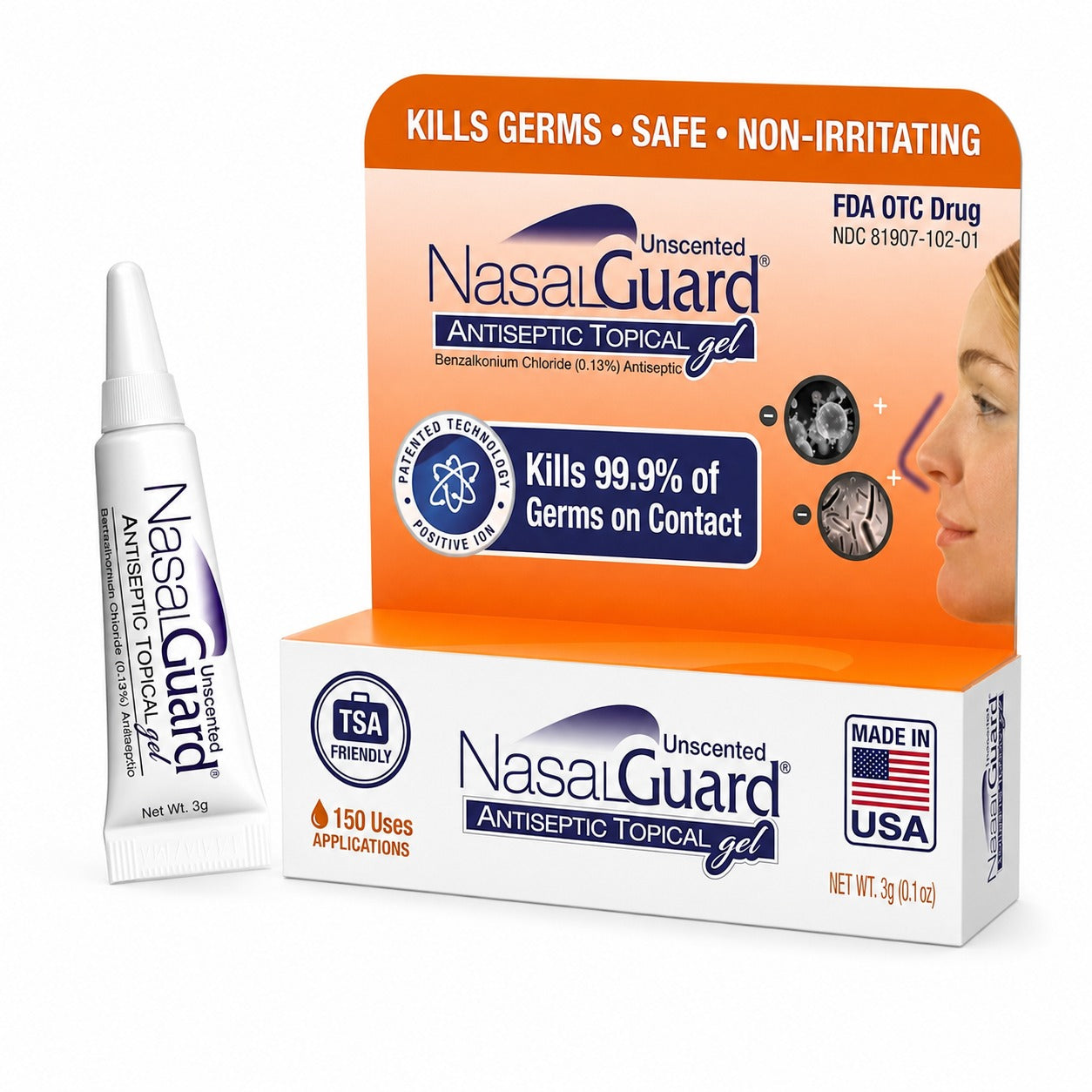
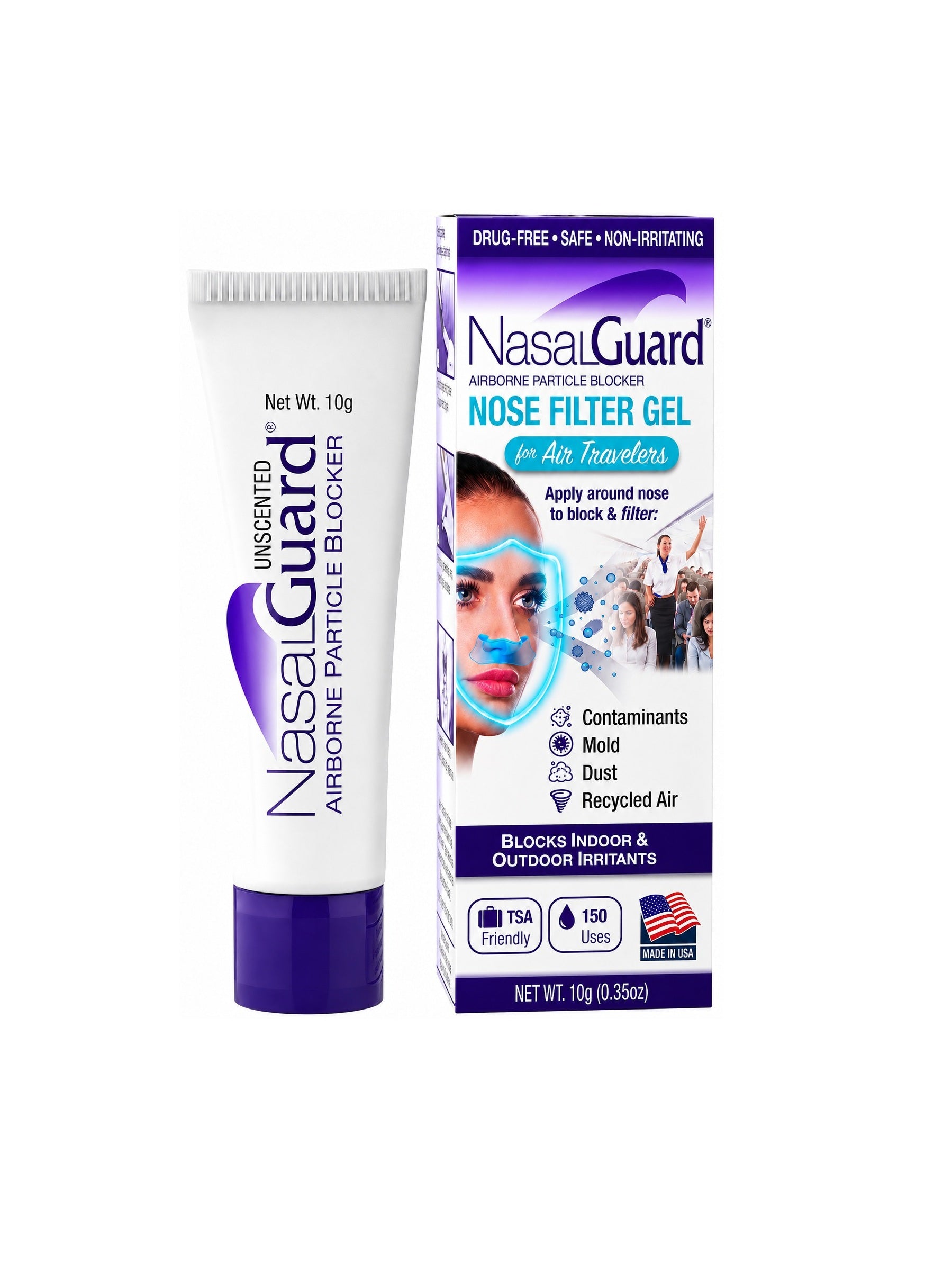
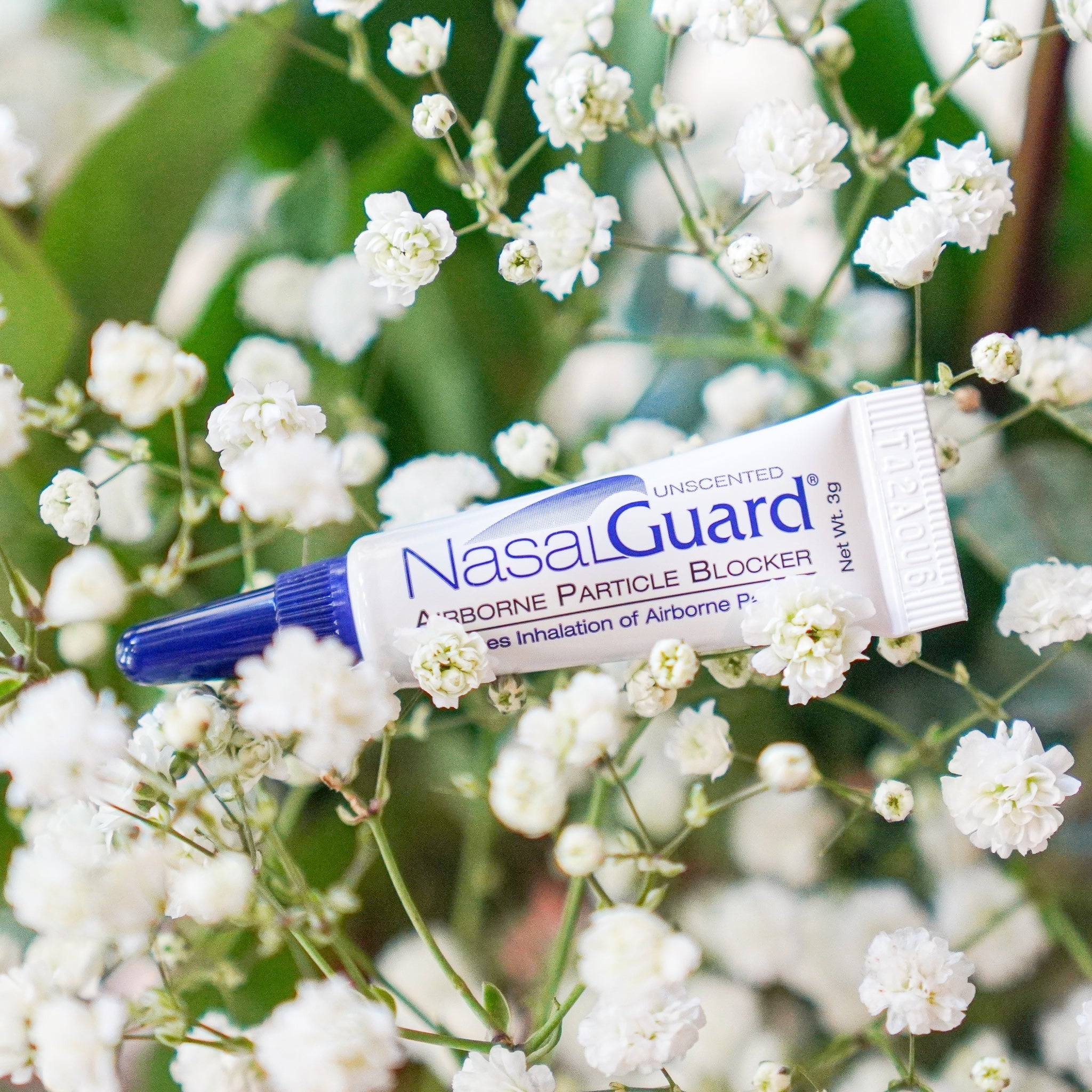
The NasalGuard Antiseptic Topical Gel is formulated to help reduce germs near the nostrils and nasal vestibule area. It is applied directly around the nose and is designed to support nasal hygiene as part of a broader daily routine.
The NasalGuard Antiseptic Topical Gel Collection offers options suited for regular daily use, making it practical to incorporate into your morning routine or carry with you throughout the day.
When to apply before higher-risk situations
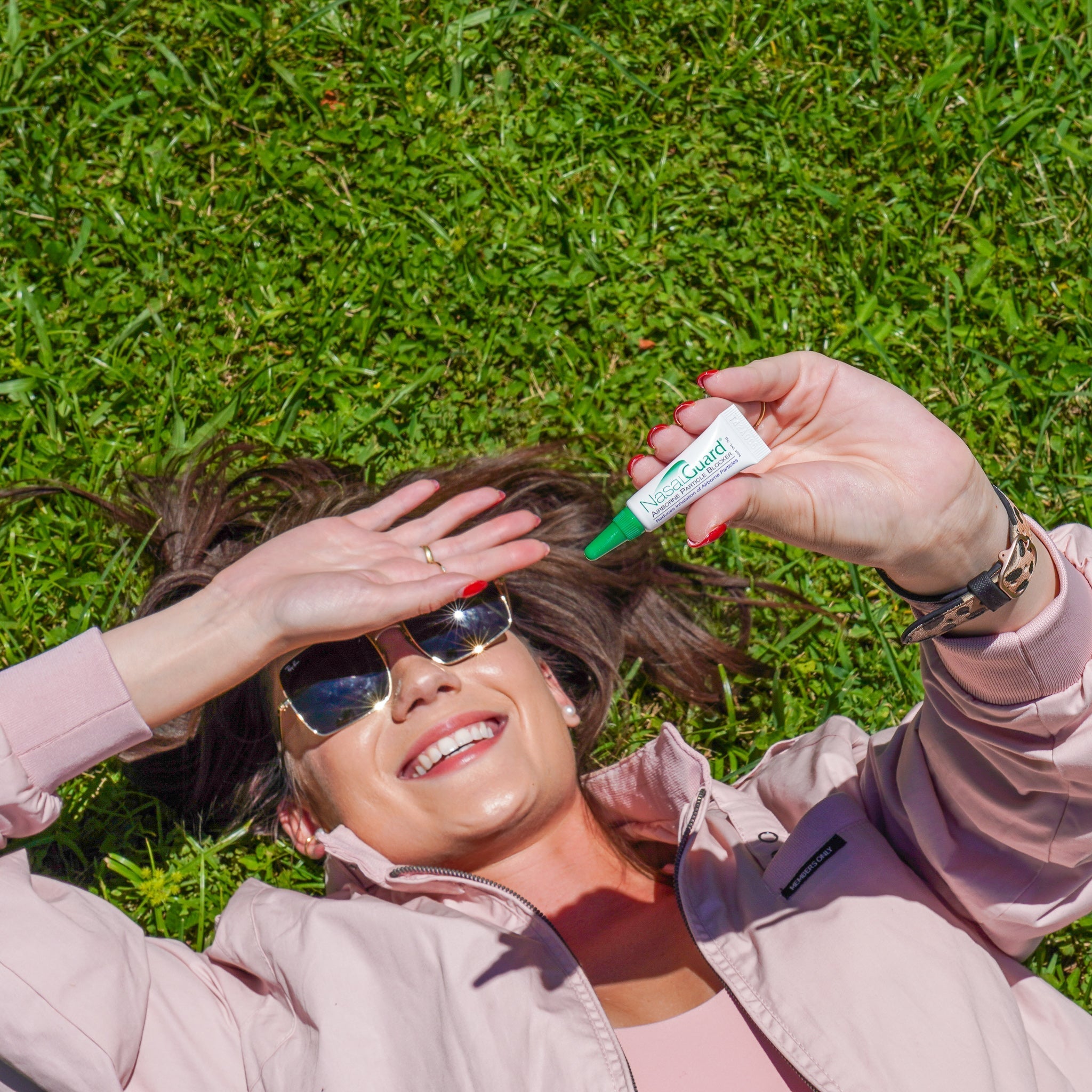
Applying the NasalGuard Antiseptic Topical Gel before entering situations with higher germ exposure helps you add targeted support exactly when it is most relevant. Good moments to apply include before boarding a flight, before spending time in a crowded indoor space, or at the start of your day during cold and flu season when respiratory germs are circulating more widely.
Everyday Situations Where Nasal Germ Protection May Help
Air travel and public transportation
Planes, trains, and buses are enclosed environments where large numbers of people share air for extended periods. Exposure to respiratory germs in these settings is naturally higher than in everyday outdoor environments.
Applying an antiseptic nasal gel before boarding, combined with regular hand hygiene during travel, can be a practical part of your common cold prevention strategy without adding bulk or inconvenience to your journey.
Schools, offices, and crowded public places
Children in school settings encounter a high volume of germs daily, which is one reason families often see more frequent colds during the school year. The same pattern applies to busy open-plan offices and high-traffic public spaces like shopping centers and transport hubs.
For families looking to support nasal germ protection across all age groups, incorporating an antiseptic nasal gel into the morning routine before school or work is a simple and non-invasive step.
Cold and flu season
The months between late autumn and early spring tend to see the highest rates of common cold transmission. People spend more time indoors, ventilation is often reduced, and immune systems can be under additional strain from disrupted routines and seasonal changes.
Adding NasalGuard Antiseptic Topical Gel to your routine during this period, alongside the healthy habits described above, gives you one more practical layer of everyday support.
Conclusion
Build healthier daily habits for better cold prevention
Understanding how to avoid catching a cold comes down to knowing where germs enter the body and taking consistent steps to reduce exposure at those points.
Regular handwashing, mindful face-touching habits, better indoor ventilation, and strong immune-protection habits all form the foundation of effective cold prevention. Adding nasal protection through an antiseptic gel supports hygiene at the nasal vestibule, the first point of contact for many of the germs you encounter each day.
Ready to add another layer of nasal hygiene to your daily routine? Explore the NasalGuard Antiseptic Topical Gel Collection for options designed to support everyday germ protection in a simple, non-invasive way.
Frequently Asked Questions
How do most common cold germs enter the body?
Most respiratory germs enter through the nose, mouth, or eyes. Germ transmission through the nose is especially common, either by inhaling viral particles or by touching the nose with hands that have contacted a contaminated surface.
Can I help reduce my risk of catching a cold?
Yes. While no single approach can guarantee complete protection, combining hand hygiene, face-touching awareness, healthy lifestyle choices, and nasal protection gives you multiple layers of everyday defense as part of a broader common cold prevention approach.
What is an antiseptic nasal gel?
An antiseptic nasal gel is a topical product applied around the nostrils and above the upper lip. It is designed to help reduce germs in the nasal vestibule area and supports nasal hygiene as part of a daily routine rather than as a standalone cure or treatment.
When should I apply a nasal gel?
Applying NasalGuard Antiseptic Topical Gel before higher-exposure situations, such as air travel, time in crowded indoor spaces, or during cold and flu season, is a practical approach. Follow the application instructions included with the product for best results.
Can antiseptic nasal gel be used every day?
The NasalGuard Antiseptic Topical Gel is designed for regular use as part of a daily nasal hygiene routine. It works best when used consistently alongside other cold prevention tips such as regular hand washing, healthy sleep, and balanced nutrition.